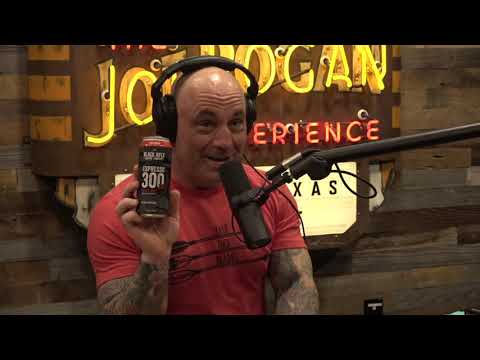
Joe Rogan Experience #1678 - Michael Pollan
Narrator, Michael Pollan (guest), Joe Rogan (host), Narrator
In this episode of The Joe Rogan Experience, featuring Narrator and Michael Pollan, Joe Rogan Experience #1678 - Michael Pollan explores michael Pollan Explores Psychedelics, Plants, and Rethinking the Drug War Joe Rogan and Michael Pollan discuss Pollan’s book *This Is Your Mind on Plants*, focusing on humanity’s deep, often misunderstood relationship with psychoactive plants like psilocybin, mescaline, caffeine, and tobacco.
Michael Pollan Explores Psychedelics, Plants, and Rethinking the Drug War
Joe Rogan and Michael Pollan discuss Pollan’s book *This Is Your Mind on Plants*, focusing on humanity’s deep, often misunderstood relationship with psychoactive plants like psilocybin, mescaline, caffeine, and tobacco.
They explore the collapse of the drug war narrative, the medical and cultural resurgence of psychedelics, and how indigenous and ritual use can inform safer modern practices.
Pollan emphasizes both risks and benefits: acknowledging casualties, screening for vulnerabilities, and the danger of hype, while highlighting promising clinical results for depression, PTSD, and addiction.
The conversation broadens to plant intelligence, co‑evolution with humans, how drugs shape culture and imagination, and the need for a mature, science‑based “instruction manual” for future drug use.
Key Takeaways
Approach psychedelics as powerful tools, not harmless panaceas.
Pollan stresses that acknowledging real risks—psychotic breaks, triggering latent schizophrenia, or bad outcomes in trials—is essential to avoid another cultural backlash and to build honest, sustainable integration.
Get the full analysis with uListen AI
Set, setting, and screening are non‑negotiable for safe psychedelic use.
Modern clinical trials and indigenous practices alike emphasize preparation, intention, guidance, and excluding people with strong psychosis or bipolar risk—these factors are as important as the substance and dose.
Get the full analysis with uListen AI
We need differentiated, post–drug war policies tailored to each substance.
Lumping heroin, cannabis, and LSD together has been scientifically incoherent and socially damaging; Pollan argues for drug‑specific regulation, harm reduction, and models like Oregon’s psilocybin therapy framework.
Get the full analysis with uListen AI
Ritual and community dramatically reduce problematic drug use.
Examples like the Native American Church’s peyote ceremonies and culturally bounded alcohol use show that when drugs are embedded in clear rituals with elders, intention, and group oversight, abuse and chaos drop sharply.
Get the full analysis with uListen AI
Addiction is largely contextual and often rooted in trauma and environment.
Rat Park research, Vietnam heroin data, and the geography of the opioid crisis all suggest addiction is less a simple “chemical hook” disease and more an adaptation to despair, trauma, and impoverished “cages.”
Get the full analysis with uListen AI
Psychedelics may help rewrite rigid mental narratives, especially later in life.
By quieting the brain’s default mode network and dissolving entrenched ego stories, psychedelics can function like a “fresh snowfall” over deep cognitive ruts, creating space for new, healthier patterns of thought and behavior.
Get the full analysis with uListen AI
Everyday drugs like caffeine and tobacco are culturally powerful and double‑edged.
Caffeine underpins modern work culture and the Enlightenment, yet clearly produces dependence; tobacco is lethal in cigarettes but can be a potent, even healing plant medicine in carefully held ritual contexts.
Get the full analysis with uListen AI
Notable Quotes
“If drug‑taking were really bad, the drug‑takers would be gone from evolution, and they’re not.”
— Michael Pollan
“Psychedelics teach us how to surrender, which is useful in a lot of other contexts too.”
— Michael Pollan
“We have to start this post–drug war conversation about how we use drugs in our lives.”
— Michael Pollan
“Addiction is a bad relationship to a drug; it’s not just about breaking the law.”
— Michael Pollan
“Plants are geniuses in their own way. We got good at language and art; they got good at biochemistry.”
— Michael Pollan
Questions Answered in This Episode
How far can we safely commercialize psychedelics without trivializing them or creating new forms of exploitation and abuse?
Joe Rogan and Michael Pollan discuss Pollan’s book *This Is Your Mind on Plants*, focusing on humanity’s deep, often misunderstood relationship with psychoactive plants like psilocybin, mescaline, caffeine, and tobacco.
Get the full analysis with uListen AI
What would a genuinely ethical, science‑informed “instruction manual” for modern psychedelic use look like, and who should write it?
They explore the collapse of the drug war narrative, the medical and cultural resurgence of psychedelics, and how indigenous and ritual use can inform safer modern practices.
Get the full analysis with uListen AI
How should society decide which substances are handled medically, which religiously, and which recreationally—and where those lines blur?
Pollan emphasizes both risks and benefits: acknowledging casualties, screening for vulnerabilities, and the danger of hype, while highlighting promising clinical results for depression, PTSD, and addiction.
Get the full analysis with uListen AI
If addiction is largely contextual and trauma‑based, how should that reshape criminal justice policy and treatment funding in practice?
The conversation broadens to plant intelligence, co‑evolution with humans, how drugs shape culture and imagination, and the need for a mature, science‑based “instruction manual” for future drug use.
Get the full analysis with uListen AI
What might we learn about consciousness and reality itself as more top‑tier neuroscientists begin using psychedelics as research tools?
Get the full analysis with uListen AI
Transcript Preview
(drum music) Joe Rogan podcast, check it out.
The Joe Rogan Experience.
Train by day, Joe Rogan podcast by night, all day. (rock music)
All right.
Mr. Pollan.
Yeah, hey.
Good to see you, man.
Good to be here, good to be back.
Good to see you again. And, uh, good to see you in the... You done with the headphones, huh?
I'm done with the headphones, yeah.
(laughs) In and out instantaneously. Um, your new book, This is Your Mind on Plants.
Yeah, right here. (book thumps)
Yeah. I like it. Um, since you've been on, I, I have to say that out of all of the people that have discussed psychedelics, I think you've been one of the most important ones because you were a r- respected, esteemed journalist. You're like a r- a real writer already. And for you to int- introduce the world of psychedelics to people that maybe would've been skeptical of someone's intentions. Like, there's a lot of folks that, like, you read something about drugs, and even if it's from someone that has credentials, you sort of assume that they're trying to justify some-
Yeah, they have an agenda starting-
Yeah.
... when they're starting out. I think you're right. I think that made a huge difference. I was coming at that world from outside. I'd had very little experience with psychedelics, virtually none as a kid. Um, I'd heard about this research. I was curious, I was skeptical, and so I went on this journey that brought me into this community. And, um, and I think that allowed people to follow me, to come with me. I think people would r- much rather go on a journey with you than have you lecture at them.
Oh, for sure.
And-
Yeah.
... so I alwa- in all my journalism, that's what I try to do. I, I, I start out as unknowing or ignorant as the reader-
Mm-hmm.
... and, uh, and then gradually work my way into the world of whether it's food and agriculture or psychedelics. And, um, uh, so in all my books, I kinda start out like an idiot. And (laughs) gradually-
(laughs)
... move toward, toward a state of knowledge or more knowledge.
I think that's incredibly relatable to people, because it, it just, it, it lets people know what you're learning, how you're learning it-
Right.
... and why you're learning it, and what-
And how you come to your conclusions.
Yeah.
That it's the result of having these experiences or talking to these people. And they see the, they see the, the, all the armature of journalists, and they see how it works, um, 'cause you're letting them, you know, you're being very transparent about the process. Um, and also, y- you know, I think that, you know, there are lots of... Uh, most of the stuff that'd been written about psychedelics and most of the stuff I was reading was written from, like, inside the world, already convinced that these were great things that were gonna change human consciousness. And that's a turn off to people, especially if you have this resistance, which many, many people do. There's so much cultural baggage around psychedelics left over from the '60s. You know, people-
Install uListen to search the full transcript and get AI-powered insights
Get Full TranscriptGet more from every podcast
AI summaries, searchable transcripts, and fact-checking. Free forever.
Add to Chrome