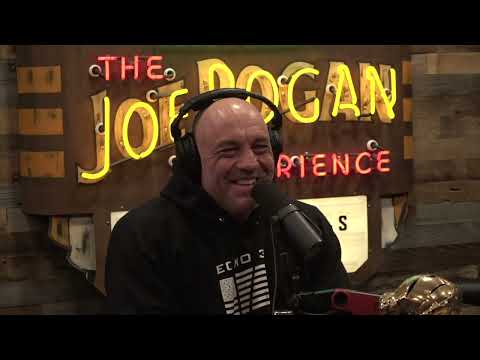
Joe Rogan Experience #1911 - Mark Boal
Mark Boal (guest), Narrator, Joe Rogan (host), Joe Rogan (host), Mark Boal (guest), Narrator, Narrator
In this episode of The Joe Rogan Experience, featuring Mark Boal and Narrator, Joe Rogan Experience #1911 - Mark Boal explores authenticity, War Stories, Psychedelics, and Media Responsibility in Focus Joe Rogan and screenwriter/producer Mark Boal (The Hurt Locker, Zero Dark Thirty, Echo 3) discuss authenticity in media, the responsibility of storytellers, and how real experiences of war and kidnapping inform Boal’s work.
Authenticity, War Stories, Psychedelics, and Media Responsibility in Focus
Joe Rogan and screenwriter/producer Mark Boal (The Hurt Locker, Zero Dark Thirty, Echo 3) discuss authenticity in media, the responsibility of storytellers, and how real experiences of war and kidnapping inform Boal’s work.
They dig into how war is depicted on screen, why Boal rejects simplistic ‘mission’ narratives, and how scenes like The Hurt Locker’s supermarket moment grew from his own post‑Baghdad dislocation.
The conversation ranges across masculinity, the crisis of trust in institutions and news, social media’s impact on culture, propaganda and bots, and Boal’s abandoned Trump–Russia project.
They finish by exploring psychedelics as therapeutic tools, human evolution theories, the role of nature and technology in modern life, and Rogan’s appreciation for elite MMA as high‑level problem‑solving under extreme pressure.
Key Takeaways
Authenticity is rare but deeply valued by audiences.
Boal argues Rogan’s success stems from unfiltered, non‑performative conversation, contrasting it with highly produced media where personas are crafted to sell something or please factions rather than reflect real people.
Get the full analysis with uListen AI
Responsible storytelling about war demands rejecting comforting narratives.
Boal avoids ‘feel‑good’ war stories and mission‑driven plots because they distort the reality he saw in Baghdad—repetitive, futile, morally ambiguous—and he withholds tactical details that could endanger troops.
Get the full analysis with uListen AI
Complex, prosocial masculinity is underrepresented in modern media.
Echo 3 intentionally portrays Special Forces operators as both highly competent and emotionally complex, challenging the common binary where masculine traits equal toxicity unless wrapped in superhero fantasy.
Get the full analysis with uListen AI
Media and tech ecosystems are eroding shared reality.
They describe how bots, troll farms, propaganda outlets, and fragmented information sources create competing narratives, making consensus on basic facts (e. ...
Get the full analysis with uListen AI
Social media amplifies exhibitionism and tribal conformity.
Rogan and Boal link audience capture, virtue signaling, and cancel culture to humans’ tribal wiring plus algorithmic incentives, arguing this pushes people toward rigid group ideologies instead of nuanced, ambiguous thinking.
Get the full analysis with uListen AI
Nature and discomfort are important correctives to modern life.
They suggest constant climate control and urban insulation from weather and wilderness may contribute to disconnection and unease, while exposure to real environments and seasonal hardship fosters humility and community.
Get the full analysis with uListen AI
Psychedelics are powerful tools that require respect and literacy.
Both see significant therapeutic and developmental potential in substances like MDMA, psilocybin, and DMT, but stress risks for vulnerable individuals and argue that legalization should be paired with cultural education and careful use.
Get the full analysis with uListen AI
Notable Quotes
“Sometimes if you just dig deep enough, your experiences—if you’re really being honest about them—will translate to other people, even if you think they’re hyper‑specific to you.”
— Mark Boal
“If I made a movie about Iraq where you ended up feeling really good about the war, I think that’s irresponsible.”
— Mark Boal
“There really aren’t that many portrayals of men right now that both embody classical masculine traits and are also prosocial.”
— Mark Boal
“You’re telling a story—it's a kind of remote teaching. You’re putting something out in the world and saying, ‘This is how it is.’”
— Mark Boal
“MMA is high‑level problem‑solving with dire physical consequences.”
— Joe Rogan
Questions Answered in This Episode
How should filmmakers balance emotional impact, commercial pressure, and factual integrity when depicting real conflicts or historical events?
Joe Rogan and screenwriter/producer Mark Boal (The Hurt Locker, Zero Dark Thirty, Echo 3) discuss authenticity in media, the responsibility of storytellers, and how real experiences of war and kidnapping inform Boal’s work.
Get the full analysis with uListen AI
Can mainstream media ever realistically regain a ‘Walter Cronkite’ level of cultural trust, or will decentralized, niche voices permanently dominate?
They dig into how war is depicted on screen, why Boal rejects simplistic ‘mission’ narratives, and how scenes like The Hurt Locker’s supermarket moment grew from his own post‑Baghdad dislocation.
Get the full analysis with uListen AI
What would more nuanced, prosocial depictions of masculinity in films and series actually look like to younger audiences raised on superhero archetypes?
The conversation ranges across masculinity, the crisis of trust in institutions and news, social media’s impact on culture, propaganda and bots, and Boal’s abandoned Trump–Russia project.
Get the full analysis with uListen AI
How might widespread, legal therapeutic use of psychedelics change our collective attitudes toward trauma, addiction, and even spirituality?
They finish by exploring psychedelics as therapeutic tools, human evolution theories, the role of nature and technology in modern life, and Rogan’s appreciation for elite MMA as high‑level problem‑solving under extreme pressure.
Get the full analysis with uListen AI
If future tech like neural interfaces radically alters communication, what aspects of human experience—ambiguity, privacy, physicality—are we most at risk of losing?
Get the full analysis with uListen AI
Transcript Preview
(drumming music) Joe Rogan podcast. Check it out.
The Joe Rogan Experience. (rock music) Train by day, Joe Rogan podcast by night, all day.
Tell me why. Tell me.
I mean, I can give you some theories.
Okay. Just keep this, like, a fist from your face and we're good to go.
Okay.
What's your theory?
Okay. Wow. Do I need these? These-
Yeah, they're better. Keeps us from talking over each other, locks you in.
Holy shit.
You get used to it.
Okay.
(laughs)
My ... It's a little trippy.
Hearing your own voice? Yeah.
Yeah.
I did so many radio shows back in the day-
Yeah.
... I just ... It's normal to me.
I, I'll get into it, but my theory is, um, has to do with authenticity, and what you represent, and how rare that is. And it's not that you're, what you're doing isn't, um, isn't, like, covered in other ways in the culture, but you as an individual and what you bring feels, and I think is, it's not, like, an illusion, very authentic, and that's super rare. And so there's-
It shouldn't be super rare though, right? That's what's confusing. Like, y- people should just be able to be themselves.
I, I wonder why ... I mean, there's big commercial interests in it not being-
Yeah.
I mean, it's hard for me.
There's also, people read a lot of social media and they read comments about themselves. They, they, they, they, like, think about what people are saying and then they, like, self-analyze too much and self-censor and self-correct and, you know. I do all that stuff on my own enough where I, I'm pretty introspective and I, uh, analyze myself and I'm probably my harshest critic, so I don't need a, a lot of other people's input on that. And when you do get a lot of people's input on that, I think people start leaning in certain directions politically and socially, and they start saying things 'cause they think it'll gain them favor with certain groups and-
Yeah. I mean, the t- the temptation when you're doing media is to sell something.
Yeah.
So as soon as you're trying to sell something, you're gonna get into crafting it a certain way, crafting a persona that you never come across, so-
Do you, do you have, uh, those considerations when you're putting together, uh, like, like, The Hurt Locker, for instance? Which is one of my all time favorite movies.
Thank you.
It's such a good movie.
Thank you. (laughs)
It's so good 'cause it's so, like, you can see how he would be like that. You could see how he would be drawn to go back there. You could see how the pull of it a- and the chaos of it all. And then there's a scene where he's, I believe he's in a supermarket?
Install uListen to search the full transcript and get AI-powered insights
Get Full TranscriptGet more from every podcast
AI summaries, searchable transcripts, and fact-checking. Free forever.
Add to Chrome