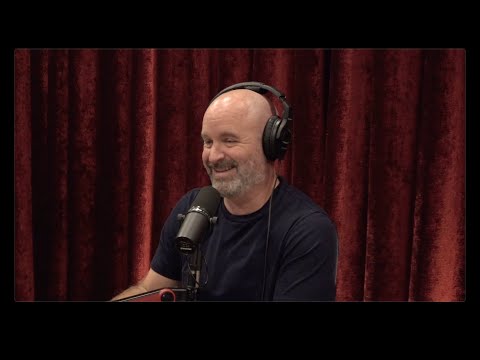
Joe Rogan Experience #2202 - Tom Segura
Narrator, Narrator, Joe Rogan (host), Tom Segura (guest), Narrator, Narrator, Narrator
In this episode of The Joe Rogan Experience, featuring Narrator and Narrator, Joe Rogan Experience #2202 - Tom Segura explores joe Rogan and Tom Segura Tackle Delusion, Death, Politics, and Cars Joe Rogan and Tom Segura move from dark humor and gruesome internet clips into a serious exploration of delusion, mortality, depression, assisted suicide, and how loneliness and online life affect mental health. They pivot into an extended breakdown of the Trump–Harris debate, media manipulation, immigration, voter ID, and how both sides weaponize information and outrage. The conversation then shifts to technology and control—OnStar kill switches, social media listening, Google search manipulation, AI power and money—before indulging in their shared obsessions: extreme cars, war docs, UFC, food, health, and aging bodies.
Joe Rogan and Tom Segura Tackle Delusion, Death, Politics, and Cars
Joe Rogan and Tom Segura move from dark humor and gruesome internet clips into a serious exploration of delusion, mortality, depression, assisted suicide, and how loneliness and online life affect mental health. They pivot into an extended breakdown of the Trump–Harris debate, media manipulation, immigration, voter ID, and how both sides weaponize information and outrage. The conversation then shifts to technology and control—OnStar kill switches, social media listening, Google search manipulation, AI power and money—before indulging in their shared obsessions: extreme cars, war docs, UFC, food, health, and aging bodies.
Throughout, they keep returning to a few core themes: how far human delusion can carry you (for better or worse), how manipulated and polarized the information landscape has become, and how important it is to protect your own mind, health, and agency in a world of addictive tech and engineered outrage.
Key Takeaways
Delusion can be either deadly or lifesaving, depending on context.
Segura recounts a friend diagnosed with stage four lung cancer who was certain he’d beat it; Rogan notes that doctors wrote him off, but his unwavering belief coincided with survival, raising questions about when ‘delusion’ is actually effective determination versus false hope.
Get the full analysis with uListen AI
Loneliness and isolation are major but often invisible risk factors for suicide.
Both discuss friends and colleagues who died by suicide and emphasize how a single caring person showing up—taking you out, making you laugh—can radically change someone’s emotional trajectory, especially for those whose only ‘community’ is online.
Get the full analysis with uListen AI
Assisted suicide policy is expanding faster than public understanding.
They highlight Canada’s rapidly growing medically assisted death program and worry that people with treatable depression or life challenges could be steered toward irreversible decisions instead of support, therapy, or time to recover.
Get the full analysis with uListen AI
Debates are now more about performance and preparation than policy.
Rogan argues Harris outperformed Trump largely because she was better prepped with clean soundbites and emotional framing, while Trump relied on riffing; the takeaway is that modern debates reward media training and team coaching more than substantive policy argument.
Get the full analysis with uListen AI
Information ecosystems are heavily curated, and that changes how people vote.
Referencing researchers like Robert Epstein, Rogan claims Google can nudge casual voters simply by surfacing more positive results for one candidate and negative ones for another, illustrating how search bias and content moderation can quietly sway elections.
Get the full analysis with uListen AI
Emerging tech gives institutions unprecedented power over individuals’ lives.
From OnStar shutting down a moving car to government-controlled digital currencies and social platforms listening for ad targeting, they argue these tools can be justified for safety or convenience but are easily abused by bad actors or corrupt officials.
Get the full analysis with uListen AI
Diet and basic physical maintenance profoundly affect mental clarity and mood.
Segura describes dramatically improved digestion, energy, and focus after months of clean eating and structured training; Rogan brings up creatine’s cognitive benefits for sleep-deprived people and criticizes U. ...
Get the full analysis with uListen AI
Notable Quotes
“Our capacity for delusion is just incredible, and it can serve you well.”
— Tom Segura
“They’re whacking people up there. You’re depressed? Your foot hurts? Come on in.”
— Joe Rogan (on Canada’s assisted suicide expansion)
“You live in this make-believe place online and you’re not having any of the normal human contact that we thrive on.”
— Joe Rogan
“If the same people with the same ideas played fair, we’d have a different thing.”
— Joe Rogan (on party manipulation and democracy)
“It’s not a path to fulfillment, being isolated online. It’s bad for your mental health.”
— Tom Segura
Questions Answered in This Episode
Where is the line between healthy confidence and harmful delusion, and how can someone tell which side they’re on when facing a crisis?
Joe Rogan and Tom Segura move from dark humor and gruesome internet clips into a serious exploration of delusion, mortality, depression, assisted suicide, and how loneliness and online life affect mental health. ...
Get the full analysis with uListen AI
How should modern societies balance compassionate assisted death for the terminally ill with protecting vulnerable people from making irreversible choices in moments of despair?
Throughout, they keep returning to a few core themes: how far human delusion can carry you (for better or worse), how manipulated and polarized the information landscape has become, and how important it is to protect your own mind, health, and agency in a world of addictive tech and engineered outrage.
Get the full analysis with uListen AI
Given the scale of search and social media influence, what concrete safeguards—if any—could realistically prevent tech platforms from nudging elections?
Get the full analysis with uListen AI
Are we underestimating the risks of convenience technologies like smart cars, digital currencies, and always-listening devices when it comes to abuse by governments or corporations?
Get the full analysis with uListen AI
How can individuals practically shift from an isolated, online-centered life to one with more real-world connections and support, especially if they feel they’re starting from zero?
Get the full analysis with uListen AI
Transcript Preview
(drumming) Joe Rogan podcast, check it out.
The Joe Rogan Experience.
Train by day, Joe Rogan podcast by night, all day. (rock music plays) Yeah, I- I- I've watched so many people get their legs broken.
Yeah.
And I, I see it in, like, jujitsu videos all the time, where someone's, like, going for a heel hook-
Uh-huh.
... and then you hear this crack, and then the guy screams in agony. And then everybody's like, "Ugh."
Yeah.
That's horrible.
Yeah. And- And the arm ... There's a million arm wrestling videos.
Oh. I saw a guy and a girl arm wrestling, and the guy broke the girl's arm. I'm like, "What the fuck, man?"
Oh, fuck. I was just like, "How does that ..." 'Cause I- I don't wanna do it ever again, really.
Arm wrestling?
No.
No.
I think it's stupid. But, like, for- for me to get involved in. (laughs) But, like, even when I'm just like, "Well, why is this happening?" And- And there was two, these two, uh, competitors, like pro-arm wrestlers, who were like, "Well, you never- you never wanna get away from your body."
Mm.
So they're like, "Arms break once they're out here."
Mm.
So you always ... They're like, "Keep- keep your- keep your arm in tight."
Mm.
Like, arms don't break when you're here.
Right.
But if- once you get extension, they're like, "That's when-"
It's the dumbest macho thing that we do.
For sure.
Like, guys aren't like, "You wanna arm wrestle, bro?"
I did it with you once. I did it with you in Louisville. Do you remember?
(laughs) No.
It was a horrifying experience. It was, um, it was after a sh- ... We did a show in Louisville at the, uh, club. I think it was tied to a old- like, a UFC.
Oh, okay.
One of those.
Yeah.
It was back in the day. And we went to a- a bar afterwards, and we're shooting pool. Somebody said, "Arm wrestling." I was like ... And you were like, "You wanna do it?" (laughs)
(laughs)
I was like, "Sure." I would- Dude, I couldn't believe how strong you were. I mean, I know you're strong, but I was like ... You're like, "Go," and I was like, "I am going, dude." (laughs) Like, I couldn't get any fucking movement. I was like-
Well, your fucking- that dude that works for you, that was the most ridiculous.
That was hilarious. That was-
D- D- Do you think he just does that because he just wants attention?
No. I- I think ... I mean, there might be a little bit of that, but I really think, that's Enyj, he has this thing. It's probably just, you know, it's- it's- it's part of his wiring. It's probably gotten him somewhere in life, in- in some ways, where he just goes-
Install uListen to search the full transcript and get AI-powered insights
Get Full TranscriptGet more from every podcast
AI summaries, searchable transcripts, and fact-checking. Free forever.
Add to Chrome