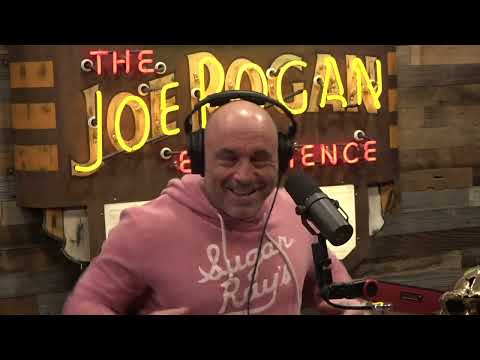
Joe Rogan Experience #1874 - Dave Attell
Dave Attell (guest), Joe Rogan (host), Guest 2 (unidentified friend/producer) (guest), Guest 3 (unidentified friend/producer) (guest), Narrator, Guest 4 (unidentified friend/producer) (guest)
In this episode of The Joe Rogan Experience, featuring Dave Attell and Joe Rogan, Joe Rogan Experience #1874 - Dave Attell explores dave Attell, Rogan Deconstruct Stand-Up, Cancel Culture, and Comedy Clubs Joe Rogan and Dave Attell spend the episode talking shop about stand-up comedy: the evolution of club scenes, how new comics develop today versus the 80s/90s, and Rogan’s new Austin club as a ‘mothership’ for comics.
Dave Attell, Rogan Deconstruct Stand-Up, Cancel Culture, and Comedy Clubs
Joe Rogan and Dave Attell spend the episode talking shop about stand-up comedy: the evolution of club scenes, how new comics develop today versus the 80s/90s, and Rogan’s new Austin club as a ‘mothership’ for comics.
They dive into the changing audiences and cancel-culture sensitivities, Attell’s obsessive joke-writing process, the ethics of not stepping on younger comics’ stage time, and the joy of playing to crowds who truly love jokes.
Along the way they veer into long, darkly funny tangents on crocodile and rat horror, massive guard dogs, psychedelic history, cold plunges, obesity TV, crime waves in big cities, and bizarre news stories.
Underneath the jokes is a recurring theme: comedy as a necessary pressure valve in a tense, chaotic world, and the importance of building spaces where comics can be fearless, work constantly, and be judged only by audiences.
Key Takeaways
Great comedy clubs are built by people who love comedy, not just selling drinks.
Rogan and Attell praise rooms like Cap City, Helium, the Laugh Stop, the Cellar, and Comedy & Magic for being run by owners who prioritize comics, sound, and audiences over food and revenue—Rogan’s Austin club is explicitly modeled on that ethos.
Get the full analysis with uListen AI
Modern scenes give young comics a clearer, faster path—but the grind never changed.
Compared with the 80s/90s, new comics today have more mics, podcasts, and visible paths to headlining, but Attell notes it’s still years of bombing, working day jobs, and stretching 5‑minute sets into 20 before you’re truly a pro.
Get the full analysis with uListen AI
Serious comics obsess over originality and constantly rework material.
Attell describes calling friends with cryptic questions to make sure a joke isn’t stolen, writing ideas out, taping every set, and listening for bad habits or better angles—Rogan similarly writes several days a week and treats stand-up like a craft to practice, not just perform.
Get the full analysis with uListen AI
Audiences have grown more reactive to topics, not jokes—and comics have to navigate it.
They talk about young crowds buffering in silence and some people responding to keywords as activists rather than listeners; both still push edgy material but accept they must weather groans, whimpers, and cultural “choppy seas.”
Get the full analysis with uListen AI
Comedy communities thrive when headliners lift locals and share stages.
Rogan emphasizes giving Austin comics real spots, Kill Tony slots, and club support; Attell admires tours where big names like Bert Kreischer and Chappelle bring multiple comics, creating “event shows” that inspire fans and younger comics.
Get the full analysis with uListen AI
Psychedelics and altered states have deep historical ties to religion and healing.
They discuss LSD, ergot, Eleusinian Mystery wine, and ibogaine for addiction, framing psychedelics as ancient tools for insight and behavior change that were later demonized, and potentially worth revisiting in controlled, medical settings.
Get the full analysis with uListen AI
Urban disorder and permissive policies have real downstream costs.
From New York’s aggressive street psychosis and mini‑bike packs to Portland’s tent cities and smash‑and‑grabs, they argue “hands‑off” approaches harm workers, small businesses, and basic safety, and question why domestic decay is ignored while billions go abroad.
Get the full analysis with uListen AI
Notable Quotes
“When the owner of the club gets it, and it’s not just beer and beverage, you can always tell. It feels different.”
— Joe Rogan
“My crowd is so good. They love jokes, there’s no line, they know I don’t pick sides. They just want the joke.”
— Dave Attell
“Some of us fell apart in this wonderful world of what’s okay to talk about and what’s not. Come on.”
— Joe Rogan
“I don’t want to be up there like, ‘Oh my God, I gotta pay that alimony.’ I’d like to do comedy forever, but I don’t want to have to.”
— Dave Attell
“The only gatekeeper should be the audience—do people like your stuff? Are you funny?”
— Joe Rogan
Questions Answered in This Episode
How has the rise of podcasts and independent clubs really changed who gets to become a successful comic compared to the gatekeeper era?
Joe Rogan and Dave Attell spend the episode talking shop about stand-up comedy: the evolution of club scenes, how new comics develop today versus the 80s/90s, and Rogan’s new Austin club as a ‘mothership’ for comics.
Get the full analysis with uListen AI
Is there a responsible way to reintroduce psychedelics like LSD or ibogaine into mainstream medicine for addiction and trauma without repeating past abuses?
They dive into the changing audiences and cancel-culture sensitivities, Attell’s obsessive joke-writing process, the ethics of not stepping on younger comics’ stage time, and the joy of playing to crowds who truly love jokes.
Get the full analysis with uListen AI
Where should the line be between free expression in stand-up and audiences’ cultural sensitivities—who, if anyone, should enforce it?
Along the way they veer into long, darkly funny tangents on crocodile and rat horror, massive guard dogs, psychedelic history, cold plunges, obesity TV, crime waves in big cities, and bizarre news stories.
Get the full analysis with uListen AI
What specific policies or approaches could realistically improve cities like New York and Portland without simply criminalizing poverty or mental illness?
Underneath the jokes is a recurring theme: comedy as a necessary pressure valve in a tense, chaotic world, and the importance of building spaces where comics can be fearless, work constantly, and be judged only by audiences.
Get the full analysis with uListen AI
If you were designing the ideal comedy club from scratch, what would you prioritize for comics and for audiences that most clubs still get wrong?
Get the full analysis with uListen AI
Transcript Preview
(drumming music) Joe Rogan podcast, check it out. The Joe Rogan Experience.
Train by day, Joe Rogan podcast by night, all day. (rock music) Ladies and gentlemen, David Attell.
Hey, Joe. Thanks for having me on the show.
Good to see you, my brother.
I was telling your guys before you showed up, I was like, "Uh, I'm hoping there's other guests besides me 'cause I don't really think I'm interesting enough to hold the whole show."
We can do it.
You think so?
Yes. All right, I believe in you.
I have, I have zero worries.
(laughs)
I'm glad you brought your straw.
Thank you.
And I'm also- (laughs)
(laughs) I'm also glad you brought your hobo sack. (laughs)
I'll show everybody.
He's a comedy nomad.
That's how you travel, people. (laughs)
That's all he brings, fresh underwear and socks. That's it. Let's go.
Good to be back in Texas.
Good to see you. How was the Cap City? Did you enjoy it?
It was awesome. I mean, you and I back in the day played the old Cap City.
Yeah.
And, uh, that was definitely an iconic club. And this is the, uh, I guess you can say the, um, the reimagining of it.
This is, uh, the, the helium folks who do an amazing job.
Exactly.
Helium folks are great. They-
They really are.
That fucking place in Philly is the shit. The one in Portland is the shit. The other clubs are fucking locked down. They're all solid as a rock.
I totally agree with you. And they put a lot of work into it.
Mm-hmm.
And, uh, let's face it, this town, you know, uh, people will come to a show. They really are great comedy fans, so...
Uh, and I'm, like, so happy that, uh, that Cap City's open too. I want as many clubs open as possible. I think it's sustainable. I think there's a giant comedy audience here. People really love it. They love live performance overall. Like, there's a lot of live music that goes on here, a lot of live comedy.
And, uh-
So we're happy.
Texas, I was gonna say, like, Texas has always been, like, um, you know, on the road, like Houston, Dallas, uh-
Yeah, fun.
... you know, uh, San Antonio. These were always, like, the hardcore, you know, um, comedy clubs. The, uh, definitely where you, like, couldn't wait to get there kind of shows.
Yeah, the fun spots.
Mm-hmm.
I used to love Addison. That fucking improv was the shit.
Awesome.
It still is. Still is the shit.
And my favorite-
Such a great club.
Do you remember, uh, c- um, the com-, uh, what was it called? Uh, in Houston, uh-
Install uListen to search the full transcript and get AI-powered insights
Get Full TranscriptGet more from every podcast
AI summaries, searchable transcripts, and fact-checking. Free forever.
Add to Chrome