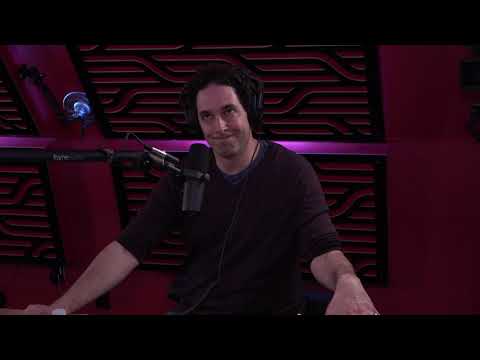
Joe Rogan Experience #1582 - Alex Berenson
Joe Rogan (host), Narrator, Alex Berenson (guest), Narrator
In this episode of The Joe Rogan Experience, featuring Joe Rogan and Narrator, Joe Rogan Experience #1582 - Alex Berenson explores alex Berenson challenges COVID orthodoxy on death counts, masks, vaccines Joe Rogan and Alex Berenson spend the episode critiquing mainstream COVID-19 narratives, arguing that the public health response has been wildly disproportionate to the actual risk, which is heavily concentrated in the very elderly and infirm.
Alex Berenson challenges COVID orthodoxy on death counts, masks, vaccines
Joe Rogan and Alex Berenson spend the episode critiquing mainstream COVID-19 narratives, arguing that the public health response has been wildly disproportionate to the actual risk, which is heavily concentrated in the very elderly and infirm.
They question how deaths are counted, the reliability and settings of PCR tests, the effectiveness of lockdowns and masks, and the way media fear‑mongering and political incentives have shaped public perception.
Berenson is highly skeptical of mass vaccination for younger, healthy people, emphasizing side‑effect profiles of mRNA vaccines and arguing they make the most sense primarily for the very old and medically fragile.
Throughout, they also discuss media bias, tech censorship, and how social and political dynamics—especially anti‑Trump sentiment and institutional groupthink—have constrained open debate about COVID policies.
Key Takeaways
COVID risk is extremely age‑skewed, but policies were universal.
Berenson stresses that mortality is overwhelmingly concentrated in people over 75–80 with multiple comorbidities, yet the response (school closures, broad lockdowns, universal fear messaging) has treated risk as evenly distributed across ages.
Get the full analysis with uListen AI
Death counts and PCR use likely inflate COVID-attributed mortality.
They argue that high PCR cycle thresholds (often 37–40) pick up trace viral fragments, leading to many positives that are not clinically meaningful, and that death attribution rules (e. ...
Get the full analysis with uListen AI
Early ventilator use may have killed patients who could have survived.
Rogan and Berenson recount how, out of fear of aerosolization and staff infection, hospitals aggressively intubated patients early; in hindsight, this likely damaged lungs and contributed to very high mortality among ventilated patients, especially some younger ones.
Get the full analysis with uListen AI
Lockdowns and school closures may be ineffective and deeply harmful.
Berenson contends that lockdowns push people indoors where transmission is highest, devastate small businesses, increase overdoses and mental-health crises, and harm children’s development and education, with little clear evidence that they significantly reduce overall mortality.
Get the full analysis with uListen AI
Evidence for cloth and surgical masks’ impact on community spread is weak.
He distinguishes N95 respirators (potentially useful when properly fitted) from common masks, claims lab and real-world data don’t show strong benefit for protecting the wearer, and says the evidence that ‘my mask protects you’ is at best marginal and heavily theorized.
Get the full analysis with uListen AI
Mass vaccination of low‑risk groups is questioned on risk–benefit grounds.
Berenson notes that mRNA vaccines are new, trials are short, younger people had higher rates of significant side effects (e. ...
Get the full analysis with uListen AI
Media and tech platforms shape the narrative by suppressing dissent.
They argue that outlets like the New York Times and platforms like Amazon/Twitter selectively amplify fear and downplay counter-evidence, often for political and institutional reasons (e. ...
Get the full analysis with uListen AI
Notable Quotes
“COVID is real. It’s killed a lot of people. It is not worthy of the response that we have had to it.”
— Alex Berenson
“Somehow this became: no one can ever get sick and die from COVID. It is wrong that this disease exists, and we have to do everything to stop it, no matter what the consequences.”
— Alex Berenson
“Once we realized it wasn’t the plague… we should have said the idea is going to be not to screw up society.”
— Alex Berenson
“The only people that seem to like the lockdowns are people that are independently wealthy.”
— Joe Rogan
“Science isn’t a thing. It’s a process… Public health people are technicians; their job is to lay out options. It’s the job of the politician to decide.”
— Alex Berenson
Questions Answered in This Episode
How strong is the best available evidence, pro and con, that cloth or surgical masks significantly reduce community spread of COVID in real-world conditions?
Joe Rogan and Alex Berenson spend the episode critiquing mainstream COVID-19 narratives, arguing that the public health response has been wildly disproportionate to the actual risk, which is heavily concentrated in the very elderly and infirm.
Get the full analysis with uListen AI
To what extent are COVID death counts inflated or misclassified due to PCR thresholds, attribution rules, and comorbidities—and how would more conservative definitions change public perception?
They question how deaths are counted, the reliability and settings of PCR tests, the effectiveness of lockdowns and masks, and the way media fear‑mongering and political incentives have shaped public perception.
Get the full analysis with uListen AI
What would a targeted-protection strategy focused on the elderly and nursing homes have looked like in practice, and could it realistically have replaced broad lockdowns?
Berenson is highly skeptical of mass vaccination for younger, healthy people, emphasizing side‑effect profiles of mRNA vaccines and arguing they make the most sense primarily for the very old and medically fragile.
Get the full analysis with uListen AI
How should individuals under 50 weigh the short‑term side effects and unknown long‑term risks of mRNA vaccines against their relatively low personal risk from COVID-19 itself?
Throughout, they also discuss media bias, tech censorship, and how social and political dynamics—especially anti‑Trump sentiment and institutional groupthink—have constrained open debate about COVID policies.
Get the full analysis with uListen AI
What guardrails or new institutions are needed to prevent media groupthink and tech-platform censorship from distorting public understanding during future health crises?
Get the full analysis with uListen AI
Transcript Preview
(drumbeats) Joe Rogan podcast, check it out.
The Joe Rogan Experience.
Train by day, Joe Rogan podcast by night. All day. (instrumental music plays) Andrew Rogan.
What's up, man? How are you? Good to see you.
Um, it's good to see you again, Joe.
Good to see you again, uh, under less hostile circumstances.
(laughs)
I don't think the last one was hostile. Um, I think maybe m- more people expected it to be hostile because you were, uh, not... I wanna n- I wanna say you're anti-cannabis, but I do think that you had a realistic perspective on cannabis. And we've talked about this before-
Mm-hmm. Yes.
... outside, but I think a lot of people that are pro-cannabis, like myself, um, they don't wanna look at the negative aspects of it because they think that it'll harm the chances of it being legalized.
Yep.
And I think that's irresponsible, and I think it's n- it's not honest.
Uh, I mean, I think that's, that's true. And now that it does look, let's be honest, like it's gonna be legal, uh, you know, certainly, you know, every state or, you know, the major states that voted to legalize, like New Jersey and Arizona in the last election, and nationally it looks like it's gonna be legal, it's time for people in the industry, I think, to start being more honest about who this product is for and, you know, and some of the downsides. I hope they do that. I do-
They have to be.
I do-
I think they have to be.
I brought you the paperback-
Oh.
... of Tell Your Children.
Yes, excellent.
Um-
Well, you should, you really should tell your children, you know? Look, and again, this is from, coming from someone who enjoys pot. I like it. I'm a fan.
(laughs)
But I do know it's not for everybody, and I do know people that have gone crazy.
Yes.
Like legitimately gone schizophrenic from marijuana, or maybe had a tendency towards schizophrenia and then smoked a lot of pot or ate a lot of pot and then (finger snaps) the switch went off and they were gone. And I think there's a direct correlation.
Yes.
So I was glad to have that conversation with you, even though a lot of people are, "What? What? You're supporting him?"
(laughs)
"How are you on his side?" I'm like, "Because it's true."
T- just wait til you get, the blowback you get for today, man. (laughs)
Well, let's, let's, uh, establish your position, Alex, on, on, on COVID. What is your position on this?
Sure. So people accuse me of being a COVID denialist or I, you know, I don't think it's real, I don't think anyone dies from it. That's, that's all nonsense, Joe.
Install uListen to search the full transcript and get AI-powered insights
Get Full TranscriptGet more from every podcast
AI summaries, searchable transcripts, and fact-checking. Free forever.
Add to Chrome