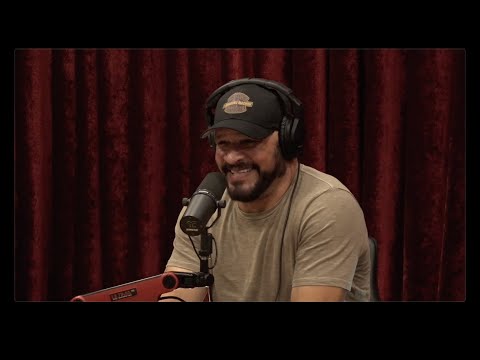
Joe Rogan Experience #2384 - Mark Kerr
Narrator, Joe Rogan (host), Mark Kerr (guest), Narrator, Narrator, Narrator, Narrator, Narrator, Narrator
In this episode of The Joe Rogan Experience, featuring Narrator and Joe Rogan, Joe Rogan Experience #2384 - Mark Kerr explores mark Kerr, The Rock, and the Brutal Evolution of MMA History Joe Rogan and Mark Kerr dive into the new film *The Smashing Machine*, exploring how Dwayne “The Rock” Johnson’s performance captures Kerr’s mannerisms, inner life, and the chaotic authenticity of early MMA and PRIDE.
Mark Kerr, The Rock, and the Brutal Evolution of MMA History
Joe Rogan and Mark Kerr dive into the new film *The Smashing Machine*, exploring how Dwayne “The Rock” Johnson’s performance captures Kerr’s mannerisms, inner life, and the chaotic authenticity of early MMA and PRIDE.
Kerr recounts pivotal moments from his career: the birth of modern MMA, the dominance of elite wrestling, the wild steroid era in Japan, and his near‑fight with Royce Gracie, while Rogan situates those stories in the broader evolution of the UFC.
They discuss legendary fighters (GSP, Jon Jones, Khabib, Usyk, Khamzat, Merab, Pereira, etc.), how training, cardio, and technique have transformed the sport, and why wrestling remains the most decisive base in MMA.
A major thread is Kerr’s openness about addiction, painkillers, alcohol, and identity after fighting—how the original *Smashing Machine* documentary and his recovery journey became a form of therapy and a blueprint for others dealing with shame and substance abuse.
Key Takeaways
Elite wrestling is still the most decisive base in MMA.
Kerr and Rogan repeatedly show how top wrestlers (Khamzat, Merab, Kamaru, Cain, Kurt Angle in wrestling, etc. ...
Get the full analysis with uListen AI
Authentic storytelling in *The Smashing Machine* honors early MMA pioneers.
The filmmakers rebuilt Kerr’s life with meticulous detail—props, sets, fight recreations, even his cauliflower ear—so the movie doesn’t “Hollywood-ize” events the way other sports biopics have, but instead preserves the reality of low pay, chaos, and risk in the early days.
Get the full analysis with uListen AI
The Rock’s performance is a major acting pivot and career risk.
Johnson isolated for 11 weeks, studied old VHS instructionals, adopted Kerr’s walk, speech, and psychology, and took on a raw, non-blockbuster role specifically to prove he can do serious, nuanced acting in a part physically and emotionally tailored to him.
Get the full analysis with uListen AI
The sport’s evolution has been explosive and nonlinear.
From bare-knuckle headbutt UFCs to calf kicks, hyper-specific cardio work, and highly technical strikers and grapplers, MMA from 1994 to 2025 is described as almost unrecognizable, driven by rising pay, better science, and new generations building on pioneers’ mistakes and innovations.
Get the full analysis with uListen AI
Addiction in fighters is often tied to pain, identity, and shame.
Kerr explains how opioids began as pain management, morphed into dependence he didn’t understand (before the opioid crisis was acknowledged), and later shifted to alcohol as he struggled with losing his identity as ‘the fighter’—with shame keeping him silent until the HBO documentary forced honesty.
Get the full analysis with uListen AI
Cardio and intentional training separate greats from everyone else.
Stories about Frank Shamrock’s early heart-rate training, Cain’s “impossible” gas tank, and outliers like Merab, Goggins, and Cam Hanes show that structured, purpose-driven, year-round work (not just talent) is what lets some athletes sustain elite flurries and pressure for entire fights.
Get the full analysis with uListen AI
Psychedelics and new therapies may be crucial for trauma and addiction.
Rogan raises ibogaine’s striking success in breaking addictive pathways for veterans and addicts—contrasting its illegality with legal, highly addictive substances—while Kerr reflects on meditation, Buddhism, and openness to alternative healing that he never would’ve considered in his fighting years.
Get the full analysis with uListen AI
Notable Quotes
“The movie’s not an MMA movie. It’s a movie that happens to be about MMA.”
— Joe Rogan
“They rebuilt my life from 25 years ago so that when DJ got into me, he was actually me.”
— Mark Kerr
“The best definition of a wrestler is: I can hold a grown-ass man where he doesn’t want to be held, for as long as I want, and he can’t do a fucking thing about it.”
— Mark Kerr
“Fighting’s what I did, it’s not who I am.”
— Mark Kerr
“Without guys like you doing it for almost no money, there is no UFC today.”
— Joe Rogan
Questions Answered in This Episode
How does *The Smashing Machine* film change your understanding of what early MMA fighters endured outside the cage?
Joe Rogan and Mark Kerr dive into the new film *The Smashing Machine*, exploring how Dwayne “The Rock” Johnson’s performance captures Kerr’s mannerisms, inner life, and the chaotic authenticity of early MMA and PRIDE.
Get the full analysis with uListen AI
In what ways might today’s fighters still be repeating the same patterns of pain management, identity crisis, and addiction that Kerr describes?
Kerr recounts pivotal moments from his career: the birth of modern MMA, the dominance of elite wrestling, the wild steroid era in Japan, and his near‑fight with Royce Gracie, while Rogan situates those stories in the broader evolution of the UFC.
Get the full analysis with uListen AI
Given the clear dominance of elite wrestlers, how should striking specialists and jiu-jitsu players rethink their training priorities?
They discuss legendary fighters (GSP, Jon Jones, Khabib, Usyk, Khamzat, Merab, Pereira, etc. ...
Get the full analysis with uListen AI
Should combat sports organizations invest significantly more in fighter pay, recovery, and mental health support to improve both performance and long-term outcomes?
A major thread is Kerr’s openness about addiction, painkillers, alcohol, and identity after fighting—how the original *Smashing Machine* documentary and his recovery journey became a form of therapy and a blueprint for others dealing with shame and substance abuse.
Get the full analysis with uListen AI
What would MMA—and fighter careers—look like if therapies like ibogaine or structured psychedelic-assisted treatment became a standard option for dealing with trauma and addiction?
Get the full analysis with uListen AI
Transcript Preview
(drumbeats) Joe Rogan podcast, check it out. The Joe Rogan Experience. (drumbeats)
Train by day, Joe Rogan podcast by night, all day. (rock music) Good. Mark, what's happening?
Joe.
Dude, the movie's fantastic. And I, and I know I told you outside, but I wanted to save it. Uh, when I kind of have a, had a little bit of a prejudice when I went to see the movie. I was like, "Okay, it's gonna be an MMA movie."
Yeah.
Yeah.
But it's not. It's a movie that happens to be about MMA, but it's a great movie.
Oh, I appreciate that.
It's, it's really good, man. It's, it's like, you know, it's v- very gripping, and the performances are fantastic, and the way The Rock did you was nuts.
I, like, I can't explain it. Uh, it, I, I keep using the word surreal, but it doesn't describe it. Um, like I was saying that, uh, my son, when he watched it, and just flipping out, like, talking to me, like on the side, like I was saying, like literally just going, "Dad, Dad, he's got your mannerisms."
(laughs)
"He's got your speech manner." But if you imagine, like I'm, I'm picturing my son, he's in New York when he watched it. Like-
Right.
Uh, and so I'm picturing him in the corner of the lobby of the theater, talking with his back to everybody going, "Oh my God, Dad, like, it's like a doppelganger."
(laughs)
"He's got all of it." You know, like full-blown, like, it was like the, the, the, 'cause a lot of my saying for myself is I'm, uh, I can't see the forest through the trees. I'm in the middle of it. Am I looking at it objectively? Am I really looking at it, or am I seeing something? And to hear my son say, "Oh my gosh, Dad, he nailed it."
Right. No, he-
Unbelievable.
He really did nail it. I, like we were saying in the lobby, like, I didn't know The Rock could act that well.
You know-
But it's really good acting. It's not like blockbuster movie acting, which is, he's great at that, but-
Yep.
... it's, it's a different thing.
It, it, it's compl- it, so with DJ, I kept trying to say to him, "You don't have to do this, dude. Like, you don't have to do this." And he would, he would stop me and he would go, "Yeah, I do. I do."
What do you mean by you don't have to do this? You don't have to, like-
So meaning that, like, he's at a, he's at-
... totally beat me?
He's at a place in his life where he can just keep doing blockbusters and be perfectly fine with it.
Mm-hmm.
There's, there is, uh, uh, I mean, he says it himself, there's always a place for that. There's always gonna be a place for blockbuster movies, and, and for that. But he needed to do something different.
Install uListen to search the full transcript and get AI-powered insights
Get Full TranscriptGet more from every podcast
AI summaries, searchable transcripts, and fact-checking. Free forever.
Add to Chrome