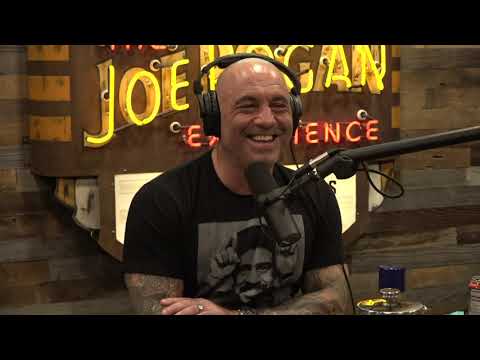
Joe Rogan Experience #1677 - Tim Dillon
Narrator, Narrator, Joe Rogan (host), Tim Dillon (guest), Joe Rogan (host), Narrator, Narrator, Narrator
In this episode of The Joe Rogan Experience, featuring Narrator and Narrator, Joe Rogan Experience #1677 - Tim Dillon explores tim Dillon, Culture Wars, Conspiracies, and Comedy’s New Battlegrounds Explored Joe Rogan and Tim Dillon move from personal addiction stories and cars into a sprawling, darkly funny breakdown of American culture, media, and politics.
Tim Dillon, Culture Wars, Conspiracies, and Comedy’s New Battlegrounds Explored
Joe Rogan and Tim Dillon move from personal addiction stories and cars into a sprawling, darkly funny breakdown of American culture, media, and politics.
They skewer identity politics, neo‑pronouns, transracialism, and corporate “wokeness,” arguing these trends signal cultural decay and create perverse incentives in entertainment and institutions.
A long middle section dives into conspiratorial territory: government manipulation, COINTELPRO, 9/11 anomalies, protest infiltration, social‑media psyops, and UFO disclosure, all framed as examples of systemic narrative control.
They close by dissecting the comedy and entertainment industry, attacking censorship, identity‑based casting, and “safe,” politically driven art, while defending meritocracy, risk‑taking, and independent platforms.
Key Takeaways
Addictive tendencies often migrate from hard drugs to “socially acceptable” habits.
Dillon describes quitting cocaine, pills, and booze but still battling cigarettes, illustrating how the addict mind rationalizes “just one” and reframes relatively smaller vices as harmless, even when they’re hardest to quit.
Get the full analysis with uListen AI
Identity politics is creating internal conflicts even within LGBT communities.
They highlight lesbian festivals being pressured to admit trans women with penises and the decline of lesbian bars, arguing that erasing sex-based boundaries can invalidate same‑sex attraction and generate backlash from gays and lesbians themselves.
Get the full analysis with uListen AI
Extremes of “woke” ideology provide a soft target for manipulation and division.
From transracial claims to neo‑pronouns and “you’re bigoted if you care about genitals,” Rogan and Dillon argue these fringe positions are amplified by institutions and are ripe for exploitation by foreign troll farms and domestic power centers to fracture society.
Get the full analysis with uListen AI
Urban disorder and rising crime are being downplayed or ideologically reframed.
They cite LA and New York real‑estate anecdotes, homicide spikes, and homeless violence, contrasting lived experience with claims that things are safer than past decades, and framing critics as dismissed as right‑wing even when they’re pointing at real harms to the poor.
Get the full analysis with uListen AI
State and corporate actors still aggressively shape narratives and public emotion.
Using examples like FBI stings, possible informant roles in protests and the Capitol riot, CIA cultural operations, and Snowden‑revealed online “cyber magicians,” they argue manipulation didn’t stop in the Cold War—it just moved online and into culture.
Get the full analysis with uListen AI
Censorship and demonetization drive audiences toward independent, risk‑taking creators.
YouTube’s arbitrary demonetization, the Weinstein brothers’ channel issues, and Gina Carano’s firing are presented as evidence that big platforms punish dissent, which in turn increases appetite for podcasts and stand‑up where taboo topics are still addressed.
Get the full analysis with uListen AI
Comedy functions best as a meritocracy, but ideology is eroding that standard.
They argue that stand‑up historically rewards whoever “kills,” regardless of identity, yet hiring and criticism increasingly prioritize optics and politics; they point to pile‑ons against Louis C. ...
Get the full analysis with uListen AI
Notable Quotes
“The addict brain is like a little pod that detaches from the spaceship and goes, ‘All clear, everything’s good, just do one.’”
— Tim Dillon
“If we validated my schizophrenic mother’s ideas instead of medicating her, we’d have a real problem.”
— Tim Dillon
“When you start zooming out you go, ‘Is anything real, or are we just living in a video game that people are arranging pretty much everything?’”
— Joe Rogan
“There’s never a time where censorship is a good thing. Never.”
— Joe Rogan
“All these revolutionaries rely on the most antiquated form of the business: working for multinational conglomerates, while pretending the guy with a podcast is the power.”
— Tim Dillon
Questions Answered in This Episode
How do you distinguish between legitimate social‑justice concerns and performative or weaponized identity politics in media and comedy?
Joe Rogan and Tim Dillon move from personal addiction stories and cars into a sprawling, darkly funny breakdown of American culture, media, and politics.
Get the full analysis with uListen AI
To what extent is it responsible—or irresponsible—for major platforms and institutions to amplify fringe ideas like transracialism or extreme pronoun politics?
They skewer identity politics, neo‑pronouns, transracialism, and corporate “wokeness,” arguing these trends signal cultural decay and create perverse incentives in entertainment and institutions.
Get the full analysis with uListen AI
Where is the line between healthy skepticism of state power (e.g., COINTELPRO, psyops) and falling into counterproductive conspiratorial thinking?
A long middle section dives into conspiratorial territory: government manipulation, COINTELPRO, 9/11 anomalies, protest infiltration, social‑media psyops, and UFO disclosure, all framed as examples of systemic narrative control.
Get the full analysis with uListen AI
Is it possible to preserve a true meritocracy in comedy and entertainment while also expanding opportunities for underrepresented groups without diluting standards?
They close by dissecting the comedy and entertainment industry, attacking censorship, identity‑based casting, and “safe,” politically driven art, while defending meritocracy, risk‑taking, and independent platforms.
Get the full analysis with uListen AI
How should cities and policymakers balance compassion for the homeless and mentally ill with public safety as urban crime and disorder rise?
Get the full analysis with uListen AI
Transcript Preview
(drum roll) Joe Rogan podcast, check it out.
The Joe Rogan Experience.
Train by day, Joe Rogan podcast by night. All day. (instrumental music plays) How you doing?
How are you?
I'm wonderful. How are you?
Thank you for having me.
I didn't know you have no caffeine.
No caffeine, uh, for years.
How many years?
About two.
What is that like?
Um, you sleep better.
That's what I hear.
Yeah. I was drinking coffee in the morning and then having to... I would drink a cup at, like, 4:00. And I would drink a, a cup at 4:00. That would keep me up till 3:00 AM every night.
Mm.
Yeah. So I had to stop, 'cause I, I'm an addict. I have addictive personality, and anything can become habitual.
Yeah.
So I had to be careful.
I think I'm an addict too.
Well, you control it better than most.
Yeah, but it's the same, it's the same thing, like-
You are the, you would be the definition of a high-functioning addict.
This has 300 milligrams of caffeine.
Now, what does that do?
(laughs)
A- when you drink that, how do you feel?
Sleep like a baby.
Really?
I could go to sleep under this table. (laughs)
Interesting. (laughs)
(laughs)
That's... 300 millile- What does a regular cup of coffee have?
That's not even 100, I don't believe.
Okay.
I think if you go to Starbucks and get one of them whammy-jammy 20-ouncers-
Yeah.
... I think that's a couple hundred milligrams, right? Didn't we... We've done this before, right? It's 225, I wanna say.
225. Starbucks is extraordinarily high in caffeine.
...
95?
... eight, eight-ounce cup, which is very small.
Oh. Well, eight-ounce. But 20 ounces is a venti, right?
It is, yeah. 20-ounce. Yeah.
So. Maybe a little more.
Yep, yep, yep.
Yeah. It's in the range. So-
I loved it. I, I started drinking coffee when I, I think my dad got me my first... I wanted to try a latte. We were in the Hamptons, I was, like, nine, and he said, "Yeah, try it." And I started drinking coffee in my teens, and I kept drinking it throughout my 20s, and then I had to get rid of it. But I loved it. Nothing is better in the morning than coffee and a cigarette. And you got rid of both of them. And then I s- went back. I go, with cigarettes, I go on and off, very bad. How you at right now? You on or off?
Now is on.
You not on?
But I-
You want a cigar?
I don't want a cigar, unfortunately.
You don't like cigars?
I don't like cigars.
Install uListen to search the full transcript and get AI-powered insights
Get Full TranscriptGet more from every podcast
AI summaries, searchable transcripts, and fact-checking. Free forever.
Add to Chrome