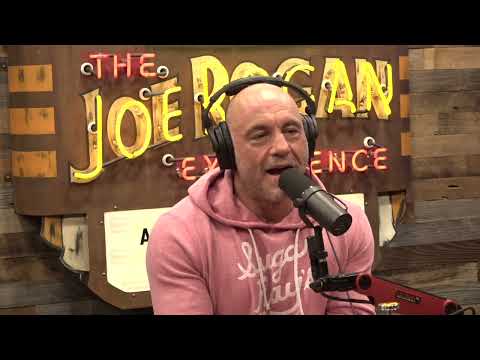
Joe Rogan Experience #2101 - Bret Weinstein
Narrator, Bret Weinstein (guest), Joe Rogan (host), Narrator, Narrator
In this episode of The Joe Rogan Experience, featuring Narrator and Bret Weinstein, Joe Rogan Experience #2101 - Bret Weinstein explores rogan and Weinstein dissect propaganda, power, pandemics, and open borders Joe Rogan and Bret Weinstein discuss how modern propaganda, meme warfare, and media capture shape public opinion, using the Super Bowl, political memes, and satire outlets like The Onion and Babylon Bee as entry points. They argue that Western institutions—including corporate media, social platforms, public health agencies, and global bodies like the WHO—have been captured by unaccountable elites more focused on power and control than truth or public welfare.
Rogan and Weinstein dissect propaganda, power, pandemics, and open borders
Joe Rogan and Bret Weinstein discuss how modern propaganda, meme warfare, and media capture shape public opinion, using the Super Bowl, political memes, and satire outlets like The Onion and Babylon Bee as entry points. They argue that Western institutions—including corporate media, social platforms, public health agencies, and global bodies like the WHO—have been captured by unaccountable elites more focused on power and control than truth or public welfare.
A large section unpacks COVID: censorship, the Twitter Files, the redefinition of ‘misinformation’ into ‘malinformation,’ the safety and purpose of mRNA vaccines, the suppression of cheap treatments like ivermectin, and how the crisis allegedly normalized a risky gene-therapy platform for massive future profits. They also explore how censorship and algorithmic manipulation distort discourse, while podcasting and platforms like X create new spaces for authentic conversation and independent journalism.
The conversation broadens into monetary policy, asset ownership, digital currencies, climate and environmental regulation, and the fragility of food and energy systems—arguing these are being reshaped to centralize control, citing farmer protests in Europe and changing ownership rules for stocks as examples.
Finally, they examine mass migration at the U.S. southern border—especially flows through the Darién Gap and a distinct stream of Chinese military‑aged men—and speculate on potential strategic motives, including remaking the electorate and even reshaping the U.S. military. They close by debating 2024 politics, the dangers of a cognitively impaired president, and why Bret sees RFK Jr. as the best hope to dislodge what he calls a captured, anti‑democratic cabal.
Key Takeaways
Meme culture exposes who actually understands reality and can communicate it.
Weinstein and Rogan argue that the ‘woke’/institutional left struggles with memes because effective satire depends on acknowledging uncomfortable truths; when an ideology requires denying obvious realities, its jokes and memes fall flat, ceding cultural ground to irreverent outlets like Babylon Bee.
Get the full analysis with uListen AI
Censorship and ‘malinformation’ frameworks are being used to suppress true but inconvenient facts.
They cite the Twitter Files, COVID reporting, and government requests to throttle factual Tucker Carlson content as examples of a shift from policing falsehoods to suppressing accurate information that undermines official narratives, reframed as ‘malinformation.’
Get the full analysis with uListen AI
The COVID crisis likely served to normalize a highly profitable but inherently risky mRNA platform.
Weinstein contends that beyond vaccine revenues, the larger play was to bypass normal safety testing and public skepticism so mRNA could become a generic delivery platform for countless future ‘vaccines’ and gene therapies, despite design flaws like non‑targeted lipid nanoparticles and resultant organ damage risks.
Get the full analysis with uListen AI
Cheap, generic treatments like ivermectin threaten both profit models and fear‑based compliance.
They argue that if ivermectin and similar drugs had been freely used and studied without sabotage, COVID would have become a much less frightening disease, undermining emergency authorizations and mass uptake of novel vaccines; the intensity of the campaign against ivermectin is presented as evidence of this threat.
Get the full analysis with uListen AI
Key systems—money, food, energy, and information—are being restructured around control rather than profit alone.
From European fertilizer limits and cow culls to legal changes in stock ownership and the push for central bank digital currencies, Weinstein interprets these moves as steps toward making populations more dependent and controllable during future crises, rather than primarily optimizing for economic efficiency.
Get the full analysis with uListen AI
Mass migration streams may serve multiple strategic purposes, including reshaping electorates and military composition.
Based on his trip to Panama, Weinstein distinguishes between economically motivated migrants and unusually homogeneous groups of Chinese military‑age men who refuse to talk—then connects this to U. ...
Get the full analysis with uListen AI
Open, long‑form conversations and independent journalism are now critical counterweights to institutional capture.
They see podcasting, X/Twitter under Musk, and reporters like Matt Taibbi, Glenn Greenwald, and Tucker Carlson (post‑Fox) as emergent ‘parallel institutions’ that can surface suppressed stories and restore some accountability, provided at least one major platform remains meaningfully uncensored.
Get the full analysis with uListen AI
Notable Quotes
“We are under the misapprehension that the game is about money. The game is still about power and control.”
— Bret Weinstein
“Just because they’re using it to manipulate us doesn’t mean there’s not some underlying truth there.”
— Joe Rogan
“COVID was not a major emergency—or it wouldn’t have been—if medicine had been allowed to function normally.”
— Bret Weinstein
“There’s a limit to how bad advice can get as a result of stupidity, and what happened during COVID exceeds that limit.”
— Bret Weinstein
“Any day that Joe Biden is in that office, and the call might come over the phone—‘what are you going to do, Mr. President?’—we can’t have that.”
— Bret Weinstein
Questions Answered in This Episode
How can we distinguish between legitimate public‑health caution and weaponized ‘malinformation’ frameworks designed to silence dissent?
Joe Rogan and Bret Weinstein discuss how modern propaganda, meme warfare, and media capture shape public opinion, using the Super Bowl, political memes, and satire outlets like The Onion and Babylon Bee as entry points. ...
Get the full analysis with uListen AI
If Weinstein is right about mRNA as a fundamentally unsafe platform, what kind of regulatory and political changes would be needed to halt or reform its use?
A large section unpacks COVID: censorship, the Twitter Files, the redefinition of ‘misinformation’ into ‘malinformation,’ the safety and purpose of mRNA vaccines, the suppression of cheap treatments like ivermectin, and how the crisis allegedly normalized a risky gene-therapy platform for massive future profits. ...
Get the full analysis with uListen AI
To what extent are farmer protests, climate policies, and food‑system changes driven by sincere environmental concerns versus centralized control agendas?
The conversation broadens into monetary policy, asset ownership, digital currencies, climate and environmental regulation, and the fragility of food and energy systems—arguing these are being reshaped to centralize control, citing farmer protests in Europe and changing ownership rules for stocks as examples.
Get the full analysis with uListen AI
What concrete evidence would validate—or falsify—the idea that certain migration patterns (e.g., Chinese military‑aged men) are part of a coordinated strategic plan?
Finally, they examine mass migration at the U. ...
Get the full analysis with uListen AI
How can citizens rebuild trustworthy institutions of journalism and science when legacy organizations appear captured, yet alternative platforms are also vulnerable to manipulation?
Get the full analysis with uListen AI
Transcript Preview
(drumbeats) Joe Rogan podcast, check it out.
The Joe Rogan Experience.
Train by day, Joe Rogan podcast by night. All day. (instrumental music plays) Very funny text you sent me the other day. You said, "I hope we have something to talk about." (laughs)
Well, you know, the, the fact is, the world's gotten kind of calm, so...
(laughs)
I was hoping, uh, I looked out the window of the hotel this morning, thinking the weather might help us. No, boring as can be.
It's beautiful, birds chirping, while who knows what lies on the horizon. Um, I did not watch the Super Bowl, but I got a ton of messages from people that watched it that are like, "What the fuck is going on?" Like, the Super Bowl was a gigantic propaganda camp- campaign, and there's Pfizer ads and weird woke commercials, and...
It was, it was bizarre. Uh, I did watch it, you know, I had nothing else to do and I probably wouldn't have watched it otherwise, but, but I did watch it and it was like some running inside joke. You had to know who these people were in order to even just be with the flow. I mean, obviously the game is what it is, but all of the stuff surrounding it was like, you're either embedded in this culture or it's kind of a head-scratcher.
I did not see any of it, so I don't, I wasn't watching the Super Bowl last night. I was busy, so I don't know what happened.
Uh, i- well, let's put it this way, I'm not a football aficionado by any stretch, but it was a pretty exciting game. I mean, it came down to the last seconds of overtime and, uh, you know, it was a hell of a comeback, so...
There are a ton of conspiracies about the way it was officiated, and that, the, the fix was in with Travis Kelce being sponsored by Pfizer, and Taylor Swift, and Taylor Swift's music catalog being owned by some mega-corporation that has shady ties. (laughs)
Well, I have to say, I was watching it and I, you know, I didn't have a dog in the fight. I wasn't really rooting for either team. I was just trying to get the sense of, uh, you know, what, what the game was like, um, but I did find myself, in the end, rooting against Taylor Swift.
(laughs)
And I...
This is, uh, the Biden thing that they posted.
After his bedtime.
"Just like we drew it up." And it's Biden with these, you know, red robot eyes. Why would they do that? Why, why, just why would they make that? Like, that, just that alone, like, what are you saying? Like, what are you doing? Like, imagine that's the president of the United States. Just, I want you to imagine Ronald Reagan if, if social media was alive, posting a photograph like that. Or Bill Clinton.
Install uListen to search the full transcript and get AI-powered insights
Get Full TranscriptGet more from every podcast
AI summaries, searchable transcripts, and fact-checking. Free forever.
Add to Chrome