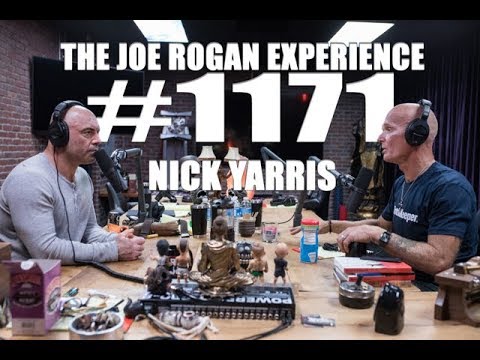
Joe Rogan Experience #1171 - Nick Yarris
Joe Rogan (host), Nick Yarris (guest)
In this episode of The Joe Rogan Experience, featuring Joe Rogan and Nick Yarris, Joe Rogan Experience #1171 - Nick Yarris explores death Row Survivor Turns Trauma Into Radical Compassion and Purpose Nick Yarris recounts being wrongfully convicted of rape and murder at 20, spending 22 years on death row, enduring extreme violence, isolation, and systemic corruption before DNA evidence finally exonerated him in 2003.
Death Row Survivor Turns Trauma Into Radical Compassion and Purpose
Nick Yarris recounts being wrongfully convicted of rape and murder at 20, spending 22 years on death row, enduring extreme violence, isolation, and systemic corruption before DNA evidence finally exonerated him in 2003.
He describes how severe childhood trauma, aphasia, addiction, and a coerced false story spiraled into a fabricated capital case, a brutal prison escape episode, and years of torture-like conditions in supermax facilities.
In prison, Yarris deliberately rebuilt himself: teaching himself to speak and write, studying thousands of books and world religions, embracing kindness, and using what he calls neuroplasticity and meticulous politeness to heal his mind and character.
Post-release, he wrestles with homelessness, exploitation in the media business, the sudden death of his infant daughter, and online hate, yet remains focused on helping others through public speaking, writing, and inspiring people not to give up on themselves.
Key Takeaways
Radical self-education can rewire a traumatized mind.
Yarris used solitary confinement to teach himself new vocabulary, practice articulation, and read over 9,000 books, effectively using what he later learned was neuroplasticity to overcome aphasia, build confidence, and become a powerful speaker and writer.
Get the full analysis with uListen AI
Not taking suffering personally can prevent bitterness from taking over.
He consciously chose not to see his torture and wrongful conviction as a unique personal attack, but as part of a wider systemic injustice shared with millions of prisoners, which helped him avoid being consumed by hatred and vengeance.
Get the full analysis with uListen AI
Meticulous politeness and kindness create an internal reward system.
On his mother’s advice, he committed to always saying “yes, ma’am,” “yes, sir,” and “thank you,” discovering that consistent respect for others and himself generated a positive feedback loop that improved his self-worth and emotional stability.
Get the full analysis with uListen AI
Telling the truth about your story can literally save lives.
Yarris regularly receives messages from people saying his film or talks stopped them from killing themselves, illustrating how honest, vulnerable storytelling about trauma and endurance can give others enough perspective and hope to keep going.
Get the full analysis with uListen AI
Support others even when it costs you opportunities.
He repeatedly diverted media and legal attention from himself to other prisoners like Walter Ogrod, sacrificing potential exposure and income to fight for men he believes are innocent, demonstrating a values-first approach to advocacy.
Get the full analysis with uListen AI
Community and meaningful connection are essential antidotes to despair.
Both Yarris and Rogan emphasize that humans are meant to be in community; Yarris’ healing accelerates when he builds friendships, family life, and educational work, while isolation—whether in a cell or online—intensifies suffering.
Get the full analysis with uListen AI
Online hate is not a reliable measure of your worth or impact.
Yarris struggles with GoFundMe backlash and stalkers, but Rogan frames this as a predictable byproduct of reaching large audiences; focusing on those you help and refusing to internalize anonymous cruelty is critical to staying on mission.
Get the full analysis with uListen AI
Notable Quotes
“I'm harder than life and I'm kinder than love. Secretly, I'm a saint. I never hurt no one.”
— Nick Yarris
“Either be a bitter pill and get sucked dry by all the misery around me, or get my shit right and start loving myself.”
— Nick Yarris
“Every day of my life, someone writes me and tells me they didn’t kill themselves today.”
— Nick Yarris
“You’re not failed. You were in jail for 22 years on death row. There’s not a whole lot of people who get through that experience and can tie their own fucking shoes after they’re done.”
— Joe Rogan
“I don’t take life personally, but I take love personally.”
— Nick Yarris
Questions Answered in This Episode
How many other people like Nick Yarris might still be sitting on death row or in supermax units for crimes they didn’t commit, and what systemic changes would most effectively prevent this?
Nick Yarris recounts being wrongfully convicted of rape and murder at 20, spending 22 years on death row, enduring extreme violence, isolation, and systemic corruption before DNA evidence finally exonerated him in 2003.
Get the full analysis with uListen AI
What practical steps can someone with deep trauma take to begin using “meticulous politeness” and neuroplasticity to rebuild their sense of self the way Yarris did?
He describes how severe childhood trauma, aphasia, addiction, and a coerced false story spiraled into a fabricated capital case, a brutal prison escape episode, and years of torture-like conditions in supermax facilities.
Get the full analysis with uListen AI
How should media producers and filmmakers be held accountable when they profit off wrongful-conviction stories while leaving the subject in financial precarity?
In prison, Yarris deliberately rebuilt himself: teaching himself to speak and write, studying thousands of books and world religions, embracing kindness, and using what he calls neuroplasticity and meticulous politeness to heal his mind and character.
Get the full analysis with uListen AI
In an era of pervasive social media hostility, how can public figures like Yarris protect their mental health while still using these platforms to reach and help vulnerable people?
Post-release, he wrestles with homelessness, exploitation in the media business, the sudden death of his infant daughter, and online hate, yet remains focused on helping others through public speaking, writing, and inspiring people not to give up on themselves.
Get the full analysis with uListen AI
What responsibilities do we as a society have to exonerated people after their release—financially, psychologically, and in terms of clearing their records and restoring their full rights?
Get the full analysis with uListen AI
Transcript Preview
Three, two, one. Stir it up, Nick. We're live.
Hello, everyone.
Hello, everyone.
(laughs)
Put the, uh, ear cups on and cheers, sir.
Ah man, thank you, Joe.
Thanks for being here, man.
Yeah. Thank you for bringing me out here, man. I know we meant to do this before but I hope now with all this good energy between us, we can do this properly for your audience.
Yeah, yeah. For sure.
Yeah.
Listen, man. To say that you've had a crazy experience in this life is one of the most understated things a person could ever say. I mean, where do we begin, right? Let's... Tell everybody your story. So, you were wrongfully committed of murder. You spent 22 years on death row before you were exonerated by DNA evidence.
Hello, everyone.
(laughs)
My name is Nick Harris and I was, as Joe said, convicted and sentenced to die for a rape and murder I didn't commit at the age of 21. In 1981, a woman named, um, Mrs. Craig was murdered in Delaware. I had never met the woman. I was in prison on unrelated charges and I stupidly made up a story to try and get out of those charges. The police soon feel- realized that I was a liar and they fabricated the charges around me then. So, it's ironic then in a few days you're going to Upper Darby, Pennsylvania and-
Yeah.
... that's where the murder happened really, basically. And Linda May Craig was leaving her job at 4:05 PM on December 15th, 1981. She's going home. She gets abducted. I don't know any of this, but I tried in desperations to get out of a lie that this officer put on me for... I, I got pulled over in a stolen car. The cop beats me up. He puts charges on me. I'm facing life imprisonment and I'm a junkie because all of my life I was destroyed by what happened to me at the age of seven. I had my head beaten in by a man with a rock in his hand after he sexually assaulted me and I did all the stupid things that people can do in the aftermath. I kept it a secret and I let it foster all the anger in me. I became very aggressive as a child and I ended up in trouble all the time. And m- uh, when I was in prison on these unrelated charges to the murder, I stupidly fell in them to that mindset of desperation of trying to get out of it. So, the police put a prisoner in the cell next to me. He said I confessed to him. I was given a three-day trial. I was sentenced to death and put on death row and then stupidly, I escaped from prison in 1985 and end up on the FBI's Most Wanted List. How did you get out?
Install uListen to search the full transcript and get AI-powered insights
Get Full TranscriptGet more from every podcast
AI summaries, searchable transcripts, and fact-checking. Free forever.
Add to Chrome