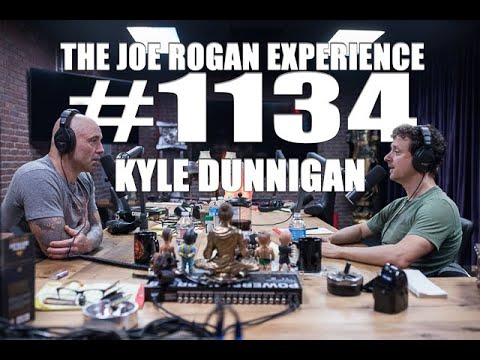
Joe Rogan Experience #1134 - Kyle Dunnigan
Joe Rogan (host), Kyle Dunnigan (guest), Jamie Vernon (guest), Narrator, Narrator, Narrator, Narrator, Narrator
In this episode of The Joe Rogan Experience, featuring Joe Rogan and Kyle Dunnigan, Joe Rogan Experience #1134 - Kyle Dunnigan explores comedian Kyle Dunnigan Escapes TV Writer Trap With Viral Impressions Joe Rogan and Kyle Dunnigan discuss Dunnigan’s mid‑life crisis decision to quit steady TV writing work and go all‑in on making Instagram face‑swap sketches, which rapidly built him a large fanbase and touring career.
Comedian Kyle Dunnigan Escapes TV Writer Trap With Viral Impressions
Joe Rogan and Kyle Dunnigan discuss Dunnigan’s mid‑life crisis decision to quit steady TV writing work and go all‑in on making Instagram face‑swap sketches, which rapidly built him a large fanbase and touring career.
They dive into the mechanics and time investment behind his viral character videos (Caitlyn Jenner, Trump, Kardashians, Kanye, etc.), and how social media has become his de facto “show” and marketing engine.
The conversation ranges through the brutal realities of show business—auditions, failed pilots, corporate gigs, aging comics stuck in writers’ rooms—and contrasts that with new, independent paths via podcasts and social platforms.
Along the way they riff on culture and politics (Caitlyn Jenner, gay marriage, Trump, Tom Arnold, religion), sex and relationships, aging, mental health, and why stand‑up and content creation now demand both creative and business savvy.
Key Takeaways
Owning your platform can rescue your career from the TV writing trap.
Dunnigan left a secure writing job, despite panic and loss of benefits, to make free Instagram sketches; that autonomy quickly translated into hundreds of thousands of followers and theater ticket sales instead of anonymous writers’ room work.
Get the full analysis with uListen AI
Short, tightly edited, character-driven content is ideal for social media virality.
He treats his Instagram like a curated show, spending many hours syncing multi‑character face‑swap bits and aggressively trimming out “fluff,” recognizing that online audiences have zero patience for slow setups.
Get the full analysis with uListen AI
Creative success now often requires business and tech literacy.
Beyond jokes, Dunnigan has to handle subscriptions, phone plans, Tesla waitlists, monetization (Patreon, product placement), and branding (usernames, consistent format), underscoring that modern comics must think like entrepreneurs.
Get the full analysis with uListen AI
Traditional showbiz paths are fragile and frequently absurd.
Stories about a Jamie Foxx sketch pilot sabotaged by non‑writers, a Pizza Hut campaign killed by 9/11, and humiliating auditions (Snoopy on Broadway, sitcom read‑through firing) illustrate how arbitrary and risky relying on networks and ads can be.
Get the full analysis with uListen AI
Building a direct audience changes the live performance experience.
Dunnigan notes that recent shows in places like San Francisco feel dramatically better because crowds already know his characters and sensibility from Instagram, allowing deeper connection and less “proving himself” on stage.
Get the full analysis with uListen AI
Comedy culture has shifted from competitive to collaborative.
Rogan points out that with podcasts, YouTube, and social platforms, top comics now regularly boost each other—reposting clips, trading podcast appearances—because attention is no longer bottlenecked through a few late‑night shows.
Get the full analysis with uListen AI
Personal choices about family, aging, and mental health shape creative paths.
They candidly discuss night terrors, fear of dying as an unknown comic, indecision about having kids, suicide in comedy, and how having children softens one’s view of other people—context that underpins many career and life decisions.
Get the full analysis with uListen AI
Notable Quotes
““Let me lose my health insurance and make videos for free on Instagram.””
— Kyle Dunnigan
““You have only so much creative energy. If you’re giving it to someone else, you’re done.””
— Joe Rogan
““I treat [Instagram] like a show.””
— Kyle Dunnigan
““We were down to like 70,000 people. If we weren’t pervs, this species wouldn’t be here.””
— Kyle Dunnigan
““You won a huge one‑in‑a‑trillion lottery to be born… and then to be born in the US at this time.””
— Joe Rogan
Questions Answered in This Episode
How does Kyle balance spending “inordinate” time on free Instagram content with the need to monetize and build long-term financial stability?
Joe Rogan and Kyle Dunnigan discuss Dunnigan’s mid‑life crisis decision to quit steady TV writing work and go all‑in on making Instagram face‑swap sketches, which rapidly built him a large fanbase and touring career.
Get the full analysis with uListen AI
In what ways does direct fan connection via Instagram change the type of material he writes compared to writing for network TV or sketch shows?
They dive into the mechanics and time investment behind his viral character videos (Caitlyn Jenner, Trump, Kardashians, Kanye, etc. ...
Get the full analysis with uListen AI
What does Dunnigan’s story say about the future of traditional TV comedy writing versus independent digital creation?
The conversation ranges through the brutal realities of show business—auditions, failed pilots, corporate gigs, aging comics stuck in writers’ rooms—and contrasts that with new, independent paths via podcasts and social platforms.
Get the full analysis with uListen AI
How should comedians navigate satire of sensitive topics (like trans issues or mental health) while still being honest and fearless?
Along the way they riff on culture and politics (Caitlyn Jenner, gay marriage, Trump, Tom Arnold, religion), sex and relationships, aging, mental health, and why stand‑up and content creation now demand both creative and business savvy.
Get the full analysis with uListen AI
Given Rogan’s point about kids altering your empathy and worldview, how might having children change the kind of comedy Dunnigan creates?
Get the full analysis with uListen AI
Transcript Preview
(ticking sound) Four, three, two, one. Kyle Dunnigan, ladies and gentlemen.
That's right, baby.
Uh, headphones or no headphones? How are you gonna do this?
Oh, sure. Headphones.
Grab them-
Sorry.
... right there. Be a Goddamn professional, sir.
Yeah, baby.
Yeah. That, uh, wh- where'd you get that-
Yeah.
... "yeah, baby"?
Yeah, yeah.
Why? (laughs)
Well, I just noticed she, like ... She answers herself. She's like, "So I went to the store-"
I like that you called her a she.
Yeah, yeah.
I like that.
Oh, I'm very politically correct.
Yeah.
But she'll be like, "Yeah, so I went and I bought some Jimmy Choos, yeah, yeah."
(laughs)
"And I called my sister, yeah." And so, she, like ... I think she spends a lot of time alone maybe, and she's-
Yeah. Crazy.
... answering herself.
What is going on with her voice? 'Cause it, she didn't have the voice when she was Bruce. It's a different voice.
Is it? I thought it was, like, pretty similar. It's like ... What's different?
Hmm.
It's a little higher or something?
It's, like, numb. Like, her face is numb.
Right. Oh, her face.
Like she had a hard time over her face.
"Yeah, baby."
(laughs)
"Yeah, yeah. Well, Bruce was..."
(coughs)
I thought she was ... I wa- ... Did you, did you see her show, I Am Kate?
(smacks lips) No.
She had, like, a reality show.
Yeah.
Which bombed. I mean, how-
Did it?
(laughs) How much of a boring person do you have to be when ... I mean, how interesting is, like, an ex-Olympic athlete turns into a woman-
Yeah.
... and you're so boring still no one wants to see that show? (exhales)
Yeah, I think-
"Yeah, baby."
... she needed a better producer.
I guess.
Seems like you could put her in interesting situations and that show could go on forever.
No, she's, she's boring. Like, I watched it. I tried to watch and it was boring.
God, I feel like there's s- I just feel like they've missed the formula. Like, that is a fascinating situation.
How can that show-
Someone who waits until they're 60 years old and then becomes a man.
Yeah, how could that show not do well?
How could it?
I think what happened was she wasn't open about what her transition. It wasn't about that.
Oh.
She didn't really talk about-
You know, she-
... what was interesting.
... she doesn't believe in gay marriage.
That ...
(laughs)
That's when I l- ... Like, I was on her side and then, like, "Yeah, she's a-"
Install uListen to search the full transcript and get AI-powered insights
Get Full TranscriptGet more from every podcast
AI summaries, searchable transcripts, and fact-checking. Free forever.
Add to Chrome