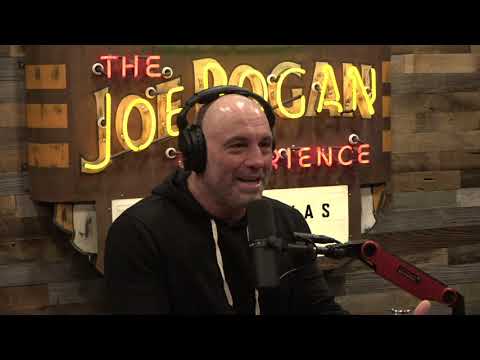
Joe Rogan Experience #1767 - James Lindsay
Narrator, Narrator, Joe Rogan (host), James Lindsay (guest), Narrator, Narrator
In this episode of The Joe Rogan Experience, featuring Narrator and Narrator, Joe Rogan Experience #1767 - James Lindsay explores rogan, Lindsay dissect ‘woke Marxism,’ COVID power, and media decay Joe Rogan and James Lindsay spend the episode arguing that modern ‘wokeness’—especially critical race and gender theories—is a rebranded form of Marxism used to gain institutional power by labeling opponents racist or extremist. They connect this to COVID policies, ESG investing, the World Economic Forum, and media narratives, claiming elites exploit crises like the pandemic to centralize control economically and culturally. They criticize government overreach, FBI provocations, censorship by tech platforms, and the erosion of trust in institutions like CNN, academia, and public health authorities. Throughout, they frame independent media, open debate, and parental pushback in schools as the main counterforce to what they see as a creeping soft totalitarianism.
Rogan, Lindsay dissect ‘woke Marxism,’ COVID power, and media decay
Joe Rogan and James Lindsay spend the episode arguing that modern ‘wokeness’—especially critical race and gender theories—is a rebranded form of Marxism used to gain institutional power by labeling opponents racist or extremist. They connect this to COVID policies, ESG investing, the World Economic Forum, and media narratives, claiming elites exploit crises like the pandemic to centralize control economically and culturally. They criticize government overreach, FBI provocations, censorship by tech platforms, and the erosion of trust in institutions like CNN, academia, and public health authorities. Throughout, they frame independent media, open debate, and parental pushback in schools as the main counterforce to what they see as a creeping soft totalitarianism.
Key Takeaways
Lindsay frames critical race theory and queer theory as updated Marxism aimed at seizing cultural power.
He argues these theories swap economic class for identity categories (race, gender, sexuality) but keep the same revolutionary logic: society is structurally oppressive, and only their ‘critical’ lens can reveal and dismantle it.
Get the full analysis with uListen AI
Labeling opponents ‘racist,’ ‘alt-right,’ or ‘extremist’ is portrayed as a deliberate control tactic.
They argue that calling any competing framework racist (or fascist) is how activists and institutions monopolize discourse and policy—what Lindsay summarizes as ‘calling everything you want to control racist until you control it.’
Get the full analysis with uListen AI
They see COVID as a pretext for centralizing power, not primarily as a public-health project.
Lindsay cites Klaus Schwab’s ‘Great Reset’ and ESG frameworks as evidence that elites used the pandemic as a ‘window of opportunity’ to fuse state and corporate power via public–private partnerships and behavior-scoring systems.
Get the full analysis with uListen AI
Institutional trust is collapsing because media and government are visibly inconsistent and partisan.
Rogan and Lindsay argue that shifting COVID narratives, selective coverage (e. ...
Get the full analysis with uListen AI
They claim censorship of ‘misinformation’ backfires and strengthens bad ideas by driving them underground.
Lindsay says misinformation is best defeated by open scrutiny; when platforms and gatekeepers suppress controversial views (e. ...
Get the full analysis with uListen AI
Schools are seen as the primary battleground for long-term cultural and political control.
Lindsay traces radical education theory from the 1960s to today’s teacher training, arguing that sexualization, critical race content, and ‘anti-parent’ attitudes are designed to detach children from family and tradition, making them more malleable to ideological grooming.
Get the full analysis with uListen AI
They predict a rough but ultimately optimistic transition toward a more decentralized ‘marketplace of ideas.’
Lindsay believes social media and independent content are eroding the old ‘aristocracy of experts,’ and if citizens push back in elections and local institutions, the current wave of illiberalism will burn out over the next decade or so.
Get the full analysis with uListen AI
They argue domestic-terror and extremism definitions are broad enough to weaponize against dissent.
By highlighting vague DHS/FBI language on ‘domestic violent extremists,’ they worry that questioning government or school policies could be reframed as a security threat, justifying surveillance or punishment of ordinary citizens.
Get the full analysis with uListen AI
Notable Quotes
““Critical race theory is calling everything you want to control racist until you control it.””
— James Lindsay
““I actually don’t worry about misinformation anymore. I worry about propaganda.””
— James Lindsay
““Where does this all go? It seems like it’s uprooting civil discourse in this country.””
— Joe Rogan
““We don’t get those rights back. They don’t ever give it back to you.””
— Joe Rogan
““I think we’re going through a Second Enlightenment… the old aristocracy of experts is burning down.””
— James Lindsay
Questions Answered in This Episode
How fair or accurate is Lindsay’s description of critical race theory as ‘woke Marxism’ when compared to primary CRT scholarship?
Joe Rogan and James Lindsay spend the episode arguing that modern ‘wokeness’—especially critical race and gender theories—is a rebranded form of Marxism used to gain institutional power by labeling opponents racist or extremist. ...
Get the full analysis with uListen AI
What evidence is there—for or against—the idea that COVID was significantly used as a political or economic ‘Great Reset’ opportunity rather than primarily a public-health emergency?
Get the full analysis with uListen AI
To what extent do FBI informant and agent-provocateur cases (e.g., Whitmer plot, January 6th claims) justify broad public distrust versus more targeted reform?
Get the full analysis with uListen AI
Where is the line between legitimate content moderation and repressive censorship in an age of viral misinformation and fragmented media?
Get the full analysis with uListen AI
What concrete policies, if any, could protect children from both genuine abuse/grooming and from overblown moral panic, while respecting parental rights and educational freedom?
Get the full analysis with uListen AI
Transcript Preview
(drumbeats) Joe Rogan podcast, check it out.
The Joe Rogan Experience.
Train by day, Joe Rogan podcast by night. All day. (rock music plays) Hello, James.
Hello, Joe.
Good to see you, you heterodox individual, you.
I am very heterodox.
I like to use that word, 'cause I never use that word.
Well, you used it properly.
I just did.
Yeah.
I think it's the first time I've ever used it on the podcast, so-
Yeah, definitely not orthodox.
(laughs) So tell me what you were just telling me about, uh, a conference. W- w- w- we were having a conversation where I was saying I wonder how many undercover feds have either gotten on the podcast or tried to get on the podcast.
Yeah, it's like, I've had a couple places. One, I had this guy come up to me, and we were, like, just in the crowd, right? W- it wasn't like I just got off stage or anything like that. And he comes up to me and he's like, "You know, if we had to narrow it down to like, you know, the top 10, 12 individuals pulling all this crazy stuff that's going on in the world, could you name who they are? Like, who are they?" And the question is, you know, "What are we gonna do about them?" You know? "Are we gonna have to take them out?" You know? "Are we gonna have to go off? When do we get to go off?" It was like this statement, "When do we get to go off on them?" Like, that violence is-
"Are we gonna have to take them out?"
... gonna have to take them out. Like, I'm looking at this guy thinking, "You're not taking anybody out," but, uh ... (laughs)
But what are you doing? Like, what is this?
Yeah.
Yes, he says.
Yeah, like, "Why are you asking me this question?" I had another guy I did a talk, and this was totally awesome, uh, event. Like, there was a mechanical bull in the venue, like, it was nuts, and I'm doing this, like, professional talk and everything. It was nuts. And this guy's drunk afterwards. I don't know, probably just drunk, maybe he's not, and he's like, "I wanted to ask you one question, man." And I was like, "What is it?" after I talked, and he was like, "When do we get to start shooting them?" And I was like, "Holy shit, dude, no." You know? We don't.
(laughs)
Like, that's the trap, if anything. Like, you don't start-
Do you think that guy was just crazy or do you think that guy was a fed? And how do you know the difference?
That's the question. I don't know. I actually suspect that guy was just drunk and-
Wow.
... shooting off at the mouth and frustrated, but I don't know. And then the weirdo guy that was like, "If we could narrow it down to who are the-" 'cause that guy wouldn't leave me alone. The f- the guy I told you about first?
Install uListen to search the full transcript and get AI-powered insights
Get Full TranscriptGet more from every podcast
AI summaries, searchable transcripts, and fact-checking. Free forever.
Add to Chrome