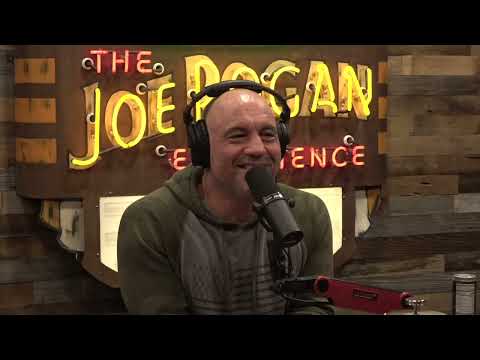
Joe Rogan Experience #1860 - Tim Dillon
Joe Rogan (host), Tim Dillon (guest), Joe Rogan (host), Jamie Vernon (guest), Narrator, Jamie Vernon (guest), Narrator, Joe Rogan (host), Narrator, Narrator, Tim Dillon (guest), Jamie Vernon (guest), Narrator
In this episode of The Joe Rogan Experience, featuring Joe Rogan and Tim Dillon, Joe Rogan Experience #1860 - Tim Dillon explores tim Dillon And Joe Rogan Roast Empire, Elites, And Our Future Joe Rogan and Tim Dillon bounce between comedy and cultural criticism, talking about everything from building Rogan’s new comedy club and the economics of cities to Hollywood hypocrisy, political corruption, and social media censorship.
Tim Dillon And Joe Rogan Roast Empire, Elites, And Our Future
Joe Rogan and Tim Dillon bounce between comedy and cultural criticism, talking about everything from building Rogan’s new comedy club and the economics of cities to Hollywood hypocrisy, political corruption, and social media censorship.
They dissect America’s homelessness and crime problems, the collapse of trust in institutions like the FBI and media, and how money and incentives distort politics, war, and public health narratives.
The conversation veers into tech and the future—AI, social credit, digital currency, CRISPR, Neuralink, and the possibility of a soft technocratic dictatorship—while joking darkly that we’re living through the late stages of a decaying empire.
Throughout, Dillon delivers long, satirical rants about hypocrisy, elite enclaves, and the inevitability of a post-human future, while both men argue that decentralized comedy and independent media are among the last places for honest, unfiltered discourse.
Key Takeaways
Comedy is decentralizing and bypassing legacy gatekeepers.
Rogan and Dillon point out that podcasts, Patreon, independent specials, and uncensored livestreams now rival or surpass late-night TV, giving comics freedom from network notes and corporate politics.
Get the full analysis with uListen AI
Wealth and elite enclaves depend on keeping ordinary people out while preaching inclusion.
Dillon’s description of the Hamptons and Beverly Hills highlights how ultra-rich residents use zoning, geography, and pricing to exclude “regular” people, even as they broadcast progressive slogans about equality.
Get the full analysis with uListen AI
Trust in U.S. institutions is collapsing, and elites know it.
From the Pelosi NVIDIA trades to the FBI’s history, the 9/11 narrative gaps, and the Mar-a-Lago raid, they argue that many Americans now assume the system is rigged, which paves the way for strongman politics or technocratic control.
Get the full analysis with uListen AI
Policy problems like homelessness and crime are less about money and more about will, governance, and incentives.
Using California’s budget surplus versus visible decay, and contrast with New York under Giuliani or Austin’s handling of tents, they argue that enforcement choices and political ideology matter more than raw funding.
Get the full analysis with uListen AI
Censorship and deplatforming are increasingly coordinated between governments and tech platforms.
They cite Alex Berenson, RT purges, Jen Psaki’s public pressures, and shadow suppression on social media as evidence that power centers now treat platforms as tools to remove or limit critics across the spectrum.
Get the full analysis with uListen AI
The war on drugs created cartels and militarized criminal empires.
Rogan frames Mexican cartel violence and the Miami cocaine era as direct products of prohibition, arguing that illegal markets give ruthless organizations huge profits and firepower that wouldn’t exist under a rationalized drug regime.
Get the full analysis with uListen AI
Technology and biotech are likely to push humanity into a post-human, highly controlled future.
They discuss CRISPR babies, Neuralink, AI, digital currencies, and social credit scores, predicting a world where cognitive enhancement, constant surveillance, and economic control erode traditional human freedom—even if life feels materially “better.”
Get the full analysis with uListen AI
Notable Quotes
“We’re one of the last groups of people to actually be free… the hellscape that’s about to be created is going to be so bad it won’t even feel like they’re in prison.”
— Tim Dillon
“America will come apart in one of the funniest ways… you’ll die, but you will be laughing.”
— Tim Dillon
“Isn’t it fucking wild that Hollywood is very anti-gun, but they promote guns more than any other media on the planet?”
— Joe Rogan
“You need actors. You need them to be good-looking and dumb and to just do what they’re told.”
— Tim Dillon
“There’s really no solutions, there’s only trade-offs, because no matter what you do, you’re going to create other problems by doing it.”
— Tim Dillon (paraphrasing Thomas Sowell)
Questions Answered in This Episode
How much of the current institutional distrust is justified, and what concrete reforms (if any) could actually restore public confidence?
Joe Rogan and Tim Dillon bounce between comedy and cultural criticism, talking about everything from building Rogan’s new comedy club and the economics of cities to Hollywood hypocrisy, political corruption, and social media censorship.
Get the full analysis with uListen AI
If CRISPR and Neuralink-style technologies become widely available, should there be ethical or legal limits on enhancing intelligence or personality, or is that inevitable progress?
They dissect America’s homelessness and crime problems, the collapse of trust in institutions like the FBI and media, and how money and incentives distort politics, war, and public health narratives.
Get the full analysis with uListen AI
Is there a realistic middle path between dangerous prohibition and potentially chaotic full legalization for hard drugs, or are we trapped between two bad options?
The conversation veers into tech and the future—AI, social credit, digital currency, CRISPR, Neuralink, and the possibility of a soft technocratic dictatorship—while joking darkly that we’re living through the late stages of a decaying empire.
Get the full analysis with uListen AI
Given the incentives of social media platforms and governments, what kind of regulatory or technological framework could protect free speech without amplifying genuine harms?
Throughout, Dillon delivers long, satirical rants about hypocrisy, elite enclaves, and the inevitability of a post-human future, while both men argue that decentralized comedy and independent media are among the last places for honest, unfiltered discourse.
Get the full analysis with uListen AI
Are we already too dependent on centralized digital infrastructure (finance, communication, media) to avoid some form of soft technocratic dictatorship in the future?
Get the full analysis with uListen AI
Transcript Preview
(drumming) Joe Rogan podcast, check it out. The Joe Rogan Experience. Train by day, Joe Rogan podcast by night, all day. (rock music) Oh, hi, Tim Dillon.
Joe Rogan-
(laughs)
... thank you for having me.
My pleasure.
Thank you for having me, sir. I appreciate it.
My pleasure. That was-
Dr-
... fun, going over to the club.
It was amazing. It's gonna be great.
Looks exciting.
It's gonna be great. I'm excited about it. I'm excited and, uh, Louie was there.
I'm glad we got him to look at too, he has some-
Yeah.
... great notes.
He's been, what would you say, 30 something? I mean, you guys have been around the same time, do you know?
Yeah, he was a little bit before me but he's gotta be 35 years in now.
So, he's been to every, every configuration of a comedy venue.
Yeah.
So, and so have you probably. So you guys, hearing you guys talk about this place and that place, you now have all the benefit of all that knowledge to make your spot amazing.
And we're doing it from scratch.
Right.
So we can just adjust, change, do things.
Yeah.
Like, he had really good notes today.
You have the money, you have the time, it's-
Yeah.
... you have everything that would make it perfect.
It's exciting.
What about C- Cap City's gonna open too.
They're open already.
Do you think-
Talent just did it.
... will you, like, do you think you would, like, uh, like, threaten them, or-
No.
... should we, like, would you, like, like do a bomb threat, or something?
(laughs) No.
(laughs)
No, I'll work there.
Well, there should be, like, some kind of war.
No.
Nah. No?
Who gives a fuck?
All right.
Come on, man.
Well, I just thought it would be good.
If you're the United States, do you invade Cambodia in 2022?
W- w-
Why would you do that?
Well, maybe.
They're not a threat.
That's a good point. They're not a threat. Okay. So, I like it. We're w- we're in a war already.
There's no war.
I, but, we're kind of in a wa-, it's a-
It's-
... little war, it's a minor war.
It's the opposite of a war.
It's a Cold War.
It's a unity.
It's unity.
We're bringing everybody together.
Okay. I like that.
Texas doesn't wanna fight New Mexico, we're all in the same country.
There's a lot of states Texas does wanna fight.
(laughs) Texas might wanna fight California.
Texas and California should fight.
(laughs) T- Texas... First, they wanna fight Mexico. They wanna-
Install uListen to search the full transcript and get AI-powered insights
Get Full TranscriptGet more from every podcast
AI summaries, searchable transcripts, and fact-checking. Free forever.
Add to Chrome