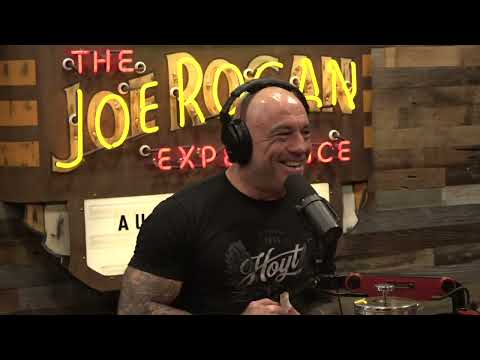
JRE MMA Show #147 with Sean O'Malley & Tim Welch
Narrator, Narrator, Joe Rogan (host), Sean O'Malley (guest), Tim Welch (guest), Narrator, Narrator, Narrator, Tim Welch (guest), Narrator, Tim Welch (guest), Narrator, Tim Welch (guest), Narrator
In this episode of The Joe Rogan Experience, featuring Narrator and Narrator, JRE MMA Show #147 with Sean O'Malley & Tim Welch explores sean O’Malley Reflects On Becoming Champ, Fighting, Fame, And Future Sean O’Malley and coach Tim Welch join Joe Rogan to trace O’Malley’s journey from prospect to UFC bantamweight champion, breaking down the Aljamain Sterling win, training philosophy, injuries, and mindset. They analyze stylistic matchups across multiple divisions, the evolution of MMA, and how different preparation styles (sparring-heavy vs. low-sparring) can both produce champions. The conversation also dives into recovery science, weight cutting, PED rules, and how business thinking and self-promotion shape a fighter’s career. Beyond MMA, they range into dreams, psychedelics, cults, parenting, social media, comedy, and longevity, framing fighting as one part of a larger, carefully designed life.
Sean O’Malley Reflects On Becoming Champ, Fighting, Fame, And Future
Sean O’Malley and coach Tim Welch join Joe Rogan to trace O’Malley’s journey from prospect to UFC bantamweight champion, breaking down the Aljamain Sterling win, training philosophy, injuries, and mindset. They analyze stylistic matchups across multiple divisions, the evolution of MMA, and how different preparation styles (sparring-heavy vs. low-sparring) can both produce champions. The conversation also dives into recovery science, weight cutting, PED rules, and how business thinking and self-promotion shape a fighter’s career. Beyond MMA, they range into dreams, psychedelics, cults, parenting, social media, comedy, and longevity, framing fighting as one part of a larger, carefully designed life.
Key Takeaways
Winning the belt validated O’Malley’s long‑held “delusional” self-belief and mental training.
He describes feeling like the Sterling KO was a vivid dream, but notes he’d been visualizing being champ since early in his career, using meditation and a calm, ‘higher self’ mindset to perform under pressure.
Get the full analysis with uListen AI
Stylistic preparation matters as much as toughness in modern MMA.
O’Malley and Rogan contrast approaches like Sean Strickland’s constant hard sparring with O’Malley’s camp-sparring-only model, showing there’s no single path to a title—as long as training is tightly aligned to a fighter’s style and physiology.
Get the full analysis with uListen AI
The cage and cage size significantly change fight dynamics.
They argue small cages help wrestlers and clinch-heavy fighters while hurting movement-based strikers; Rogan even floats the idea of a no-cage platform, which O’Malley says would massively shift wrestling-centric game plans.
Get the full analysis with uListen AI
Recovery science and strength/nutrition support can extend and protect careers.
O’Malley credits reduced injuries to working with a strength coach and nutritionist, plus tools like cold plunges, PEMF, fasting, and structured mornings—highlighting that staying healthy is as crucial as skills training.
Get the full analysis with uListen AI
Current anti-doping frameworks blur the line between fair play and blocking health optimization.
They argue that peptides and reasonable hormone optimization, especially for aging fighters, could be allowed while still banning extreme abuse—comparing creatine, BCAAs, and legal pre-workouts to “performance enhancers” already accepted.
Get the full analysis with uListen AI
Business awareness is now a core skill for top fighters.
O’Malley openly thinks like a promoter—targeting big-name opponents, understanding PPV structures (e. ...
Get the full analysis with uListen AI
Fame, social media, and modern culture add unique psychological pressures.
They discuss fighters and comedians dealing with depression, parasocial attention, and dating-app dynamics, emphasizing routines, physical training, and boundaries (e. ...
Get the full analysis with uListen AI
Notable Quotes
““I still have that fucking want to kill…not a strong Strickland want to kill, but in the cage—dominate.””
— Sean O’Malley
““I went into that fight like it’s life or death if he grabs me.””
— Sean O’Malley, on fighting Aljamain Sterling
““There’s not just this one way you gotta do it. Sean Strickland spars all the time. I literally only spar in camp. Two opposite styles—both just won.””
— Sean O’Malley
““I’ve been thinking like a businessman. I feel like I’ve been champ for a long time; they just finally made it official.””
— Sean O’Malley
““Your body is your vehicle for carrying you through life…you can actually soup up your race car.””
— Joe Rogan
Questions Answered in This Episode
How much did the rib muscle strain and limited grappling in camp truly change O’Malley’s game plan and performance against Sterling?
Sean O’Malley and coach Tim Welch join Joe Rogan to trace O’Malley’s journey from prospect to UFC bantamweight champion, breaking down the Aljamain Sterling win, training philosophy, injuries, and mindset. ...
Get the full analysis with uListen AI
If the UFC ever removed the cage or standardized only a large cage, which current champions and contenders would be helped or hurt most?
Get the full analysis with uListen AI
Where should the sport draw the ethical and practical line between health-optimization (peptides, TRT for older fighters) and outright performance enhancement?
Get the full analysis with uListen AI
How sustainable is O’Malley’s low-sparring approach across a long title run, especially against relentless wrestlers and high-volume pressure fighters like Sandhagen or Umar Nurmagomedov?
Get the full analysis with uListen AI
In an era where self-promotion drives matchmaking, what happens to elite but low-profile fighters who struggle to build a brand despite their skills?
Get the full analysis with uListen AI
Transcript Preview
(drumbeats) Joe Rogan podcast, check it out.
The Joe Rogan Experience.
Train by day, Joe Rogan podcast by night, all day. (rock music plays) And we're up. Boys, when were ... We did the first one together-
Yep.
... was it, like, five years ago?
Yeah, I think it was 2017, right? Or 2018?
Yeah. I was somewhere around then.
I was 2-0 in the UFC. I was just coming off the Andre-Soccer mom fight where I broke my foot. Um, 20 ... yeah, I was 23.
Yeah, that was just after your broken foot, right?
(coughs)
Yeah.
Yeah. And now here you are, the fucking champ of the world.
(laughs)
Fucking, we did it.
Living in a dream.
Like, (laughs) it's crazy 'cause that whole fight week, I always take a lot of naps fight week, especially 'cause it was on the East Coast and we were trying to stay up late. And I would have crazy, vivid dreams, not necessarily about the fight, but just really vivid dreams. And, uh ... So after the fight, I just felt like I was kind of in one of those dreams. I'm like-
Hmm.
... "There's no way that went out, uh, that, that played out perfect. There's no way that played out literally how I wanted it to play out." So for a while I kept thinking like, "I'm gonna wake up in my bed and still have to go out there and do that." But I haven't woke up from a nap yet, so-
(laughs)
(laughs)
... we're still rolling.
Well, it makes you wonder what dreams really are.
Yeah.
It c- uh, i- it's so weird that we just accept that we close our eyes every night and scenarios take place that don't really take place, and they seem super vivid. And, and then weird things happen in them, and then you wake up and you're like, "Oh, that wasn't real." But we just accept that ... There's many times where I've been in a lucid dream, or many times I've been in a dream that felt so real.
Yeah.
Like, uh, wha- what ... You know, like, what's going on in our heads?
Probably a lot during, uh, Sober October for you too 'cause I noticed when I s-
Yeah.
... quit smoking weed in camp, like when I get closer to the fight, my dreams are so fucking vivid.
Yeah.
It's kinda scary. It's like a snapshot of another dimension. I'm like, "That ... Could that possibly be us in another dimension witnessing our life play out some other way?"
It c- it could be that what you're doing is, like, peeking. You're like, every night you, like, peak-
(laughs)
... into some other dimension and then-
Yep.
... pop back up in the morning when you wake up. That mean-
Install uListen to search the full transcript and get AI-powered insights
Get Full TranscriptGet more from every podcast
AI summaries, searchable transcripts, and fact-checking. Free forever.
Add to Chrome