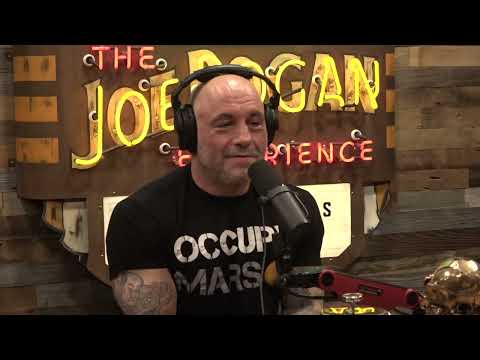
Joe Rogan Experience #1965 - David Choe
Joe Rogan (host), David Choe (guest), Narrator, Narrator
In this episode of The Joe Rogan Experience, featuring Joe Rogan and David Choe, Joe Rogan Experience #1965 - David Choe explores david Choe, Psychedelics, AI, and Reinventing Life Beyond Money and Fame Joe Rogan and artist David Choe dive into Choe’s three-year transformation since Rogan moved to Austin, covering why Rogan left Los Angeles, why Choe is contemplating leaving big cities entirely, and what he found living with hunter‑gatherers in Africa.
David Choe, Psychedelics, AI, and Reinventing Life Beyond Money and Fame
Joe Rogan and artist David Choe dive into Choe’s three-year transformation since Rogan moved to Austin, covering why Rogan left Los Angeles, why Choe is contemplating leaving big cities entirely, and what he found living with hunter‑gatherers in Africa.
Choe talks candidly about “beating” the games of money, sex, and status, realizing they didn’t bring fulfillment, and shifting his focus toward spirituality, service, and love, including his deep involvement with Tanzania’s Hadza tribe and a new documentary about them.
They discuss the disruptive impact of AI on artists and workers, how to adapt through human connection and “touring” (real‑world presence), and the possibility that humans are merely midwives for a new machine intelligence.
Throughout, they weave in stories on psychedelics, trauma, extreme fitness experiments, acting in Netflix’s Beef and The Mandalorian, and the tension between creative freedom, Hollywood business, and mental health.
Key Takeaways
You can “win” at money and sex and still feel empty.
Choe describes deliberately pursuing extreme wealth (art, gambling, Facebook equity) and extreme sexual conquest for years, then realizing those games became boring and unfulfilling; this pushed him toward a “final quest” of spiritual growth and service.
Get the full analysis with uListen AI
Real‑world impact can come from simply telling a story on a big platform.
His earlier Rogan appearance about living with the Hadza led to viral clips, major donations, and tourism that helped fund clean water, education, and preservation efforts for the tribe—illustrating how media attention can materially change lives and cultures.
Get the full analysis with uListen AI
Hunter‑gatherer presence challenges Western obsessions with legacy and monetization.
With the Hadza, kids made incredible drawings then casually threw them off a cliff because they live fully in the present; this forced Choe to confront his own attachment to archiving, selling, and preserving art instead of simply experiencing creation.
Get the full analysis with uListen AI
AI will decimate some jobs but increase the value of human presence and craft.
Both note that AI already does legal research and visual art at a disruptive level; Choe argues that like bands forced to tour after Napster, people will need to lean into in‑person experiences, hand‑made work, and community as their enduring “value proposition.”
Get the full analysis with uListen AI
Trauma often lives in the body until it’s physically discharged.
Choe recounts “trauma release exercises” from rehab—using bats on dummies or protected people—and how humans (unlike animals) tend to store trauma somatically, leading him to design intense art installations where people could safely express rage and grief.
Get the full analysis with uListen AI
Psychedelics can radically reset priorities but can’t be your only tool.
Through ayahuasca, mushrooms, and especially a four‑day iboga ordeal, Choe says he was pushed to question his hoarding, living trust, and attachment to possessions, ultimately giving away most of his personal belongings and focusing on love and presence; he also emphasizes integrating lessons through everyday practices, not just repeated trips.
Get the full analysis with uListen AI
Creative success without boundaries can destabilize your identity.
Immersing himself in an angry, violent character for Beef blurred into real life—Choe found himself “leaking” aggression into mundane situations, ultimately checking himself into a mental hospital, which underscores the need for limits and grounding when working in intense creative roles.
Get the full analysis with uListen AI
Notable Quotes
““The video game of money is over for me now.””
— David Choe
““You talk about something on Joe Rogan and it could, like, save a culture.””
— David Choe
““The answer is love… Everyone says it, but what does that path look like?””
— David Choe
““AI is a fucking insane monster that’s here now… there’s no stopping it.””
— David Choe
““Human beings are the sex organs of the machine world.””
— Joe Rogan (quoting Marshall McLuhan, then expanding on it)
Questions Answered in This Episode
If you truly “beat” the games of money and sex like Choe describes, what would you choose as your next life “game,” and why?
Joe Rogan and artist David Choe dive into Choe’s three-year transformation since Rogan moved to Austin, covering why Rogan left Los Angeles, why Choe is contemplating leaving big cities entirely, and what he found living with hunter‑gatherers in Africa.
Get the full analysis with uListen AI
How should artists and creators adapt their careers in a world where AI can imitate their style, but not their physical presence or story?
Choe talks candidly about “beating” the games of money, sex, and status, realizing they didn’t bring fulfillment, and shifting his focus toward spirituality, service, and love, including his deep involvement with Tanzania’s Hadza tribe and a new documentary about them.
Get the full analysis with uListen AI
What can modern urban societies realistically learn from the Hadza’s present‑moment living without romanticizing or exploiting them?
They discuss the disruptive impact of AI on artists and workers, how to adapt through human connection and “touring” (real‑world presence), and the possibility that humans are merely midwives for a new machine intelligence.
Get the full analysis with uListen AI
Where is the line between deep creative immersion (e.g., method acting) and self‑harm, and how can artists protect their mental health?
Throughout, they weave in stories on psychedelics, trauma, extreme fitness experiments, acting in Netflix’s Beef and The Mandalorian, and the tension between creative freedom, Hollywood business, and mental health.
Get the full analysis with uListen AI
If psychedelics can radically shift values and behavior, what responsibilities do individuals and societies have in how they are used and integrated?
Get the full analysis with uListen AI
Transcript Preview
(drum music) Joe Rogan podcast, check it out.
The Joe Rogan Experience.
Train by day, Joe Rogan podcast by night, all day. (energetic music) (laughs)
Hey.
What's happening?
Can I give you a real hug? Like, I wanna get with you.
Yeah, you can give me a real hug. Sure.
Oh, I missed you. (laughs)
What's happening? I miss you too. What's going on? It's great to see you.
Yeah. And, uh, I always like to give you a gift. Um, so this is my, like, shroom mates, you know, our connection through psychedelics.
That's beautiful.
And, uh, and I added this one, train all day-
(laughs)
... JRE all night. And then I got the-
Oh, wow.
... I got the mushroom guy. I got a mushroom playing a mushroom drum set with, like, some guy dunking on, you know...
Nice.
I wanted to model it for you, but I wanna give it to you.
Well, thank you very much.
I don't know if it'll fit, but...
I'm sure it'll fit.
There you go.
Thank you.
Yeah. There you go.
And what is this fucking costume you're wearing underneath this? Jesus Christ.
Ah. Joe, um, I've been cruising Austin. All right, where do I begin with this?
(laughs)
Okay. Where, where do I begin with this?
Where do you begin with this?
I touched down Austin yesterday. All right. This is what I... This... They're like-
You touched down wearing that or with the face?
I had this on and I... And people were like... Do you think they know I'm from LA?
(laughs)
Do you think they know I'm from out of town? Um.
No. There's a lot of people here like that.
Let me do a, uh, call-out to the Asians really quick. Uh, Asians, if you're listening, to all my gooks, all my jungle Asians, I've been here for 24 hours in Texas. Oh my God, I found a kai peet jean place, awesome sushi. There's, like, two banh mi places, a halo-halo place. Like, if you're listening, this... I've done the reconnaissance.
(laughs)
I was on my bike. I went down Congress. I went through, like, um, uh, West Lake. I- I- I rode all over town. Like, it was the best. Like, I had Explosions in the Sky playing. Um, I watched Friday Night Lights when I got back to my room. It's like, this place is... I saw, like, maybe two homeless people. I rode around the lake. Barbecue is great. Like, that was my concern, right? I think the last time I did your show, you were... It was the week you were about to leave. I talked to Jamey. He was like-
Yeah.
... "You know?" And I was like, "This guy, this guy is not really going to..."
Install uListen to search the full transcript and get AI-powered insights
Get Full TranscriptGet more from every podcast
AI summaries, searchable transcripts, and fact-checking. Free forever.
Add to Chrome