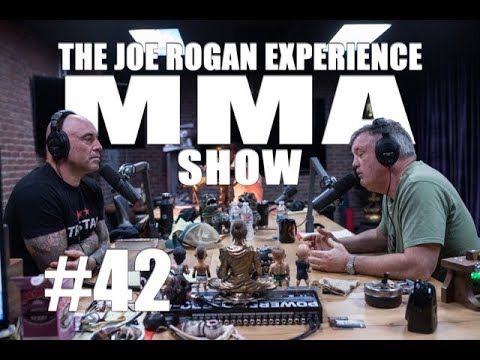
JRE MMA Show #42 with Teddy Atlas
Joe Rogan (host), Teddy Atlas (guest), Joe Rogan (host)
In this episode of The Joe Rogan Experience, featuring Joe Rogan and Teddy Atlas, JRE MMA Show #42 with Teddy Atlas explores teddy Atlas Exposes Boxing’s Corruption And Redefines True Fighting Greatness Teddy Atlas and Joe Rogan range from recent mega-fights to the deep ethical and historical soul of boxing. Atlas critiques modern judging, promotional corruption, and the lack of centralized oversight that undermines fighters who risk their lives. He contrasts manufactured ‘greatness’ with what he sees as real greatness—fighters like Joe Louis and Evander Holyfield who overcame immense pressure and adversity. Interwoven are powerful personal stories about Atlas’s father, his foundation, and why he demands absolute commitment and character from fighters and officials alike.
Teddy Atlas Exposes Boxing’s Corruption And Redefines True Fighting Greatness
Teddy Atlas and Joe Rogan range from recent mega-fights to the deep ethical and historical soul of boxing. Atlas critiques modern judging, promotional corruption, and the lack of centralized oversight that undermines fighters who risk their lives. He contrasts manufactured ‘greatness’ with what he sees as real greatness—fighters like Joe Louis and Evander Holyfield who overcame immense pressure and adversity. Interwoven are powerful personal stories about Atlas’s father, his foundation, and why he demands absolute commitment and character from fighters and officials alike.
Key Takeaways
Modern superfights are often overrated because fans are starved for big events.
Atlas argues Canelo–Golovkin II was a very good fight but not an all-time classic; in eras with many elite matchups (like the 1980s), it would be judged more modestly. ...
Get the full analysis with uListen AI
Boxing’s lack of centralized governance enables systemic corruption in judging and matchmaking.
With no national commission or ‘commissioner,’ promoters can wine, dine, and pay officials and sanctioning bodies, creating conflicts of interest that would be unthinkable in leagues like the NFL or MLB.
Get the full analysis with uListen AI
Judges often reward crude aggression over effective, technically sound work.
Atlas maintains that jabs, range control, and ‘effective aggression’ should score, but many judges simply favor the man coming forward or throwing power shots, leading to controversial decisions like those in the Canelo–Golovkin series.
Get the full analysis with uListen AI
True greatness in fighting is revealed only under real resistance and adversity.
Atlas defines a real ‘fight’ as the moments when things go wrong and you must overcome fear and pressure; by that standard, he says Mike Tyson’s record of dominant blowouts hides a lack of success in his few truly hard fights.
Get the full analysis with uListen AI
Boxing once played a crucial role in elevating marginalized communities and deserves better preservation.
Stories of Joe Louis, Benny Leonard, and Sugar Ray Robinson show how champions gave Black, Jewish, and poor communities pride and hope, yet this history is barely taught compared to baseball or football lore.
Get the full analysis with uListen AI
Character and ethics outside the ring matter as much as talent inside the ring.
Atlas’ standards come from his father, a selfless doctor; he demands honesty, commitment, and decency from fighters and refuses to work with or excuse people who show chronic weakness or exploitation, even if they are stars.
Get the full analysis with uListen AI
Proper training balances intensity, recovery, and psychological confidence.
He stresses individualized camps, avoiding overtraining, and using tools like strength work and isometrics not just for physical gains but to make fighters feel stronger and more secure, while correcting technical ‘mortal sins’ that get you hurt.
Get the full analysis with uListen AI
Notable Quotes
“You’re not in a fight until there’s something to overcome.”
— Teddy Atlas
“In boxing, when judges rob you, you don’t play again next week—you go to the back of the line and take a thousand punches trying to get back.”
— Teddy Atlas
“On one given night, no matter where you came from, you could get in that ring and make the world fair.”
— Teddy Atlas
“Mike Tyson was as strong a guy as you’ll ever see, but he was as weak a person as you’re ever going to find.”
— Teddy Atlas
“My father didn’t waste time telling me how to live—he just did it in front of my face every day.”
— Teddy Atlas
Questions Answered in This Episode
If boxing had a single, powerful commissioner like the NBA or NFL, what specific reforms should be implemented first to protect fighters and fix judging?
Teddy Atlas and Joe Rogan range from recent mega-fights to the deep ethical and historical soul of boxing. ...
Get the full analysis with uListen AI
How should fans reconcile Teddy Atlas’s harsh assessment of Mike Tyson with the public’s deep emotional attachment to Tyson’s highlight-reel dominance?
Get the full analysis with uListen AI
What practical steps could be taken to better preserve and teach boxing’s social and historical impact—stories like Joe Louis and Benny Leonard—to younger generations?
Get the full analysis with uListen AI
In combat sports, where is the line between holding fighters accountable for their character and acknowledging the trauma or environments that shaped them?
Get the full analysis with uListen AI
How can coaches and fighters better balance the need for grueling preparation with the modern understanding of overtraining, long-term brain health, and recovery?
Get the full analysis with uListen AI
Transcript Preview
Four, three, two, one. And we're live. Teddy Atlas, thanks for being here, man. I really appreciate it.
Sorry, I'm a minute late. I'm, uh, I hope, I didn't-
Dad, S- you keep saying that. Stop.
... m- make you guys, uh-
D- listen, that's-
... get anyone out there mad at you, so.
No one's mad at anything. There's no real set time. You know, uh, I ca- I gotta tell you, since I announced that you're gonna be on the podcast, I had about 100 people tell me to get you mad. They want you to rant and get scr- (laughs)
(laughs)
Ever since that, the, "We're firemen," speech you g- gave to Tim Bradley-
Yeah.
... everybody wants you to start screaming and get mad. You get-
(laughs)
You get people hyped up. (laughs)
Well, uh, well, hopefully if there's only an occasion for it, and I don't think there'll be an occasion.
No.
But, um, I, I'm looking at this stuff here. You got a nice place here, by the way.
Thank you.
And it's making me think about the Denzel Washington movie, uh, The Equalizer, the first one, where he was in with those Russian guys that were, like, messed up guys. And he was trying to protect that girl, and he, he started pointing. There were skulls and stuff at the guy's desk, you know.
Yeah.
And, uh, he was pointing to this stuff. He was trying to explain to the guy, "Listen, let this girl go." You know, "I'll give you $9,000." Whatever it was. "Let her go." She was, like, 15 years old. And, um, he, he didn't wanna listen to him, and so he started... The- they had stuff like this, with this skull. I don't know if the people could see it.
Right.
But, um, and he started pointing it towards him. And, like, the guy didn't, like, take the hint, you know, the guy. And about a couple minutes later, he, he killed everybody in the room. But it- it's just, it looks exactly like the thing from that movie, the Denzel Washington, where he, uh, he also had guns and stuff he was pointing-
There it is right there. There's the scene.
Yeah. This is-
Jamie pulled the scene up.
Oh, really? He was f-
Yeah.
Wow.
I never saw that movie.
Yeah, so you see, like, w- there's a scene (laughs) where he starts pointing. They, they might've taken this from here. I mean, they could've gotten it from you to-
That's from Mexico.
... for props. Um, so they, they pointed, he pointed it all towards the guy to kind of warn the guy what was coming next, but obviously the guy was-
Denzel, that movie is probably the only good movie that ever came out of a terrible TV series.
Install uListen to search the full transcript and get AI-powered insights
Get Full TranscriptGet more from every podcast
AI summaries, searchable transcripts, and fact-checking. Free forever.
Add to Chrome