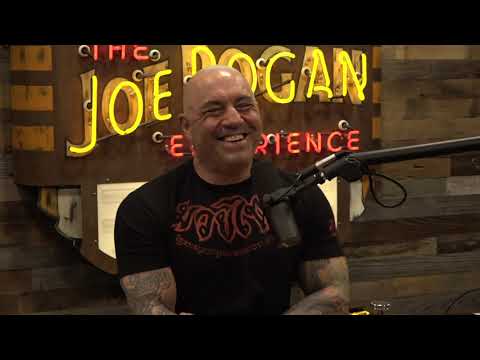
Joe Rogan Experience #1656 - Adam Duritz
Narrator, Joe Rogan (host), Adam Duritz (guest), Narrator, Narrator, Narrator, Narrator, Narrator
In this episode of The Joe Rogan Experience, featuring Narrator and Joe Rogan, Joe Rogan Experience #1656 - Adam Duritz explores adam Duritz on Fame, Mental Health, Art, and Survival in Music Joe Rogan and Counting Crows frontman Adam Duritz trace Adam’s trajectory from shy, dissociated kid to sudden rock stardom, and how fame amplified his existing mental health struggles. They discuss the corrosive effects of overexposure, criticism, and record-label economics on artists, as well as the liberating aspects of live performance and songwriting. A large portion of the conversation explores creativity as a coping mechanism, the grind of both music and stand-up, and how the internet and streaming reshaped the industry. Duritz also talks about his current projects—festivals, podcasts, cooking videos—and announces an upcoming Counting Crows tour tied to the “Butter Miracle” release.
Adam Duritz on Fame, Mental Health, Art, and Survival in Music
Joe Rogan and Counting Crows frontman Adam Duritz trace Adam’s trajectory from shy, dissociated kid to sudden rock stardom, and how fame amplified his existing mental health struggles. They discuss the corrosive effects of overexposure, criticism, and record-label economics on artists, as well as the liberating aspects of live performance and songwriting. A large portion of the conversation explores creativity as a coping mechanism, the grind of both music and stand-up, and how the internet and streaming reshaped the industry. Duritz also talks about his current projects—festivals, podcasts, cooking videos—and announces an upcoming Counting Crows tour tied to the “Butter Miracle” release.
Key Takeaways
Fame magnifies existing vulnerabilities rather than fixing them.
Duritz describes how pre‑existing anxiety and dissociative disorder were intensified by sudden celebrity, making everyday interactions overwhelming even as he felt completely free on stage.
Get the full analysis with uListen AI
Songwriting can crystallize identity and give purpose.
Writing his first song in college instantly made Duritz feel like he knew who he was—a songwriter—giving him a direction that many of his peers lacked despite not knowing how he’d make a living from it.
Get the full analysis with uListen AI
Creative careers demand a long, painful apprenticeship few see.
Both Rogan and Duritz emphasize that the distance from amateur to professional—whether in bands or comedy—is like walking across a continent: years of bombing, bad gigs, and grinding that most people underestimate.
Get the full analysis with uListen AI
Mental illness is often managed, not cured.
Duritz frames dissociative disorder more like a lifelong handicap than a disease with a cure; he had to learn breathing techniques, accept medication trade‑offs, and build a life that accommodates his brain rather than expecting to be “fixed.”
Get the full analysis with uListen AI
Traditional record deals were structurally predatory, and streaming reconfigured that.
He explains how labels recouped costs only out of artists’ small royalty percentages, then tried to extend that logic into “360” deals claiming touring and merch, even as digital destroyed physical sales.
Get the full analysis with uListen AI
Community projects can replace label power in breaking artists.
Through his Underwater Sunshine festival, podcast, and “garden sessions,” Duritz uses his platform to spotlight independent artists, showing how curation plus live experience can do what labels used to do—without owning artists’ work.
Get the full analysis with uListen AI
Simplicity and control matter more than scale for many creatives.
Both men prefer lean, self‑run projects (Rogan’s tiny podcast crew; Duritz’s self‑shot cooking videos) over big, heavily staffed productions, arguing that too many executives, brands, and metrics suffocate authenticity.
Get the full analysis with uListen AI
Notable Quotes
“Life is often very awkward and uncomfortable, but not on stage.”
— Adam Duritz
“As soon as I’d written that song, I was a songwriter.”
— Adam Duritz
“People don’t understand how much it takes. It’s a long walk, and you gotta grind.”
— Joe Rogan
“Mental illness doesn’t go away. You just learn how to carry that weight.”
— Adam Duritz
“Part of podcasting is being irresponsible. You’re just talking shit and you don’t even exactly know what you’re going to say.”
— Joe Rogan
Questions Answered in This Episode
How did finally naming and understanding dissociative disorder change how Adam approached touring, press, and relationships?
Joe Rogan and Counting Crows frontman Adam Duritz trace Adam’s trajectory from shy, dissociated kid to sudden rock stardom, and how fame amplified his existing mental health struggles. ...
Get the full analysis with uListen AI
What would a fair, artist‑centric streaming model look like if musicians like Duritz could redesign the system from scratch?
Get the full analysis with uListen AI
In what concrete ways does songwriting help process emotional pain without actually being “cathartic” in the simple sense?
Get the full analysis with uListen AI
Could independent festivals and curated podcasts realistically replace record labels as the main discovery channels for new artists?
Get the full analysis with uListen AI
How does Adam balance protecting his mental health with staying accessible to fans in the age of social media?
Get the full analysis with uListen AI
Transcript Preview
(drumming) Joe Rogan podcast, check it out. The Joe Rogan Experience.
Train by day, Joe Rogan podcast by night, all day. (rock music plays) Hello, Adam.
Hello, Joe.
How you doing?
I'm pretty good.
It's good to see you. It's nice to meet you, man. It's nice to be, uh, I, I've been a fan of your work for a long fucking time, and it's always weird when you meet someone that you listen to their music or you've seen their stuff, and you're like, "Oh, you're just a normal human being. There you are."
A, a little whacked out, but yeah.
(laughs) But it's, uh, you know, like, I remember watching Mr. Jones on, uh, MTV and, uh, I, I, I wa- I loved that fucking video, man, and I loved that you dancing in that, was it like a living room or something like that?
Yeah, yeah.
I'm like, "I, I wanna be that free." Like, you seem so loose. You were so in the moment. I remember thinking that. I was, remember talking to a friend of mine that la- uh, that night after a, a show. I was at a bar. I was like, "You ever see that Mr. Jones video?" I go, "When that dude's dancing," I go, "I wanna, like, figure out how to get there."
Shit, I wanna be that free.
(laughs)
And you know, it's a weird thing. I used to, I'm gonna take these off for now.
Okay.
I used to be, for me, you know, life is often very awkward and uncomfortable, but not on stage. You know, like, on stage I always felt like, well, this is the one place on, everything I do is fine.
Right.
And so when I started, you know, making videos, uh, at first it was just like, uh, this is apps, this is easy, 'cause all I gotta do is do the stuff I gonna, I'm gonna do, you know, and, and there's nothing wrong I can do. I can just be as free as I want. And that lasted about a year and a half, maybe two years. Something about, like, getting really famous outta nowhere and then, you know, all the kind of backlash that comes with it. I noticed a couple years later I was a lot more self-conscious. I'm still, on stage I never think about anything. When I'm playing, it, nothing bothers me, but in front of cameras, I got really self-conscious in front of cameras after sometime in the middle of our second record. I just noticed that I started to suck on, not suck on video, but definitely not like that Mr. Jones video. You know?
You became aware that so many people were watching and criticizing you, or like, what was it?
I think it was that, you know, 'cause at first I just, uh, well, didn't care, and I just thought that there's nowhere in the world I'm more comfortable than here, so I'm fine. And then I think on our second album when we got a lot of backlash and you get a little too big and everybody, you get, you annoy the shit out of people being-
Install uListen to search the full transcript and get AI-powered insights
Get Full TranscriptGet more from every podcast
AI summaries, searchable transcripts, and fact-checking. Free forever.
Add to Chrome