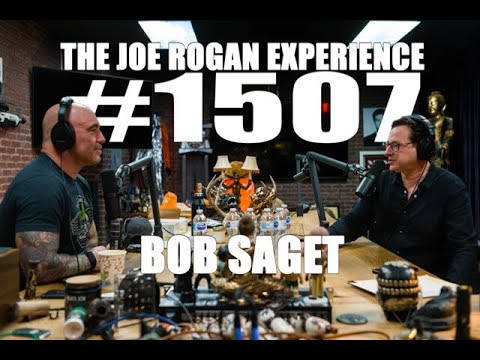
Joe Rogan Experience #1507 - Bob Saget
Joe Rogan (host), Bob Saget (guest), Narrator, Narrator, Narrator, Narrator
In this episode of The Joe Rogan Experience, featuring Joe Rogan and Bob Saget, Joe Rogan Experience #1507 - Bob Saget explores joe Rogan and Bob Saget dissect comedy, cancel culture, and chaos Joe Rogan and Bob Saget have a long, free‑flowing conversation that ranges from COVID, media manipulation, and political polarization to the craft, history, and psychology of stand‑up comedy.
Joe Rogan and Bob Saget dissect comedy, cancel culture, and chaos
Joe Rogan and Bob Saget have a long, free‑flowing conversation that ranges from COVID, media manipulation, and political polarization to the craft, history, and psychology of stand‑up comedy.
They discuss deepfakes, unreliable news, and the erosion of trust, then pivot into how comedy can bridge divides, process trauma, and challenge rigid political or cultural positions.
A major throughline is their shared reverence for the comedy community—trading stories about legends like Richard Pryor, Robin Williams, Sam Kinison, Bill Burr, Eddie Murphy, and others, while examining mental health, addiction, and early deaths among great comics.
They close by reflecting on the pandemic’s impact on live performance, personal health, and Rogan’s podcast itself as an unexpected but powerful platform for honest discourse.
Key Takeaways
Deepfake tech and fragmented media make truth verification critical.
Rogan and Saget worry that manipulated video and biased, bite‑sized news clips can manufacture or destroy reputations and even trigger conflict, making independent verification and skepticism essential.
Get the full analysis with uListen AI
Police need both physical and psychological training, not just bans on techniques.
They argue that prohibiting holds without replacing them with grappling and de‑escalation skills forces officers into more violent options like tasers or batons, and that good psychological screening is equally important.
Get the full analysis with uListen AI
Comedy can unite people by making them laugh at their own beliefs.
Rogan notes his best political bits work when fans who love the target (e. ...
Get the full analysis with uListen AI
‘Punching down’ in comedy isn’t a simple moral rule.
They challenge the notion that good comedy must always ‘punch up,’ citing classic bits from Sam Kinison and George Carlin about extremely vulnerable subjects, arguing that context, intent, and craft matter more than a rigid formula.
Get the full analysis with uListen AI
The public image of performers often hides darker realities.
Through stories about Cosby, Pryor, and others, they show how family‑friendly or inspirational personas can mask addiction, abuse, or predatory behavior, reinforcing the need to separate art from assumptions about character.
Get the full analysis with uListen AI
Great comedy requires relentless iteration and risk after each special.
Both describe the terror of discarding an hour of material after taping a special and starting from scraps, emphasizing that the desperation to build a new act quickly is what drives growth and originality.
Get the full analysis with uListen AI
COVID severity is strongly tied to underlying health and vitamin D.
Rogan highlights emerging data linking obesity and vitamin D deficiency—especially in African‑American populations—to worse COVID outcomes, suggesting people proactively test and supplement rather than rely only on policy measures.
Get the full analysis with uListen AI
Notable Quotes
“We don't even know what history is right now.”
— Bob Saget
“Comedy is supposed to be, ‘Here’s the world through my eyes.’”
— Joe Rogan
“It’s easier to be angry than it is to dig out and wake up positive.”
— Bob Saget
“We need someone who can say something that calms people down and brings us together and inspires us.”
— Joe Rogan
“I can’t stop being one. I am one. It’s part of my hard drive.”
— Bob Saget, on being a stand‑up comic
Questions Answered in This Episode
How should we balance protecting people from harmful misinformation with avoiding censorship of controversial comedy or political speech?
Joe Rogan and Bob Saget have a long, free‑flowing conversation that ranges from COVID, media manipulation, and political polarization to the craft, history, and psychology of stand‑up comedy.
Get the full analysis with uListen AI
What concrete reforms to police training and standards would address both public safety and excessive use of force without leaving officers powerless?
They discuss deepfakes, unreliable news, and the erosion of trust, then pivot into how comedy can bridge divides, process trauma, and challenge rigid political or cultural positions.
Get the full analysis with uListen AI
Where is the ethical line in stand‑up: is there any subject you believe should be completely off‑limits, or does it all depend on how the joke is constructed?
A major throughline is their shared reverence for the comedy community—trading stories about legends like Richard Pryor, Robin Williams, Sam Kinison, Bill Burr, Eddie Murphy, and others, while examining mental health, addiction, and early deaths among great comics.
Get the full analysis with uListen AI
Given how many great comedians struggle with mental health, what responsibilities do clubs, networks, and peers have to intervene or support them?
They close by reflecting on the pandemic’s impact on live performance, personal health, and Rogan’s podcast itself as an unexpected but powerful platform for honest discourse.
Get the full analysis with uListen AI
Has Rogan’s podcast, now so influential, changed the way he feels he must prepare, fact‑check, or moderate conversations compared with the early, looser episodes?
Get the full analysis with uListen AI
Transcript Preview
Yeehaw, Bob Saget. How are you, buddy?
I am happy ... I am actually excited to be- I'm excited to be anywhere-
(laughs)
... but I'm especially excited to be talking to you.
I'm excited to be talking to you too.
Thank you.
And we tested you. You're clean, buddy.
I am.
You're free and clear of-
I-
... the virus.
... I did ... I, uh, usually have like a ... A ... Trump had someone take his SAT, I usually have someone take my-
(laughs)
... COVID test for me.
Did Trump have someone take his SATs?
Yeah.
Is that true?
Yeah, it's true. Apparently.
How could you do that?
But I don't know what's, what's true.
Right.
What the hell is true anymore?
Well, anything before the internet is hard and even during the internet it's hard, because they splice things up and edit stuff.
Oh, it's all soundbites. You could, you could hate anybody or love anybody.
I know. It's ... You know what's weird, man? Is, um, when ... The, the deep fake stuff. Like, how long do we have before you don't know what you're seeing?
Right.
How long before ... Do, do we have before, you know, we see, like, a, a world leader declaring war on us and we don't know if it's real?
Yeah. Correct.
How long?
I, I say now.
Probably.
I mean, somebody could do it right now. I mean, but I don't, I don't know, 'cause North Korea could, could fire a missile and it wouldn't go anywhere, I don't think.
I like how they introduce new players, like now you have to be worried about the sister.
Right. (laughs)
You notice that? Like, the evil sister. And she's thin-
(laughs) Yeah.
... so you probably think she's mean, right?
She will be. She's gonna be very mad.
Oh, yeah.
She'll be a Karen.
A Karen.
(laughs)
Imagine if your fucking kid's named Karen. What a bummer that must be if you're a nice person named Karen.
(laughs)
And then Karen-
Well, it's like Corona beer. I mean, I can't believe they had to stop that. That, that makes me sad. I mean-
What do you mean? They stopped the name?
That's what I'm told, they stopped making it. Now, I don't know if-
Oh, that's stupid.
... that's true. That's the source I heard, but-
I still enjoy a Corona, I'm not a fucking child.
I like Corona Light. But what am I gonna do? And then, and then Ayds Candy, that was a smart move.
Yes.
You had to stop that diet candy.
Yeah, uh, uh, it makes you lose weight? (laughs)
Install uListen to search the full transcript and get AI-powered insights
Get Full TranscriptGet more from every podcast
AI summaries, searchable transcripts, and fact-checking. Free forever.
Add to Chrome