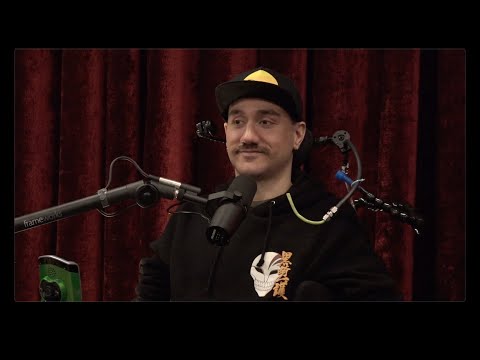
Joe Rogan Experience #2167 - Noland Arbaugh
Noland Arbaugh (guest), Narrator, Joe Rogan (host), Narrator
In this episode of The Joe Rogan Experience, featuring Noland Arbaugh and Narrator, Joe Rogan Experience #2167 - Noland Arbaugh explores first Neuralink Patient Shares Life-Changing Brain-Computer Interface Experience Joe Rogan interviews Noland Arbaugh, the first human patient implanted with Neuralink’s brain-computer interface, about what the device can currently do, how it works, and what it’s like to live with it. Arbaugh explains how he controls a computer cursor and plays complex video games using only his neural activity, the technical challenges like thread retraction from his brain, and the unexpectedly fast software improvements. They explore future possibilities such as restoring movement and vision, potential mind-to-mind communication, and broader ethical questions about hacking, AI, and cyborg futures. Arbaugh also discusses how paralysis reshaped his character and why he chose to take on the risks of being the first participant.
First Neuralink Patient Shares Life-Changing Brain-Computer Interface Experience
Joe Rogan interviews Noland Arbaugh, the first human patient implanted with Neuralink’s brain-computer interface, about what the device can currently do, how it works, and what it’s like to live with it. Arbaugh explains how he controls a computer cursor and plays complex video games using only his neural activity, the technical challenges like thread retraction from his brain, and the unexpectedly fast software improvements. They explore future possibilities such as restoring movement and vision, potential mind-to-mind communication, and broader ethical questions about hacking, AI, and cyborg futures. Arbaugh also discusses how paralysis reshaped his character and why he chose to take on the risks of being the first participant.
Key Takeaways
Neuralink already enables practical, high-precision computer control via brain signals.
Arbaugh uses an implant in his motor cortex that wirelessly streams neural spikes to a computer app, allowing him to move a cursor, type, browse, and play complex games like Civilization VI purely through neural intent—at speeds sometimes faster than his conscious sense of movement.
Get the full analysis with uListen AI
The brain moves more than expected, creating real engineering challenges.
Neuralink’s ultra-thin threads began retracting because Arbaugh’s brain pulses about 3 mm with each heartbeat, triple what designers had planned for; this revealed critical biomechanical realities that are now informing hardware and algorithm improvements.
Get the full analysis with uListen AI
BCI control can evolve from ‘attempted movement’ to pure thought.
Initially, Arbaugh had to try to move his paralyzed hand in specific directions, but over time he discovered he could simply think “cursor go here” and the system would respond—suggesting future interfaces may become fully thought-based without any imagined limb motion.
Get the full analysis with uListen AI
Software and machine learning can compensate for significant hardware loss.
Even after many implanted threads effectively pulled back and stopped providing strong signals, Neuralink’s team improved algorithms and decoding such that Arbaugh’s performance rebounded and now surpasses his initial control, underscoring the power of adaptive software.
Get the full analysis with uListen AI
Future Neuralink applications aim to restore movement and senses, not just augment them.
Neuralink is already testing ‘brain-to-spine’ links in animals, where one implant in the brain talks to another in the spinal cord to drive leg movement, and they’ve demonstrated early visual stimulation in monkeys—pointing toward potential treatments for paralysis and blindness.
Get the full analysis with uListen AI
Security and misuse are real but currently limited concerns.
Arbaugh acknowledges the implant can, in theory, be hacked, but right now an attacker could mostly only see neural data and redirect his cursor while he’s connected; he and Rogan discuss future risks like malware, mind-hijacking, deepfakes, and propaganda as the tech scales.
Get the full analysis with uListen AI
Paralysis forced a deep personal reckoning that guides Arbaugh’s choices.
Years of quadriplegia, dependence on others, and long hours alone led him to reassess his past behavior, recognize he wasn’t as good a son, friend, or partner as he thought, and embrace Neuralink as a way to contribute meaningfully and reduce future suffering for others.
Get the full analysis with uListen AI
Notable Quotes
““When I moved it for the first time with my mind without attempting to move at all, I was giddy the entire day.””
— Noland Arbaugh
““I basically have an aim bot in my head.””
— Noland Arbaugh
““Technology always moves forward. It never stops over concerns of what could possibly go wrong.””
— Joe Rogan
““How many people who are paralyzed don’t have to be paralyzed anymore? That’s my goal at the beginning.””
— Noland Arbaugh
““I realized I was painting a much prettier picture of myself in my head than who I actually was.””
— Noland Arbaugh
Questions Answered in This Episode
If brain-computer interfaces become safe and common, should healthy people be allowed to get them purely for cognitive or performance enhancement?
Joe Rogan interviews Noland Arbaugh, the first human patient implanted with Neuralink’s brain-computer interface, about what the device can currently do, how it works, and what it’s like to live with it. ...
Get the full analysis with uListen AI
How can society realistically guard against hacking, surveillance, or coercive uses of implanted neural devices as they become more capable?
Get the full analysis with uListen AI
At what point does a person with extensive neural augmentation stop being considered ‘just human,’ and does that distinction matter ethically or legally?
Get the full analysis with uListen AI
How should we balance the undeniable benefits of animal research for devices like Neuralink with the moral cost of sacrificing intelligent animals like monkeys?
Get the full analysis with uListen AI
Could future mind-to-mind or mind-reading technologies actually reduce conflict by eliminating lying and misunderstanding, or would they simply create new forms of manipulation and control?
Get the full analysis with uListen AI
Transcript Preview
(drumbeats) Joe Rogan podcast, check it out.
The Joe Rogan Experience.
Train by day, Joe Rogan podcast by night, all day. (instrumental music) All right. What's up, Nolan?
Nothing much. Can you guys hear me through this?
Yeah.
Is this too far away? Cool.
No, it's perfect, it's perfect.
Yeah, cool, man.
It's a pleasure to meet you, man.
Hey, you too. Me- you too. Thanks for having me.
I have a feeling if there's a movie that they do in the future-
Oh.
... of how the world changed in 2024, you're gonna be in that movie.
(laughs) Yeah, that would be cool.
(laughs)
Yeah, that'd be cool. I wonder if they'd get to play me.
Y- I ... They probably don't need people by then.
(laughs)
They probably just do movies with AI-
Yeah, yeah.
... and probably really quickly. You could probably, like, take a really great novel like The Great Gatsby-
Mm-hmm.
... run it through an AI video creator, and it would just make you the most amazing version of The Great Gatsby.
Yeah, that's true.
Probably.
Yeah, that'd be sick.
But if we're talking about, like, historical moments in human beings and in technology, the implementation of Neuralink on the first human patient, that's you.
Yeah. Yeah, I guess so. Um-
No, definitely.
Yeah. (laughs)
(laughs)
Yeah, I mean, I was... I keep thinking about it like, you know, BCI have been around for a while, um, so I've told people-
What is BCI?
Uh, brain computer interface, so like-
Mm-hmm.
... just, uh, implants that they've done in people, um, different ways that they've found. Um, they've given people the ability to, like, control electronic devices. They've been able to control computers and stuff. There are a couple things out there that... Utah Array, um, Synchron came out with something, um, where basically they go through the, um, um, artery in the neck and that they kinda thread something up into the brain that expands, um, in a vein up there, in an artery up there, and then they can, like, control the brain through that. So BCI has been around for a while, a few decades at least, I think since, like, the '90s. So I always say that we're standing on the shoulders of giants sort of thing, but I know Neuralink just has, uh ... It's in a league of its own, and I know that, you know, with Elon's name attached to it, it's gonna blow up way more. Um, but I think this is the beginning. I think everyone else that, you know, comes after this basically is gonna be pulled up by the progress Neuralink's making and the fact that they are trying to, like, open source basically all of it. Um, I think the whole field is just gonna grow exponentially at this point.
Install uListen to search the full transcript and get AI-powered insights
Get Full TranscriptGet more from every podcast
AI summaries, searchable transcripts, and fact-checking. Free forever.
Add to Chrome