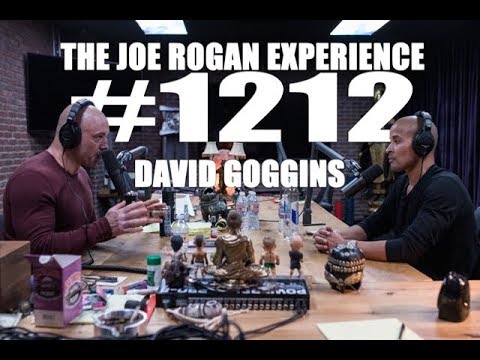
Joe Rogan Experience #1212 - David Goggins
Joe Rogan (host), David Goggins (guest), Narrator
In this episode of The Joe Rogan Experience, featuring Joe Rogan and David Goggins, Joe Rogan Experience #1212 - David Goggins explores david Goggins Reveals How Extreme Suffering Built Unbreakable Mental Toughness Joe Rogan and David Goggins discuss Goggins’ transformation from abused, obese, insecure kid to Navy SEAL, ultra-endurance athlete, and author of “Can’t Hurt Me.”
David Goggins Reveals How Extreme Suffering Built Unbreakable Mental Toughness
Joe Rogan and David Goggins discuss Goggins’ transformation from abused, obese, insecure kid to Navy SEAL, ultra-endurance athlete, and author of “Can’t Hurt Me.”
Goggins explains how he uses physical suffering as a tool to build mental resilience, reframe trauma, and wage “psychological warfare” on his own limiting beliefs.
They break down the making of his book and audiobook, his views on authenticity versus fake motivation, and why he refuses to stop grinding or chase comfort.
The conversation also explores discipline, self-honesty, environment, injury, stretching, wildland firefighting, and future challenges like smokejumping and potentially Brazilian jiu-jitsu.
Key Takeaways
Use physical hardship to train your mind, not just your body.
Goggins views workouts as “mental callus-building,” deliberately doing things he doesn’t want to do (early runs, brutal sessions) to normalize discomfort so that real-life adversity feels manageable.
Get the full analysis with uListen AI
Rewrite your internal dialogue or it will quietly sabotage you.
He emphasizes that the most important conversation is with yourself; by catching and replacing victim-minded, self-hating thoughts, he turned his abusive past into “perfect training” for future resilience.
Get the full analysis with uListen AI
Brutal self-honesty is the foundation of real change.
His “accountability mirror” forced him to confront his lies, laziness, obesity, and failures without excuses, which created the self-respect and clarity needed to set and hit extreme goals.
Get the full analysis with uListen AI
Your environment and friends can either fuel you or destroy you.
He warns that people who make excuses, drink, or fail constantly will pull you back to your old self; sometimes you must walk alone or seek out higher-standard peers to keep progressing.
Get the full analysis with uListen AI
There is no finish line; you must keep finding your new 100%.
Goggins rejects the “golden years” fantasy; whether through running, stretching, firefighting, or future pursuits, he believes you must continuously redefine your best within whatever limitations you have today.
Get the full analysis with uListen AI
Authenticity beats polished, theoretical motivation every time.
He criticizes soft, buzzword-heavy self-help and insists on advice grounded in lived suffering and practice, sharing unflattering details of his own failures so others can see what real change costs.
Get the full analysis with uListen AI
Your past pain can become an advantage if you reframe it.
By viewing his abuse, bullying, learning disabilities, and racism as “training” that gave him an edge, he transformed resentment and self-pity into fuel instead of a lifelong excuse.
Get the full analysis with uListen AI
Notable Quotes
“Life is one big psychological warfare that you play on yourself.”
— David Goggins
“Without friction, there is no growth.”
— David Goggins
“The most important conversation I ever had is with myself.”
— David Goggins
“There’s no finish line. It doesn’t exist.”
— Joe Rogan
“I want to drain my soul of every bit of person I am.”
— David Goggins
Questions Answered in This Episode
How can an average person start using discomfort intentionally without injuring themselves or burning out?
Joe Rogan and David Goggins discuss Goggins’ transformation from abused, obese, insecure kid to Navy SEAL, ultra-endurance athlete, and author of “Can’t Hurt Me.”
Get the full analysis with uListen AI
What practical steps can someone take to build their own “accountability mirror” and stick with it?
Goggins explains how he uses physical suffering as a tool to build mental resilience, reframe trauma, and wage “psychological warfare” on his own limiting beliefs.
Get the full analysis with uListen AI
How do you distinguish between productive suffering that builds you and pointless masochism or ego-driven extremes?
They break down the making of his book and audiobook, his views on authenticity versus fake motivation, and why he refuses to stop grinding or chase comfort.
Get the full analysis with uListen AI
In what ways might unresolved trauma be silently dictating someone’s choices, and how can they begin to reframe it as fuel?
The conversation also explores discipline, self-honesty, environment, injury, stretching, wildland firefighting, and future challenges like smokejumping and potentially Brazilian jiu-jitsu.
Get the full analysis with uListen AI
How do you balance relentless self-improvement with being present for relationships, recovery, and long-term health?
Get the full analysis with uListen AI
Transcript Preview
Hey, you, come on, let's go. (book closes) Boom, and we're live. David Goggins, your book is fucking fantastic, man. (book closes) This has been my running partner. (book closes) The audio version of it has been my running partner for the last week. It's fucking amazing, man.
Well, I appreciate that. Thank you. And-
Well, you guys are doing something, uh, very unusual. The book is great. I've read, I've read it, like sat down and read-read. But the r- the audio book is really interesting-
Right.
... because you and the gentleman that you wrote it with-
Yeah, Adam.
... Adam was l-
Adam Scolnick.
Adam Scolnick, who, who reads it. Then you come on and talk about things in between. So it's more than just the book.
Right.
It's the book plus. It's the book plus like a podcast.
Right. Yeah, so how all that came to be, man, is, um, as I was going through this book for the last year, we would go through, change stuff up. I have so many stories, man. We went through, interviewed so many people, so many stories. He would come back and read it to me, all my changes. And when he'd read, I'm like, "Man, this guy has a great reading voice. I love his reading voice." And I started getting these different ideas about doing it, like, "You know what? Maybe he can read, and then I can do my podcast thing on the side. And he can like, after each chapter, in between chapters, make it a real interactive type of thing." And that's kind of how it came to be, man.
At the beginning, I gotta be honest, at the beginning I was like, "Who is this motherfucker talking for David Goggins?"
(laughs)
I was gonna call up Dave. Like, "Dave, can you read-
(laughs)
... do this? Why don't you do it? Why are you d-" But, but it works.
Right.
It really does work.
Yeah.
Like as, as it goes on, and I got ... Also, y- it's very obvious that you and him are good friends. So when you guys are talking, then I don't mind him reading for you as much for some strange reason. (laughs)
Right.
I know it doesn't make any sense.
Well, I wouldn't say we're good friends. Um, I'm just joking, Adam, though you can hear right now.
(laughs)
Um, he became a pain in my fucking ass during this process, man, because, you know, he's just a, he's a real anal guy. You know, he, he helped out a lot. You know, I'm a, I'm a real raw, sadistic type of mindset. And he, uh, he helped me put that on paper, man, so I give him a lot of credit for that.
Well, it, y- it comes across. The book is outstanding. And, you know, it's, it's, it's more than just sitting wa- like sitting across from you and you telling your story is one thing, but this long, detailed history-
Install uListen to search the full transcript and get AI-powered insights
Get Full TranscriptGet more from every podcast
AI summaries, searchable transcripts, and fact-checking. Free forever.
Add to Chrome