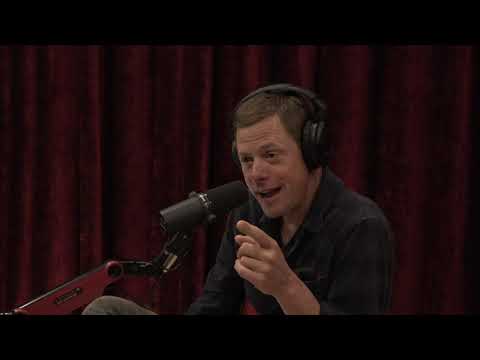
Joe Rogan Experience #1716 - Steven Rinella
Narrator, Narrator, Joe Rogan (host), Steven Rinella (guest), Narrator, Narrator, Narrator, Narrator
In this episode of The Joe Rogan Experience, featuring Narrator and Narrator, Joe Rogan Experience #1716 - Steven Rinella explores hunting, predators, parenting, and social media on modern frontiers Joe Rogan and Steven Rinella range from childhood tobacco and Mark Twain lore into deep discussions of wildlife management, predator encounters, and the ethics of hunting in North America.
Hunting, predators, parenting, and social media on modern frontiers
Joe Rogan and Steven Rinella range from childhood tobacco and Mark Twain lore into deep discussions of wildlife management, predator encounters, and the ethics of hunting in North America.
They dissect controversial topics like mountain lion and grizzly bear control, wolf hunting near Yellowstone, and public misconceptions driven by urban voters and media.
The conversation broadens into COVID (including deer infections and vaccines), the mental health impact of social media on kids, cancel culture, and the fragility of creators who depend on platforms like YouTube and Facebook.
Throughout, Rinella reflects on raising kids close to nature in Montana, building the MeatEater media and gear empire, and trying to be honest about risk, adversity, and responsibility in both parenting and public life.
Key Takeaways
Predators need active management, not total protection or total eradication.
Rinella argues that treating mountain lions, wolves, and grizzlies as managed big‑game animals (with controlled harvests) is safer and more sustainable than either banning hunting outright (e. ...
Get the full analysis with uListen AI
Most non‑hunters vastly misunderstand what hunting actually is.
Rogan and Rinella criticize typical hunting TV as kill‑centric and shallow, missing the days‑long difficulty, failure, emotional weight, and food/culinary dimension that define real hunts—something MeatEater tries to portray, including ‘skunked’ episodes with no kill.
Get the full analysis with uListen AI
Hunter safety failures often stem from ‘shooting at movement’ instead of strict target identification.
They recount multiple accidental shootings (especially in turkey season) and emphasize that no shot should ever be taken without positively identifying an animal; blaze orange rules can help, but discipline and culture matter more.
Get the full analysis with uListen AI
Social media algorithms reward outrage and can harm kids, especially girls.
They discuss Facebook/Instagram’s internal knowledge of anxiety, self‑harm, and anorexia content among teens, and note how algorithmic amplification of conflict has radically worsened polarization and mental health since smartphones/social platforms took off.
Get the full analysis with uListen AI
Depending on a single tech platform is a fragile business model for creators.
New YouTube hunting rules (around animal suffering and kill shots) and demonetization illustrate how quickly policies can jeopardize livelihoods; Rinella deliberately diversifies MeatEater through books, TV, podcasts, and multiple brands to avoid a single point of failure.
Get the full analysis with uListen AI
Free speech needs messy, open debate—even when experts and platforms are wrong.
Rogan views episodes like the early ‘lab leak’ censorship as evidence that platforms and press secretaries shouldn’t be gatekeepers of ‘acceptable’ ideas; the only way to correct errors is to allow broad, contested public discussion.
Get the full analysis with uListen AI
Kids need real adversity and risk, not total protection or total neglect.
They compare helicopter parenting versus ‘free‑range’ kids, and Rinella’s approach of exposing his children to grizzlies, boats, and backcountry—with strong family love and guidance—arguing that challenge and nature are crucial for resilience.
Get the full analysis with uListen AI
Notable Quotes
“In my view they need to be managed as a renewable resource.”
— Steven Rinella (on mountain lions and big predators)
“I think all these people that vote against mountain lion hunting need to be around one.”
— Joe Rogan
“If you have sustainable, harvestable populations of wildlife and a public interest in exploiting that wildlife without long‑term detriment to the species, that should be allowed.”
— Steven Rinella
“To challenge orthodoxy, you have to be so good that you don’t set off the alarms.”
— Steven Rinella
“If you didn’t know what was going on from the news and social media, when I go about my daily existence I would never know everybody hates everybody now.”
— Steven Rinella
Questions Answered in This Episode
How should states balance urban voters’ emotions with rural realities when setting predator and big‑game policy?
Joe Rogan and Steven Rinella range from childhood tobacco and Mark Twain lore into deep discussions of wildlife management, predator encounters, and the ethics of hunting in North America.
Get the full analysis with uListen AI
What would a genuinely accurate, full‑length representation of a difficult, week‑long hunt look like, and would non‑hunters actually watch it?
They dissect controversial topics like mountain lion and grizzly bear control, wolf hunting near Yellowstone, and public misconceptions driven by urban voters and media.
Get the full analysis with uListen AI
Where should platforms like YouTube draw the line between graphic content rules and honest depictions of hunting, farming, or medical reality?
The conversation broadens into COVID (including deer infections and vaccines), the mental health impact of social media on kids, cancel culture, and the fragility of creators who depend on platforms like YouTube and Facebook.
Get the full analysis with uListen AI
How can parents practically give kids meaningful risk and independence (like nature and city freedom) without exposing them to the worst of online culture?
Throughout, Rinella reflects on raising kids close to nature in Montana, building the MeatEater media and gear empire, and trying to be honest about risk, adversity, and responsibility in both parenting and public life.
Get the full analysis with uListen AI
Is it possible to create a stable, diversified media business today that isn’t structurally dependent on a handful of giant tech platforms?
Get the full analysis with uListen AI
Transcript Preview
(drumming music) Joe Rogan podcast, check it out.
The Joe Rogan Experience.
Train by day, Joe Rogan podcast by night, all day. (rock music) You ate meat tobacco growing up?
Oh.
Tell me about this.
Well, I was- I was telling this story the other day.
(laughs)
Um, when I was in-
You swallowed it?
I was just telling this story, 'cause we- we- we had a toba-, we had some, bunch of the guys I work with, uh, and then this other dude, Jared Outlaw, who are all big dip guys. We were having a conversation about dip, and-
Is Jared the f- the flip-flop fleshers?
No, no, no.
No, that's Seth.
No, that's a guy named Seth. All of, a lot of the guys I used to work with, or not, a lot of the guys I work with did, uh, and do, you know, they're horrible tobacco addicts.
Dippers.
Dip.
Yeah.
'Cause they're all workers, so they, they don't smoke 'cause it keeps their hands free. Um, but I was explaining to them my aversion, and I, and I feel like it traces to when I was in fifth grade, we had to make agricultural maps of the United States of America. And you had to glue the pro-, you know, like the products, so like you get to South Dakota and you glue like a little corn kernel.
Right, I remember those.
Yeah, put some wheat, you know?
Yeah.
Uh, and for whatever reason, like Vir- for Virginia, we had tobacco and someone had brought in, I can't even remember what it was, like must've been loose leaf or plug. And, uh, me and my buddy, uh, I don't even know if he, if this dude remembers. But me and my buddy Stanley Johnson, um, ate, we took it out in the playground and ate some.
(laughs)
And I, dude, I was, I was, I hallucinated twice as a child.
(laughs)
Once on, uh, once when I had to get a root canal, um, and once when we ate that tobacco. I mean, I was, I was no- I was hallucinating.
What were you seeing?
I can't even remember. My mom had to come get me.
(laughs)
She had to come fetch me from school.
How old were you?
Fifth grade.
Oh, wow.
Unbelievably sick.
When I was in, I guess it was, uh, seventh grade, sixth or seventh grade, I really got into Tom Sawyer.
Oh.
Tom Sawyer and Huckleberry Finn.
Yeah.
I read all those books. And, uh, they were always chewing tobacco, so I bought some.
(laughs)
And, uh, I tried it and I got very sick. Just like drool pouring out of my mouth. You know, like you get that (gagging) that drooly-
Install uListen to search the full transcript and get AI-powered insights
Get Full TranscriptGet more from every podcast
AI summaries, searchable transcripts, and fact-checking. Free forever.
Add to Chrome