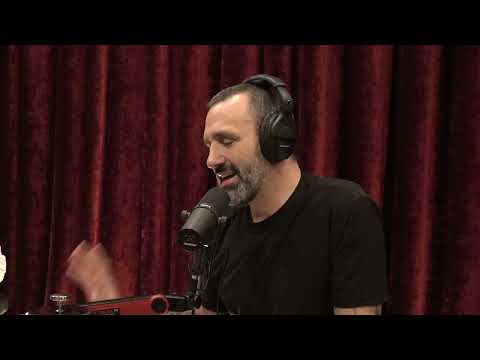
Joe Rogan Experience #2096 - Josh Dubin & Sheldon Johnson
Narrator, Josh Dubin (guest), Sheldon Johnson (guest), Joe Rogan (host), Guest (off-mic/producer side comment) (guest), Narrator
In this episode of The Joe Rogan Experience, featuring Narrator and Josh Dubin, Joe Rogan Experience #2096 - Josh Dubin & Sheldon Johnson explores from 50-Year Sentence to Youth Advocate: Sheldon Johnson’s Transformation Joe Rogan speaks with civil-rights advocate Josh Dubin and formerly incarcerated Sheldon Johnson, who received a 50-year sentence for two robberies where the victim suffered only two stitches. Sheldon recounts his traumatic childhood, early institutionalization, immersion in crime, and the brutal realities of New York’s prison system, including gangs, solitary confinement, and prison labor. He describes the turning point where he chose education, rehabilitation, and service—earning degrees, mentoring others, and eventually securing resentencing and release after 25 years. The discussion broadens into systemic racism, over‑sentencing, privatized prisons, junk forensic science, and concrete community-based alternatives like the Queens Defenders’ Youth Emergent Leadership Program.
From 50-Year Sentence to Youth Advocate: Sheldon Johnson’s Transformation
Joe Rogan speaks with civil-rights advocate Josh Dubin and formerly incarcerated Sheldon Johnson, who received a 50-year sentence for two robberies where the victim suffered only two stitches. Sheldon recounts his traumatic childhood, early institutionalization, immersion in crime, and the brutal realities of New York’s prison system, including gangs, solitary confinement, and prison labor. He describes the turning point where he chose education, rehabilitation, and service—earning degrees, mentoring others, and eventually securing resentencing and release after 25 years. The discussion broadens into systemic racism, over‑sentencing, privatized prisons, junk forensic science, and concrete community-based alternatives like the Queens Defenders’ Youth Emergent Leadership Program.
Key Takeaways
Trauma and deprivation heavily shape criminal trajectories, but are rarely considered at sentencing.
Sheldon’s story shows how childhood abuse, psychiatric institutionalization, overmedication, and crack-era Harlem helped normalize crime; yet his judge imposed a 50-year term without a pre-sentencing investigation or mitigation evidence.
Get the full analysis with uListen AI
The justice system delivers vastly disproportionate punishment, especially for people of color.
For robberies within the drug world and a minor physical injury, Sheldon received a sentence harsher than many murderers—illustrating how race, prior records, and “tough on crime” culture can eclipse proportionality and rehabilitation.
Get the full analysis with uListen AI
Prison environments often worsen people, but genuine rehabilitation is possible with education and purpose.
After years in gangs and solitary confinement, Sheldon pivoted toward education (GED, college degrees, Cornell and Mercy programs), cognitive-behavioral courses, and mentoring—demonstrating how structured programs can drastically lower recidivism when available.
Get the full analysis with uListen AI
Formerly incarcerated ‘credible messengers’ are uniquely effective in diverting youth from crime.
Now a client advocate at Queens Defenders, Sheldon designs and runs Youth Emergent Leadership, teaching conflict resolution, financial literacy, coding, and civic engagement; judges and prosecutors have reduced serious sentences when youths succeed in these programs.
Get the full analysis with uListen AI
Systemic issues extend beyond sentencing to education, forensics, and prison labor.
The conversation highlights widespread dyslexia and illiteracy in prisons, unreliable forensic disciplines (like bite marks), and corporate use of near-slave prison labor—showing reform must address upstream education, evidentiary standards, and economic incentives.
Get the full analysis with uListen AI
Reentry support is minimal, pushing people back toward crime unless NGOs fill the gap.
Sheldon was released with $40, a bus ticket, and delayed access to basic benefits; organizations like Hudson Link and Queens Defenders provided housing, education, and navigation help that the state largely failed to offer.
Get the full analysis with uListen AI
Ordinary people and institutions can materially support reform right now.
Dubin urges listeners to volunteer with public defenders or civic groups, fund mitigation work and fellowships at the Perlmutter Center, and back community-based diversion and education programs rather than simply complaining about crime and punishment.
Get the full analysis with uListen AI
Notable Quotes
““I went from the bowels of hell, 25 years in prison, to above the clouds on a plane, headed to talk about change.””
— Sheldon Johnson
““He’s someone that took responsibility for what he did, and I just don’t know that his life was worth throwing away.””
— Josh Dubin
““You wanna make America great again? Make it so there’s less losers—so more people have a chance.””
— Joe Rogan
““Prison does two things to you: it brings out the best or it brings out the worst.””
— Sheldon Johnson
““The impossibly sick, twisted irony is that it took prison to save him. Why couldn’t he be saved as a kid?””
— Josh Dubin
Questions Answered in This Episode
How could schools, mental health systems, and juvenile facilities be redesigned so a fifth-grade behavioral incident doesn’t trigger a lifelong criminal trajectory like Sheldon’s?
Joe Rogan speaks with civil-rights advocate Josh Dubin and formerly incarcerated Sheldon Johnson, who received a 50-year sentence for two robberies where the victim suffered only two stitches. ...
Get the full analysis with uListen AI
What concrete safeguards should be mandated before a judge can impose an extreme sentence, especially on young defendants from highly disadvantaged backgrounds?
Get the full analysis with uListen AI
How might the justice system systematically integrate ‘credible messenger’ roles for formerly incarcerated people into probation, diversion courts, and youth programming?
Get the full analysis with uListen AI
Given the evidence of unreliable forensic disciplines and systemic bias, what should be the threshold for admitting scientific evidence in criminal trials?
Get the full analysis with uListen AI
If prison labor and private prison profits depend on mass incarceration, what political and economic strategies could realistically reduce those incentives without triggering massive institutional resistance?
Get the full analysis with uListen AI
Transcript Preview
(drumbeats) Joe Rogan podcast. Check it out. The Joe Rogan Experience. Train by day, Joe Rogan podcast by night. All day. (instrumental music plays) Okay, Mr. Dugan, good to see you again, sir.
Mr. Rogan, it's an honor.
Always, always a pleasure.
Always.
Introduce your friend.
This is my, uh, my friend, my client, my brother, Sheldon Johnson. Uh, I figured we'd do something a little bit different. Um, typically the person sitting to my right is someone that was wrongfully convicted, so I don't want to bury the headline. Sheldon is guilty. Um, and I thought it would be a real interesting conversation to learn his, um, background, learn about his upbringing, learn about the crime that he committed, and hear the sentence he got, which, um, I don't want to, to shade it and, uh, inject my opinion, I have a strong one, but it's, uh, pretty astounding how, um, he was treated by the system. I think that there's a real interesting twist that happens at his sentencing and, um, I know I've said this before and it probably sounds repetitive, but another miracle sitting to my right, just like a, a marvelous human being who was basically told by a judge, um, by an African-American judge that "You don't matter, you don't count, and I'm gonna throw your life away." For a crime in which the victim received two stitches and, um, on a second offense, his first offense being a gun possession charge. So, I will say this, that he received a sentence that far eclipses a sentence, um, that would be commonly doled out for murder or manslaughter. So, with that, here's Sheldon.
Sheldon, how long you been out for?
Um, going on nine months. I got out, uh, May 4th last year, 2023.
And you were in for 25?
25 years and five months.
(exhales)
Long time.
For two stitches.
Two stitches.
Jesus.
But one, one of the things that always struck me about Sheldon, um, was I didn't know him, and I got a call from these two remarkable attorneys at, uh, organization called the Center for Appellate Litigation, Barbara Zolot and Allison Haupt, who had been working on his case for a long time, and they called, uh, me and Derrick Hamilton and said, "You know, we know you're working on some stuff with the Manhattan District Attorney's Office. We have this case that has sort of hit a snag. Want you to take a look at it and, um, see if you could help us." And I called Barbara back and said, "I think, I think that there's a mistake here, because it says that he was sentenced to 50 years." Um, I mean, that's no bullshit. I could not believe what I was reading, and then I read about what Sheldon had accomplished while in prison, um, and that his earliest date of release was I think 20-
Install uListen to search the full transcript and get AI-powered insights
Get Full TranscriptGet more from every podcast
AI summaries, searchable transcripts, and fact-checking. Free forever.
Add to Chrome