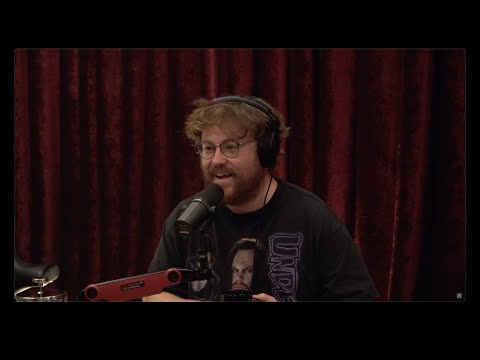
Joe Rogan Experience #2351 - James McCann
Narrator, Joe Rogan (host), James Donald Forbes McCann (guest), Narrator, Narrator, Guest 2 (unidentified) (guest), Narrator, Narrator, Narrator
In this episode of The Joe Rogan Experience, featuring Narrator and Joe Rogan, Joe Rogan Experience #2351 - James McCann explores joe Rogan and James McCann Deconstruct Comedy, Culture, Power, Control Joe Rogan and Australian comic James McCann spend the episode oscillating between stand-up craft, cancelations, and how institutions wield power over artists and the public. They dig into comedy club bans, work ethic, and the grind of developing as a comic, contrasting U.S. and Australian scenes and festival cultures. The conversation frequently swerves into politics, medical and intelligence conspiracies, and global authoritarian tendencies—from AIDS and COVID narratives to JFK, MKUltra, and immigration policy. Underneath the riffs is a throughline about personal freedom, censorship, and how both governments and corporations shape behavior, opportunity, and public perception.
Joe Rogan and James McCann Deconstruct Comedy, Culture, Power, Control
Joe Rogan and Australian comic James McCann spend the episode oscillating between stand-up craft, cancelations, and how institutions wield power over artists and the public. They dig into comedy club bans, work ethic, and the grind of developing as a comic, contrasting U.S. and Australian scenes and festival cultures. The conversation frequently swerves into politics, medical and intelligence conspiracies, and global authoritarian tendencies—from AIDS and COVID narratives to JFK, MKUltra, and immigration policy. Underneath the riffs is a throughline about personal freedom, censorship, and how both governments and corporations shape behavior, opportunity, and public perception.
Key Takeaways
Consistent, structured work beats raw talent in comedy.
Both emphasize that many brilliant early comics never made it because they wouldn’t grind—writing daily, refining material, and performing constantly—whereas greats like Chappelle treat stand-up like a full-time craft, going onstage nightly and recording everything.
Get the full analysis with uListen AI
Your environment shapes your comedic style and career trajectory.
McCann describes how Australia’s festival culture incentivizes yearly trauma-themed hours (e. ...
Get the full analysis with uListen AI
Industry gatekeepers and club politics can make or break careers.
Stories about Rogan’s Comedy Store ‘ban,’ Brian Simpson’s ban, and McCann’s Australian feuds show how managers, festivals, and agents can punish troublemakers, and how siding against plagiarism or speaking up can cost work—even when you’re ultimately vindicated.
Get the full analysis with uListen AI
Burnout and familiarity must be actively managed.
They argue comics need deliberate mental “recalibration”—remembering what it felt like to crave any stage time—to avoid resenting multiple shows a night; healthy habits like swimming or walking are framed as better coping tools than drugs or pure avoidance.
Get the full analysis with uListen AI
Regulation is necessary, but easily weaponized.
From building codes to occupational licensing and raw milk bans, they distinguish between safety-driven rules that prevent structural collapse or food-borne illness and bloated, industry-captured regulations that raise costs, block small players, or restrict housing.
Get the full analysis with uListen AI
Trust in medical and political authorities has been deeply eroded.
Long detours into AIDS (Peter Duesberg’s HIV skepticism, AZT toxicity), COVID vaccines, Fauci, and myocarditis illustrate how conflicting data, pharma incentives, and aggressive censorship around ‘disinformation’ have made many people question official narratives.
Get the full analysis with uListen AI
States and intelligence agencies routinely manipulate events and narratives.
They cite examples from JFK and Dorothy Kilgallen’s suspicious death, to MKUltra, Charles Manson, CIA involvement in foreign coups, and Israeli assassinations, arguing that conspiracies are often real exercises of power rather than fringe fantasies.
Get the full analysis with uListen AI
Notable Quotes
“Half the battle is just sitting down and actually writing.”
— Joe Rogan
“Everyone does an hour every year, so you end up with a 35‑minute joke show and a 10‑minute very sad story about being molested or wanting to die.”
— James McCann
“If you can’t make it work, you have to stop at some point. But the hard bit is figuring out what’s consistent about the times you do make it work.”
— Joe Rogan
“You can keep making things safer forever. There’s no limit. At some point the effort goes up so much it stops making sense.”
— James McCann
“Most of us are in the middle. We want people to be free and we want people to be taken care of—but we don’t want the state controlling everything or lying to us.”
— Joe Rogan
Questions Answered in This Episode
How much of a comic’s eventual success is talent versus sheer work ethic, given the stories of early brilliance that never went anywhere?
Joe Rogan and Australian comic James McCann spend the episode oscillating between stand-up craft, cancelations, and how institutions wield power over artists and the public. ...
Get the full analysis with uListen AI
Are festival-driven, “trauma hour” styles of comedy ultimately good for the art form, or do they dilute stand-up’s core mission to be funny first?
Get the full analysis with uListen AI
Where should societies draw the line between necessary safety regulation and overreach that protects incumbents, stifles housing, or limits personal choice?
Get the full analysis with uListen AI
In an age of competing narratives around AIDS, COVID, and vaccines, how can ordinary people realistically evaluate medical claims without becoming either naive or nihilistic?
Get the full analysis with uListen AI
To what extent are modern political outcomes manipulated by intelligence agencies, corporations, and backroom deals rather than by voters themselves?
Get the full analysis with uListen AI
Transcript Preview
(drumbeats) Joe Rogan podcast, check it out. The Joe Rogan Experience.
Train by day, Joe Rogan podcast by night, all day. (rock music) John, John, John McHarg, my man.
Hey, thank you for having me here.
My pleasure.
It's a joy.
It's a joy to have you, sir. I've been having a good time hanging out with you at the club, so...
It's been great.
Felt like we gotta do that.
This is very... Ah, man, I'm trying not to spin out.
(laughs)
This is... I have watched this on a phone before. This is great.
Well, it's weird for me that it's weird for people, because to me, it's still the same thing. It's just sitting down and talking to people.
Yeah.
I've gotten so used to it, even when it's like Trump, or Elon, or some fucking huge cultural figure, it's still just like very...
You must have spun out at least one time.
I spun out a bunch of times in the early days. I still spin out every now and then, like, uh, you know, like, you, like Mel Gibson's on the podcast-
Yeah.
... you're like, "Oh, that's really Mel Gibson." Mike Tyson, that's another one. Um, yeah.
Yeah, he was... Was this where he said he became erect when he wanted to beat people up?
That was in, uh, California.
Okay.
Yeah. That was... (laughs)
That's a classic.
(laughs)
That's a classic, all-time great moment.
He was, he was scaring the shit out of me. Whew.
Man, I spin out... When I first got to the club, I was going, it was every week I would, uh...
It's weird, right?
When I first met Adam Egert, I went... I, I, I... You know, it's, "Hello, Mr. Egert. H- I've seen you. You denied the Holocaust." (laughs)
(laughs) Not really. We should be real clear.
No, he was not jerking off-
It was a Norm MacDonald-
... punks under a bridge.
It was a Norm MacDonald bit.
He features in that book a lot.
Well, Adam's an amazing guy.
Yeah.
He's the reason... He's one of the reasons why I went back to the store. When I was banned from the store for seven years, Adam came to visit-
That's seven years?
Yeah. Well, I banned myself for seven years. They banned me, they were gonna ban me for like a few weeks, I'm like, "Fuck you."
Yeah.
Like, "Nay."
What did you do?
There's the whole Carlos Mencia thing.
They banned you for that?
Yes.
You won the court of public opinion on that, I'm sure.
Well, not only did I not really get banned, the guy who banned me was eventually fired. He was the manager there. But Mitzi, uh, gave me a spot that night. It's like-
Install uListen to search the full transcript and get AI-powered insights
Get Full TranscriptGet more from every podcast
AI summaries, searchable transcripts, and fact-checking. Free forever.
Add to Chrome