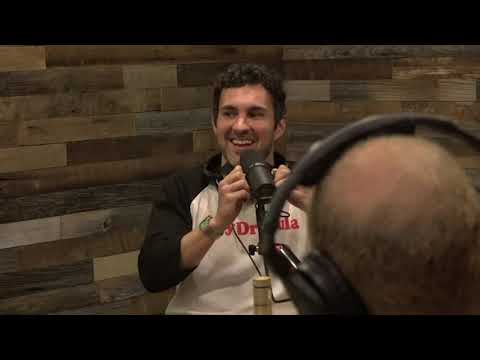
Joe Rogan Experience #1764 - Ari Shaffir, Shane Gillis & Mark Normand
Narrator, Narrator, Joe Rogan (host), Ari Shaffir (guest), Mark Normand (guest), Shane Gillis (guest), Shane Gillis (guest), Ari Shaffir (guest), Mark Normand (guest), Shane Gillis (guest), Mark Normand (guest), Ari Shaffir (guest), Shane Gillis (guest), Ari Shaffir (guest), Shane Gillis (guest), Mark Normand (guest), Ari Shaffir (guest), Joe Rogan (host), Shane Gillis (guest), Shane Gillis (guest), Ari Shaffir (guest), Joe Rogan (host), Mark Normand (guest), Mark Normand (guest), Ari Shaffir (guest), Joe Rogan (host), Shane Gillis (guest), Narrator, Mark Normand (guest), Mark Normand (guest), Narrator, Joe Rogan (host), Ari Shaffir (guest), Narrator
In this episode of The Joe Rogan Experience, featuring Narrator and Narrator, Joe Rogan Experience #1764 - Ari Shaffir, Shane Gillis & Mark Normand explores four Unfiltered Comics Rip on Politics, Outrage, Sex, and Insanity Joe Rogan, Ari Shaffir, Shane Gillis, and Mark Normand sit down for a long, loose, and often offensive hang that jumps from New York politics and COVID censorship to trans prison policies, celebrity scandals, and grotesque injury stories.
Four Unfiltered Comics Rip on Politics, Outrage, Sex, and Insanity
Joe Rogan, Ari Shaffir, Shane Gillis, and Mark Normand sit down for a long, loose, and often offensive hang that jumps from New York politics and COVID censorship to trans prison policies, celebrity scandals, and grotesque injury stories.
The conversation is mostly riff-based comedy: they mock woke culture, media narratives, online censorship, and their own degeneracy while frequently veering into dark topics like the Holocaust, child trafficking conspiracies, and sex crimes.
They also reminisce about stand-up culture, legendary comics like Joey Diaz and Artie Lange, and Rogan’s ‘Fear Factor’ days, illustrating how extreme stunts, trolling, and boundary-pushing humor intersect with modern media constraints.
Throughout, the tone is intentionally provocative and chaotic, reflecting both the appeal and the controversy of this recurring “Protect Our Parks”–style episode: friends getting drunk and high and saying the things you’re not supposed to say on air.
Key Takeaways
Online platforms are aggressively policing COVID talk, often without nuance.
Shane Gillis’s podcast episode was removed from YouTube simply for joking that he ‘beat COVID by drinking beer,’ and other comics report delayed strikes for old episodes—highlighting blunt enforcement rather than context-aware moderation.
Get the full analysis with uListen AI
Identity politics can be exploited in unintended ways, especially in criminal justice.
They discuss male sex offenders claiming female or nonbinary identities to be placed in women’s prisons, arguing that self-ID rules can be gamed without medical transition, with real harms to vulnerable inmates.
Get the full analysis with uListen AI
Troll farms and disinformation operations are deeply embedded in U.S. social media.
Rogan cites reporting that 19 of the top 20 Christian Facebook pages and some of the largest “Black” and “women’s” pages were run from overseas troll farms, showing how foreign actors seed outrage and division across ideological lines.
Get the full analysis with uListen AI
Comedy thrives on pushing into taboo, but the environment for that is shrinking.
They repeatedly note that many bits (Holocaust jokes, AIDS origin riffs, Epstein conspiracies, donkey shows, etc. ...
Get the full analysis with uListen AI
Physical risk and grotesque spectacle remain a big part of entertainment culture.
From bull-leaping and bubble-suit rodeos to Jackass injuries and Fear Factor contestants drinking donkey semen, they show how audiences are both horrified and fascinated by extreme bodily risk—and how TV once happily broadcast it on network prime time.
Get the full analysis with uListen AI
Perceptions of health and body image are politically and emotionally charged.
They joke about Jonah Hill, Adele, and Lizzo as examples where weight loss or gain triggers fan backlash—illustrating how bodies have become symbolic battlegrounds for identity, representation, and “body positivity” vs. ...
Get the full analysis with uListen AI
Aging and anti-aging science are moving targets, blending promise and fear.
Rogan and the others talk about LASIK wearing off, new bacterial eye injections, and Harvard’s David Sinclair’s work on reversing biological age; they both fantasize about living to 400 and joke about the social and moral chaos that would create.
Get the full analysis with uListen AI
Notable Quotes
“If you’re 99 and listening to Spotify, get the booster.”
— Shane Gillis (deadpan, after joking about Betty White and vaccines)
“Imagine if you got to the point where you could go back to 21… but old people still have long ears. People are gonna know.”
— Joe Rogan
“You’re a kite flyer—you go where the winds go.”
— Ari Shaffir (insulting Normand for changing opinions mid-argument)
“You couldn’t even have this conversation on YouTube. We’re just people sitting around talking and that’s now a problem.”
— Joe Rogan
“Some of the stuff is just a real thing that happened… and the second you read about it, you’re like, ‘Oh shit, this is real.’”
— Shane Gillis (on scandals like the Franklin case and Epstein)
Questions Answered in This Episode
How much responsibility should platforms like YouTube have in distinguishing between literal medical advice and obvious comedy when moderating ‘misinformation’?
Joe Rogan, Ari Shaffir, Shane Gillis, and Mark Normand sit down for a long, loose, and often offensive hang that jumps from New York politics and COVID censorship to trans prison policies, celebrity scandals, and grotesque injury stories.
Get the full analysis with uListen AI
Where should the line be drawn on self-declared gender identity in contexts like prisons or sports when safety and fairness are at stake?
The conversation is mostly riff-based comedy: they mock woke culture, media narratives, online censorship, and their own degeneracy while frequently veering into dark topics like the Holocaust, child trafficking conspiracies, and sex crimes.
Get the full analysis with uListen AI
Does learning about organized troll farms and foreign disinformation change how you interpret viral outrage or ‘trending’ culture-war stories?
They also reminisce about stand-up culture, legendary comics like Joey Diaz and Artie Lange, and Rogan’s ‘Fear Factor’ days, illustrating how extreme stunts, trolling, and boundary-pushing humor intersect with modern media constraints.
Get the full analysis with uListen AI
Can shows like Fear Factor and Jackass exist in the same form today, or has our tolerance for televised bodily harm and humiliation fundamentally shifted?
Throughout, the tone is intentionally provocative and chaotic, reflecting both the appeal and the controversy of this recurring “Protect Our Parks”–style episode: friends getting drunk and high and saying the things you’re not supposed to say on air.
Get the full analysis with uListen AI
Are comics like Rogan’s group preserving a necessary space for offensive, taboo-breaking humor, or are they clinging to a style that culture is right to move away from?
Get the full analysis with uListen AI
Transcript Preview
(drum roll) Joe Rogan podcast, check it out.
The Joe Rogan Experience. (energetic music)
Train by day, Joe Rogan podcast by night, all day. Hey, we're up and running. To the cuddle party.
Cheese. All right.
High five. High five.
Hey, hey, comedy.
(Uh) There we go, Gil.
Yes, yes.
So what are we calling this? Are we calling this Protect Our Parks?
No.
I think it's Protect Our Parks.
We need a better name.
We didn't do a good job protecting the last one.
What happened to the park?
(laughs) It's gone. (laughs)
Since the podcast.
It's 50 acres just a dirt pile now.
Good. That is so crazy that they allowed them to do that, that they just do it ... they just totally did that. You know nobody in the city voted for that.
Not a single person.
(laughs)
(laughs) I mean, yeah.
Fucking evil, man. It's evil.
There's definitely gonna be a, a prison in there or high rises in no time.
What is the general consensus about the new mayor of New York?
Oh, it's bad already.
Saw people get mad at him for-
Really?
I think he seems nice.
I saw people get mad at him for he says, "We had to protect the low-wage employees." 'Cause he's like, "The people at Dunkin' Donuts," and (laughs) he goes, "They're not educated. They're not smart enough to be in a corner office." And everyone's like, "What?"
Oh, Jesus. (laughs)
(laughs)
(laughs)
He's not wrong.
His point was protect them, but, but the way he said it, people were like, "What's that supposed to mean?"
You, you gotta protect these morons.
But he's, uh, he hired his brother, and he gave him, like, half a mil.
$250,000 yeah.
There you go.
Yeah. His last job, I think, was parking cars.
Damn.
Oh, really?
Yeah.
What does he get for that?
Not much.
Just whatever he can clear out of the middle? (laughs)
(laughs)
(laughs)
That's a nice thing though. That's, that's what you want in your leader, somebody who's willing to hook his brother up.
Tell him what his dad did to him.
I don't want a guy who, I w- I don't want a guy who wouldn't hook his brother up.
Right, I don't want a guy who shits on his brother.
Tell that to Cuomo.
(laughs)
That's what they said about Cuomo. They're like, "Why'd you help your brother?" I'm like, "What?"
It's his brother.
(laughs) Yeah, what are you talking about?
I think it's the way he did it, though, right? Wasn't the Cuomo thing that he was-
Too Italian.
... y- he was using his influence to, like, gather-
Install uListen to search the full transcript and get AI-powered insights
Get Full TranscriptGet more from every podcast
AI summaries, searchable transcripts, and fact-checking. Free forever.
Add to Chrome