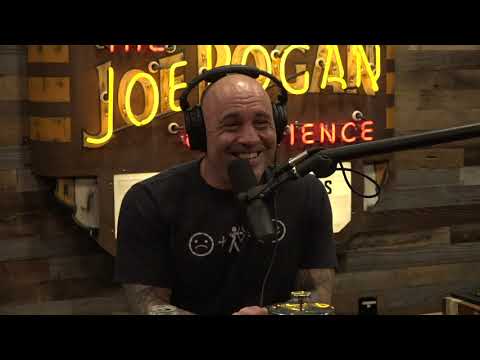
Joe Rogan Experience #1686 - Ari Shaffir
Narrator, Joe Rogan (host), Ari Shaffir (guest), Narrator, Narrator
In this episode of The Joe Rogan Experience, featuring Narrator and Joe Rogan, Joe Rogan Experience #1686 - Ari Shaffir explores ari Shaffir, Ayahuasca, Mitzi Shore, and Comedy’s Wild Evolution Joe Rogan and Ari Shaffir range through an extremely loose, three-hour conversation that bounces from hair loss and ancient plagues to drugs, policing, COVID, and the inside history of The Comedy Store.
Ari Shaffir, Ayahuasca, Mitzi Shore, and Comedy’s Wild Evolution
Joe Rogan and Ari Shaffir range through an extremely loose, three-hour conversation that bounces from hair loss and ancient plagues to drugs, policing, COVID, and the inside history of The Comedy Store.
They swap travel stories from South America, discuss intense psychedelic experiences (especially Ari’s ayahuasca trip and its vision of Mitzi Shore), and explore how artists create their best work under pressure.
The episode also critiques cancel culture, media institutions like The New York Times and Comedy Central, and the ways social media algorithms and corporate incentives distort public discourse.
They close by championing under-recognized comics and emphasizing how much of modern stand-up has been shaped by The Comedy Store, Mitzi Shore, and a collaborative, non-competitive comedy culture.
Key Takeaways
Pressure and hard circumstances often forge better performers.
Rogan describes how Mitzi Shore deliberately put him in brutal follow-spots (e. ...
Get the full analysis with uListen AI
Institutional cowardice lets small internal factions dictate culture.
Ari’s Bon Appétit and New York Times examples show how a few young staffers, empowered by Slack and social media, can scare leadership into overcorrecting, censoring, or firing people to avoid being labeled problematic.
Get the full analysis with uListen AI
Cancel culture often starts from a desire for good but uses bad methods.
Rogan argues that even groups like Antifa or MAGA rioters think they’re improving the world, but they’re poorly informed, easily misled, and using destructive tactics that ignore long-term consequences and nuance.
Get the full analysis with uListen AI
Psychedelics can reframe how artists see their work and mentors.
On ayahuasca, Ari “talks” with Mitzi Shore and visualizes every great set or creation as glowing orbs that exist forever; this helps him let go of revenge, accept past losses, and refocus on making new work.
Get the full analysis with uListen AI
Corporate and political incentives corrupt information about health.
They point out that pharma companies profit from patented solutions, not cheap generics or lifestyle advice, while politicians and press secretaries talk about deplatforming “misinformation” instead of promoting sleep, exercise, vitamins, and stress reduction.
Get the full analysis with uListen AI
Sex work and platform-based content are normalizing transactional intimacy.
Stories about casual prostitution, OnlyFans, and “housewives” turning to paid encounters highlight a shift in how people view selling sex or access to their bodies, especially when traditional jobs disappeared during COVID.
Get the full analysis with uListen AI
Comics are increasingly bypassing legacy gatekeepers to support one another.
Ari’s Comedy Central story and Rogan’s praise of podcasts, YouTube, and Substack illustrate how comics like Shane Gillis, Dave Attell, Earthquake, and others can build careers outside of TV, amplified by peers rather than executives.
Get the full analysis with uListen AI
Notable Quotes
“The worst thing that's ever happened to you is the worst thing that's ever happened to you, even if it's not that bad.”
— Joe Rogan
“If you want it better… actually talk to cops. Ask them, ‘What can we do to make this better?’ Not ‘defund them and send social workers to domestic calls.’”
— Joe Rogan
“What I want to do is make orbs. Every time you pure something artistically, it lives forever up there, playing with all the other great things.”
— Ari Shaffir (describing his ayahuasca vision)
“Mitzi was like a drill sergeant. She beat you down so the industry couldn’t kill you later.”
— Ari Shaffir
“I don’t trust the news anymore at all.”
— Joe Rogan
Questions Answered in This Episode
How much of cancel culture is genuinely about harm reduction versus status-seeking and power plays inside institutions?
Joe Rogan and Ari Shaffir range through an extremely loose, three-hour conversation that bounces from hair loss and ancient plagues to drugs, policing, COVID, and the inside history of The Comedy Store.
Get the full analysis with uListen AI
If psychedelics can help artists and trauma survivors reframe their lives so profoundly, what ethical framework should govern their wider use?
They swap travel stories from South America, discuss intense psychedelic experiences (especially Ari’s ayahuasca trip and its vision of Mitzi Shore), and explore how artists create their best work under pressure.
Get the full analysis with uListen AI
What would a realistic, effective reform of policing look like that incorporates both officer safety and community protection, instead of simplistic slogans?
The episode also critiques cancel culture, media institutions like The New York Times and Comedy Central, and the ways social media algorithms and corporate incentives distort public discourse.
Get the full analysis with uListen AI
Given the obvious incentives in pharma and media, how can ordinary people reliably evaluate health information about COVID, vaccines, or alternative treatments?
They close by championing under-recognized comics and emphasizing how much of modern stand-up has been shaped by The Comedy Store, Mitzi Shore, and a collaborative, non-competitive comedy culture.
Get the full analysis with uListen AI
Are we moving toward a world where more people prefer independent, peer-amplified artists over legacy media, and what does that mean for the next generation of comics?
Get the full analysis with uListen AI
Transcript Preview
(drumming) Joe Rogan podcast, check it out. The Joe Rogan Experience.
Train by day, Joe Rogan podcast by night. All day. (rock music) You decided to shave your head now, huh?
Yeah. I like it.
Enough.
What?
It's better, right? Enough.
It's smoother and it's easier.
Yes.
Yeah.
So much better.
Yeah.
Imagine going to a barber shop now.
God took care of a lot of it.
God took care of it.
(sighs) Yeah.
God cursed you. Too much scalp.
I want it back.
Do you?
I want ... I, uh, I really wanna do a mohawk correctly.
Oh.
And I want it for a little bit. Remember how much fun I'd have with my hair?
Well, you could do stuff with your hair to get it back that's not as dangerous as, uh, the, the, uh-
Staples?
No. No, no, no, no, no. There's, uh, ways ... There's f- ... There's a guy name, uh, Derek, he's got a website called More Plates, More Dates, and he, uh, he talks a lot about, uh, hormone optimization, all kinds of stuff, but also recovering hair loss. And w- ... There's a bunch of different things you can do. There's topical shampoos that remove DHT from the scalp that help bring your hair back.
But it'll get back?
I don't know, man. You're pretty far gone.
That's ... I ... There's this, um, Amazonian, like, treatment for it.
Amazonian?
Yeah, An- ... Eng- ... Ungurahua.
Ooh.
And, um ... And then I found this lady who was like, "Uh, there's a lot of fake shit on the market there." Ooh, s- can I curse on this? And, uh ... (laughs)
(laughs)
So, so I drop ... Fuss, drop. I ... Sorry, won't do it again. Um ...
That's hilarious.
And so she could smell it and tell, like, that's real, like, "Oh, no way, that's g- ... A lotta corn oil." And I was like-
Oh.
... See, this botanist guy, I was like, "Will it work?" And he was like, "Yes." And then he looks up and he goes, "Unless you're too far gone (laughs) then it will not work."
Yeah.
But he goes, "None of those people in the Amazon have hair loss."
Really?
And that's why. Yeah, all those fucking ... We talked about all those-
Mostly it's genetic, though.
Yeah.
Yeah. Mostly it's genetic. If the ... A lot of people in the Amazon don't have it, I doubt it's 'cause they're all-
Well-
... rubbing leaves on their head.
I get what you're saying.
'Cause, uh, it's not a f- ... A common thing amongst, uh, Native Americans that are pure bled ... Uh, pure blood, rather.
Really?
Install uListen to search the full transcript and get AI-powered insights
Get Full TranscriptGet more from every podcast
AI summaries, searchable transcripts, and fact-checking. Free forever.
Add to Chrome