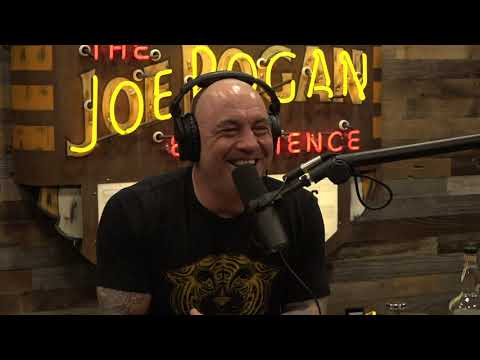
Joe Rogan Experience #1655 - Sebastian Junger
Sebastian Junger (guest), Narrator, Joe Rogan (host)
In this episode of The Joe Rogan Experience, featuring Sebastian Junger and Narrator, Joe Rogan Experience #1655 - Sebastian Junger explores sebastian Junger Dissects Death, Freedom, and America’s Fractured Tribe Sebastian Junger recounts nearly bleeding to death from a ruptured pancreatic aneurysm, describing a vivid near-death experience, his atheist struggle to interpret it, and the ICU nurse’s advice to view it as “sacred,” which radically deepened his appreciation for life and interdependence.
Sebastian Junger Dissects Death, Freedom, and America’s Fractured Tribe
Sebastian Junger recounts nearly bleeding to death from a ruptured pancreatic aneurysm, describing a vivid near-death experience, his atheist struggle to interpret it, and the ICU nurse’s advice to view it as “sacred,” which radically deepened his appreciation for life and interdependence.
He and Rogan explore the themes of Junger’s book *Freedom*: how mobility, fighting ability, and strategic thinking let smaller people and groups resist larger powers, from Apache and Comanche fighters to labor movements, guerrillas, and MMA strategy.
They dig into near‑death and mystical neurochemistry (DMT, the pineal gland), tribal psychology, leadership and courage, and America’s political polarization, drawing parallels between far-right “MAGA” and far-left “woke” extremes that both erode shared reality and civic trust.
Junger closes by arguing that real freedom requires obligations to one’s community and country, and proposes three concrete civic rituals—donating blood, voting, and serving on juries—as ways to reforge a sense of belonging and responsibility in modern America.
Key Takeaways
Near-death can radically reset your priorities—and you don’t need to almost die to learn from it.
Junger’s sudden catastrophic bleed, “black pit” experience, and visit from his deceased father jolted him into seeing everyday existence as miraculous and precarious; mentally revisiting that moment helps him cut through daily irritations and stay anchored in gratitude and presence.
Get the full analysis with uListen AI
Reframing trauma as ‘sacred’ instead of just ‘scary’ can transform its impact.
An ICU nurse tells Junger to see his brush with death as sacred; that single reframe turns obsessive fear into a source of meaning, deepening his sense of connection to his children, to anonymous blood donors, and to the broader human web that kept him alive.
Get the full analysis with uListen AI
Being physically fit and resilient isn’t vanity; in crisis it can literally buy you survival time.
Junger’s doctors directly credit his lifetime of running, sobriety, and physical robustness with keeping his heart from failing as he lost 90% of his blood, underscoring how long-term fitness can be an invisible insurance policy against sudden catastrophe.
Get the full analysis with uListen AI
Small actors can beat larger powers through mobility, endurance, and strategy—not brute force.
From Apache bands outrunning armies, Scythians unnerving Persian king Darius, and Montenegrins resisting the Ottoman Empire, to smaller MMA fighters leveraging cardio and timing, Junger’s “run, fight, think” framework shows how agility and tactics can offset size and wealth.
Get the full analysis with uListen AI
True leadership means sharing risk and sacrifice, not insulating yourself with power.
Whether it’s an Irish rebel commander walking into gunfire, a U. ...
Get the full analysis with uListen AI
Extremes on the left and right share the same authoritarian impulse to dictate thought.
Junger compares MAGA election denialism with far-left “woke” orthodoxy (“WAGA”), noting both claim moral monopoly on truth, delegitimize opponents, and corrode the shared “well” of public discourse that any large democracy needs to survive.
Get the full analysis with uListen AI
Freedom isn’t just lack of constraint; it depends on accepting obligations to the group.
Drawing on gangs like the Vice Lords, frontier militias, and modern institutions, Junger argues you cannot be totally safe, comfortable, and completely obligation-free; real autonomy is sustained by mutual defense and shared duties—today expressed through voting, jury service, and even giving blood.
Get the full analysis with uListen AI
Notable Quotes
“Stop thinking of that moment as scary and start thinking of it as sacred.”
— ICU nurse (recounted by Sebastian Junger)
“Life is a frigging miracle… that we’re here for even one day is a freaking miracle.”
— Sebastian Junger
“Toughness will kill you. If it doesn’t save you, it will kill you.”
— Sebastian Junger
“If you make yourself one of everyone else, then you’re really, really a leader. When you use your position of power to protect yourself… you’re not a leader. You’re an opportunist.”
— Sebastian Junger
“We need clean water to drink in our public discourse… and the extremes on both sides have poisoned it.”
— Sebastian Junger
Questions Answered in This Episode
How should we interpret near-death experiences like Junger’s ‘black pit’ and visitation from his father—pure brain chemistry, or evidence of something deeper we don’t yet understand?
Sebastian Junger recounts nearly bleeding to death from a ruptured pancreatic aneurysm, describing a vivid near-death experience, his atheist struggle to interpret it, and the ICU nurse’s advice to view it as “sacred,” which radically deepened his appreciation for life and interdependence.
Get the full analysis with uListen AI
In practical terms, how can individuals cultivate the kind of ‘sacred’ appreciation for life that Junger gained, without going through a major trauma or brush with death?
He and Rogan explore the themes of Junger’s book *Freedom*: how mobility, fighting ability, and strategic thinking let smaller people and groups resist larger powers, from Apache and Comanche fighters to labor movements, guerrillas, and MMA strategy.
Get the full analysis with uListen AI
Where is the line between protected free speech and dangerous incitement, especially when leaders use rhetoric that can plausibly trigger violence or undermine democratic legitimacy?
They dig into near‑death and mystical neurochemistry (DMT, the pineal gland), tribal psychology, leadership and courage, and America’s political polarization, drawing parallels between far-right “MAGA” and far-left “woke” extremes that both erode shared reality and civic trust.
Get the full analysis with uListen AI
If freedom requires obligations, what additional modern ‘rituals’—beyond voting, jury duty, and blood donation—might realistically rebuild a sense of shared American identity?
Junger closes by arguing that real freedom requires obligations to one’s community and country, and proposes three concrete civic rituals—donating blood, voting, and serving on juries—as ways to reforge a sense of belonging and responsibility in modern America.
Get the full analysis with uListen AI
Given the parallel between guerrilla warfare and MMA strategy, what can personal training in combat sports teach ordinary people about navigating power imbalances in work, politics, or society?
Get the full analysis with uListen AI
Transcript Preview
(drum music plays) Joe Rogan podcast. Check it out.
The Joe Rogan Experience.
Train by day, Joe Rogan podcast by night. All day. (rock music plays)
Good to see you, man. How are you?
Uh, really good. Very good to see you too.
Yeah, I see you're, uh, very prepared. Look at all these, uh-
Yeah, look at all those notes on those notecards. Yeah.
Yeah. Serious stuff.
Yeah.
We were talking before. This, there's so much to, to talk about, but we were talking before and you were saying that, uh, over the last year you almost died because you had some crazy internal an-, uh, you had an aneurysm in your pancreas. Is that what you said it was?
Yeah. I had an undiagnosed asymptomatic aneurysm, which is a sort of ballooning in the blood vessel, uh, in the artery, in my pancreatic artery. And out of the blue, it was a congenital thing. Like, I'd apparently developed during my whole life. It, um, it was just from a structural problem. And, uh, in one afternoon, one beautiful June afternoon last year, it burst. And, um, you know, I just felt this pain shoot through my stomach. I was like, "Damn, what is that?" And within a few minutes, I couldn't stand up and within about 10 minutes, I was starting to go blind. And my wife called the, the ambulance and, um, those guys got there and, and, um, you know, I was tanking really fast and the hospital was an hour away. And, uh, by a miracle, I don't even think the doctors understand it, but by a miracle I was still alive when I got to the hospital. I, I lost 90% of my blood into my abdomen. Um, and, um, I didn't know I was dying, but I was dying, and I was right in that sort of twilight zone. And, um, the, uh, a, a black pit opened up underneath me and I felt myself starting to get pulled down into it and I, I didn't wanna go. Like, it was cold and dark and black and bottomless, and I just knew, like, "Do not go down there." And I was getting pulled down into it. And right at that moment, my, my father who passed away in 2012, um, my father sort of appeared next to me and started trying to communicate, trying to communicate with me and comforting me. And, um, I, um, I sort of waved him away and the last thing I remember saying to the doctor, I was sort of losing consciousness, and the last thing I said to the doctor was, "You're losing me right now. You gotta hurry." He was trying to put a... He'd cut my neck open. He was trying to put a line into my neck to... You know, they pumped 10, 10 units of blood into me and that's what brought me back. It was really close. (exhales)
Install uListen to search the full transcript and get AI-powered insights
Get Full TranscriptGet more from every podcast
AI summaries, searchable transcripts, and fact-checking. Free forever.
Add to Chrome