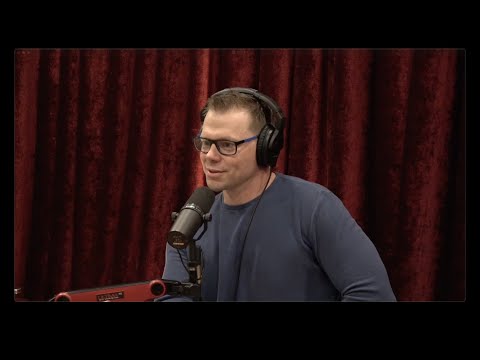
Joe Rogan Experience #2289 - Darryl Cooper
Joe Rogan (host), Darryl Cooper (guest)
In this episode of The Joe Rogan Experience, featuring Joe Rogan and Darryl Cooper, Joe Rogan Experience #2289 - Darryl Cooper explores darryl Cooper Defends Nuanced History Amid Outrage Culture And War Fears Joe Rogan and historian–podcaster Darryl Cooper (MartyrMade) discuss the backlash to Cooper’s Tucker Carlson appearance, where his attempts to humanize Germans in WWII got him labeled an antisemite and Nazi apologist.
Darryl Cooper Defends Nuanced History Amid Outrage Culture And War Fears
Joe Rogan and historian–podcaster Darryl Cooper (MartyrMade) discuss the backlash to Cooper’s Tucker Carlson appearance, where his attempts to humanize Germans in WWII got him labeled an antisemite and Nazi apologist.
Cooper explains his method: deeply researching conflicts and extremist figures (Nazis, Jonestown, Israel–Palestine, U.S. wars) until he can understand how events felt and made sense to the people involved, without endorsing their actions.
They broaden the conversation into how war degrades societies, how overreactive accusations of racism/antisemitism can fuel real extremism, and why understanding ‘evil’ actors is necessary to avoid repeating catastrophic mistakes.
Along the way they cover cult psychology, labor history, immigration and nationalism, drugs, and America’s unique, constantly renegotiated identity, arguing that long-form storytelling and historical literacy are antidotes to shallow outrage and manipulation.
Key Takeaways
Nuanced historical empathy is not endorsement, but audiences often conflate the two.
Cooper insists that really understanding Nazis, Jim Jones, or Bolsheviks requires putting yourself in their shoes to see how their choices made sense to them—yet in the case of WWII Germans, many people assume that humanization equals justification.
Get the full analysis with uListen AI
Overusing labels like “antisemite” or “racist” weakens them and can backfire.
Rogan and Cooper argue that branding nuanced analysis as bigotry teaches onlookers that mainstream discourse is dishonest, pushing curious people toward fringe sources that will answer their questions without shame.
Get the full analysis with uListen AI
War damages the moral fabric of societies, not just the bodies of combatants.
Cooper notes that atrocities like Abu Ghraib horrified Americans partly because of what they revealed about ‘our’ people, and he believes decades of war on terror have hardened hearts and normalized dehumanization.
Get the full analysis with uListen AI
Most ‘evil’ movements hijack real virtues—love, loyalty, justice—not pure malice.
From Hitler’s love of the German people to Jim Jones’ early civil-rights activism, Cooper shows how sincere ideals and community bonds can be twisted by paranoia, drugs, power, and historical trauma into catastrophic outcomes.
Get the full analysis with uListen AI
Industrialization and economic incentives often drive moral disasters like slavery or factory farming.
They compare European reliance on African slavery and Stalinist collectivization with modern industrial agriculture, arguing that structural pressures can trap societies in brutal systems individuals may recognize as wrong.
Get the full analysis with uListen AI
America’s perpetual demographic churn forces constant renegotiation of national identity.
Cooper traces successive waves of immigration and internal migration (Irish, Germans, Italians, Jews, Black Great Migration, post‑1965 immigration) to show why U. ...
Get the full analysis with uListen AI
Long-form, engaging history can unlock “non-academic” people’s intellectual potential.
Cooper gets frequent messages from listeners who thought they were “dumb kids” uninterested in books until a podcast episode hooked them; once engaged, they build serious reading habits and a new sense of their own capabilities.
Get the full analysis with uListen AI
Notable Quotes
““I don’t record anything until I feel like I can put myself in the shoes of the people that I’m gonna talk about and really kind of understand how their actions made sense to them with the information they had and in the context of their time.””
— Darryl Cooper
““It’s not there’s good people on one side and there’s evil people on the other side. No, there’s genuinely just human beings, and there’s horrible circumstances and then there’s evil people who lead these people in horrible circumstances to do evil, terrible things.””
— Joe Rogan
““When you get past a certain threshold of understanding people, you’re butting right up against empathizing with them… and people see that, you know, and you’re empathizing with evil people.””
— Darryl Cooper
““Calling everything racist and everything antisemitic when it’s clearly not is that you diminish what that word means… You’re essentially crying wolf.””
— Joe Rogan
““History is extremely messy… The crucial decisions that, like, turn history this way or that are often made under crisis conditions by people who… are the person who happens to be there at the time.””
— Darryl Cooper
Questions Answered in This Episode
Where should we draw the line between morally necessary condemnation and the kind of nuanced empathy Cooper advocates when discussing perpetrators of mass atrocities?
Joe Rogan and historian–podcaster Darryl Cooper (MartyrMade) discuss the backlash to Cooper’s Tucker Carlson appearance, where his attempts to humanize Germans in WWII got him labeled an antisemite and Nazi apologist.
Get the full analysis with uListen AI
How can educators and media outlets present complex historical narratives (like WWII from the German perspective) without opening themselves up to bad-faith accusations of apologism?
Cooper explains his method: deeply researching conflicts and extremist figures (Nazis, Jonestown, Israel–Palestine, U. ...
Get the full analysis with uListen AI
In what practical ways does over-policing speech about sensitive topics like Israel–Palestine or antisemitism contribute to radicalization and distrust of mainstream institutions?
They broaden the conversation into how war degrades societies, how overreactive accusations of racism/antisemitism can fuel real extremism, and why understanding ‘evil’ actors is necessary to avoid repeating catastrophic mistakes.
Get the full analysis with uListen AI
Given the structural incentives behind systems like factory farming or globalization, what realistic pathways exist to change them without triggering the kind of geopolitical ‘survival’ logic Cooper describes around slavery?
Along the way they cover cult psychology, labor history, immigration and nationalism, drugs, and America’s unique, constantly renegotiated identity, arguing that long-form storytelling and historical literacy are antidotes to shallow outrage and manipulation.
Get the full analysis with uListen AI
How can long-form content—podcasts, deep-dive series, narrative history—be used more intentionally to reach people who’ve written themselves off as “not academic” and help rebuild a culture of serious thinking?
Get the full analysis with uListen AI
Transcript Preview
(drumbeats) Joe Rogan podcast, check it out.
The Joe Rogan Experience.
Train by day, Joe Rogan podcast by night, all day. (rock music plays) The guys today, I think they're the highest level fighters of all time. We running? Hey, Darryl, what's going on, man?
How's it going?
And we were just talking UFC. Yeah. I think this is the, the h- we were talking about how exciting the Ankalaev and Pereira fight was, even though people didn't, they didn't like it 'cause it wasn't like some crazy result and a giant knockout like you get in most Pereira fights. But, it was so technical and Per- Ankalaev just did a fantastic job of shutting down the scariest guy in the division.
Yeah. I just... And the psychological aspect of it, of just, he made him back up and second guess himself.
Yeah.
And you know, that's... You can't just do that by being aggressive. You can't, you know, you really gotta get in there and you gotta hurt him a little bit and you just have to put that on him. And it was, it was amazing to watch. I thought it was a great fight.
Well, it was so interesting because the consequences of exchanging with Pereira are so high, but also Ankalaev. Ankalaev has knocked a lot of people out. We always look at Pereira's knockouts, but Ankalaev has knocked out some of the best guys in the division and he only lost one time, and that was... Paul Craig has the nastiest fucking triangle. It's so sneaky-
(laughs)
... and so quick and you don't expect it. He's so high level off his back and he caught him, I think, with like one second to go in the third round-
Mm-hmm.
... a fight that he was losing.
Yeah. He, he broke Jamal's arm or-
Mm-hmm. Yeah.
... dislocated his elbow too.
Yeah.
He's one of those guys like, uh, that... You know, like Ryan Hall.
Mm-hmm.
It's like, you know, they're on the feet dancing around. It's like, you know, "What are we really watching here?" kind of, but man, as soon as they hit the ground it's next level.
Yeah. He's, there's a giant disparity between his standup, which is good, his good standup, you know, and the, the Bo Nickal fight was entirely standup. It was a good fight, you know, he was... He looked good on the feet, but you would never say, you know, this is like an Israel Adesanya type character.
Yeah.
He doesn't have that level of proficiency with striking, but God, when he gets on his back, you're in such danger like nobody else in the division. It's weird 'cause most guys you're on their back, you're not really worried about it. With Paul Craig, it's like everything has to be tight.
Especially guys that size-
Install uListen to search the full transcript and get AI-powered insights
Get Full TranscriptGet more from every podcast
AI summaries, searchable transcripts, and fact-checking. Free forever.
Add to Chrome