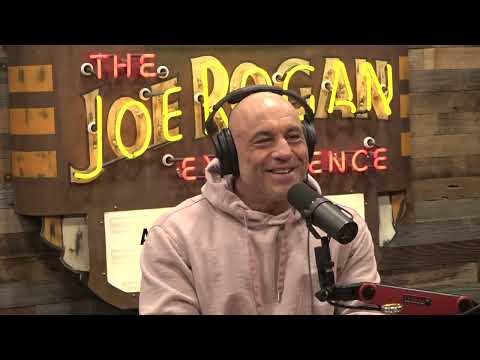
Joe Rogan Experience #2088 - Yannis Pappas
Yannis Pappas (guest), Narrator, Joe Rogan (host), Narrator, Narrator, Narrator, Narrator, Narrator, Narrator, Narrator, Narrator, Narrator, Narrator, Narrator
In this episode of The Joe Rogan Experience, featuring Yannis Pappas and Narrator, Joe Rogan Experience #2088 - Yannis Pappas explores war, trauma, AI, and comedy: Joe Rogan and Yannis riff relentlessly Joe Rogan and Yannis Pappas range across politics, history, mental health, technology, and standup culture in a long, free-form conversation. They mock modern protest culture and media narratives around conflicts like Israel–Palestine, Ukraine–Russia, and 9/11, while stressing how complex and propagandized these issues are. A substantial section dives into trauma, depression, EMDR therapy, and how childhood experiences and environment shape people’s worldviews. They also speculate about AI, mind-reading tech, social media manipulation, and the future of free speech, all while repeatedly returning to comedy as a coping mechanism and a rare, honest community.
War, trauma, AI, and comedy: Joe Rogan and Yannis riff relentlessly
Joe Rogan and Yannis Pappas range across politics, history, mental health, technology, and standup culture in a long, free-form conversation. They mock modern protest culture and media narratives around conflicts like Israel–Palestine, Ukraine–Russia, and 9/11, while stressing how complex and propagandized these issues are. A substantial section dives into trauma, depression, EMDR therapy, and how childhood experiences and environment shape people’s worldviews. They also speculate about AI, mind-reading tech, social media manipulation, and the future of free speech, all while repeatedly returning to comedy as a coping mechanism and a rare, honest community.
Key Takeaways
International conflicts are far more complex than media headlines suggest.
Rogan and Pappas argue that narratives around wars—whether Israel–Palestine, Ukraine–Russia, or 9/11—are heavily simplified and often manipulated; understanding motives like power, NATO expansion, and energy interests is crucial before taking hard positions.
Get the full analysis with uListen AI
Early trauma and life experiences deeply shape adult anxiety and depression.
They emphasize that panic, depression, and PTSD often stem from childhood abuse, neglect, or later traumatic events, and that people’s current behavior is the cumulative product of those experiences plus their interpretations of them.
Get the full analysis with uListen AI
EMDR and trauma-focused therapies can be effective where talk therapy or meds alone fail.
Pappas describes his own success with EMDR—eye-movement desensitization and reprocessing—as a structured, time‑bounded method that accesses subconscious material, reprocesses memories, and reduces their emotional charge, aligning with newer neuroscience about how trauma is stored.
Get the full analysis with uListen AI
Medication can help in crisis but is unlikely to be a complete solution.
They compare psych meds to historical medical leeches—useful at times but ultimately a crude tool—arguing future mental health care will focus more on “rewiring” the brain (trauma work, neuroplasticity, targeted therapies) than blunt chemical intervention.
Get the full analysis with uListen AI
Information ecosystems are actively manipulated by governments, corporations, and foreign actors.
They highlight examples like Russian troll farms, algorithmic amplification, FBI informant-heavy plots, and platform censorship to argue that online outrage and division are often engineered, and that many social media accounts are bots or coordinated influence operations.
Get the full analysis with uListen AI
AI and neural tech will radically change communication and truth-detection.
Discussing real-time translation phones, AI summarization, and Neuralink-style implants, they predict a future where language barriers vanish and even mind‑reading or emotional transparency could make lying and traditional power hustles far harder to sustain.
Get the full analysis with uListen AI
Comedy and honest community are powerful buffers against a chaotic world.
Both frame standup and greenroom camaraderie as rare spaces where people can say anything, process horrific realities through humor, and enjoy genuine human connection—something they imply is increasingly scarce in a censored, image-driven culture.
Get the full analysis with uListen AI
Notable Quotes
“You are the accumulation of your processing of every experience you've ever had.”
— Joe Rogan
“Medication is gonna be like leeches. They didn’t fix the brain—they just did chemicals.”
— Joe Rogan
“Trauma is not necessarily the thing that happened to you; it’s how you react to the thing that happened to you.”
— Yannis Pappas
“If you want to really connect with humans, just actually be a real human. And the only way you do that is if you’re being truthful.”
— Joe Rogan
“We’re the last of the meat humans.”
— Joe Rogan
Questions Answered in This Episode
How should ordinary people navigate geopolitical issues when media narratives are clearly incomplete or biased?
Joe Rogan and Yannis Pappas range across politics, history, mental health, technology, and standup culture in a long, free-form conversation. ...
Get the full analysis with uListen AI
If trauma shapes so much of adult life, what practical steps can someone take to start healing without access to expensive therapy?
Get the full analysis with uListen AI
Where is the ethical line between necessary undercover work and entrapment when law enforcement infiltrates extremist plots?
Get the full analysis with uListen AI
Could a future of AI-enhanced mind-reading actually reduce war and corruption, or would it simply become another tool for control?
Get the full analysis with uListen AI
In a world of bots, troll farms, and algorithmic manipulation, how can comedians and creators stay genuinely subversive and honest?
Get the full analysis with uListen AI
Transcript Preview
(drumming music) Joe Rogan podcast. Check it out.
The Joe Rogan Experience.
Train by day, Joe Rogan podcast by night, all day. (rock music) Yannis Papas.
Joe Rogan.
Yannis Papas.
Yannis Papas.
How are you, my brother?
I'm good. How you doing?
What the fuck's cracking?
I'm doing good, man. Just enjoying Austin.
Are you enjoying our town of freedom?
I'm enjoying the town of freedom. Yes.
This is the town of freedom.
Yes.
There's freedom here. This is the Wild West.
Yes. I'm enjoying it. I'm enjoying it. I'm eating. I went to Suerte.
Oh, that's a good spot.
It was incredible.
Yeah, that's a good spot.
I think it's the best Mexican I ever had.
It's very good.
Yeah.
There's a lot of good Mexican out here.
Yeah. But that-
That's- that's a good spot though.
That was good. Yeah.
Yeah.
And, of course, hit the Terry B's on Martin Luther King Day, so it was empty. It was nice.
Suerte, you have the added benefit of being around people with masks. That's like a East- East Austin.
I didn't- I haven't seen any masks.
You haven't seen any? (laughs)
No. I think... Well, I did in Vancouver. I was in Vancouver before this.
(laughs) They wearing them.
Yeah.
They were wearing them.
They're still going.
They never stopped.
No, they're still going. Yeah. Yeah.
It's wild. There's a San Francisco, um, like, town hall meeting, and they- they passed a vote to stop, uh, for a ceasefire in Palestine.
I saw it. Yeah.
Yeah, and so they're all masked up, and they're dancing around, and they got blue hair, and somebody made a caption that this is literally South Park.
(laughs)
This is literally an episode of South Park.
Yeah.
And it... They look like fucking complete maniacs left in this war-torn, shattered hull of a city.
Yeah.
Whatever's left, it's filled with human shit-
Yeah.
... and tents everywhere. They're dancing around like they've stopped the ceasefire in Palestine. "Yeah, we voted for it. Stop. Stopped it."
They solved it in Oakland.
Like as if Benjamin Netanyahu's paying attention.
Right, like that's gonna work.
He's gonna go, "Oh, I guess I'll stop now."
Yeah. He stopped traffic on the way to the airport in New York, and that'll do it. (laughs)
Yeah, that does it. That generally does it.
That's what, that's- that's what Netanyahu's waiting for. He's like, "All right, now I've- now I've- I've seen the error in my ways now."
"Now I gotta pull back."
"Now I gotta pull back."
"I did go a little too far. Let me back up."
"Yeah, let me back it up right now."
Install uListen to search the full transcript and get AI-powered insights
Get Full TranscriptGet more from every podcast
AI summaries, searchable transcripts, and fact-checking. Free forever.
Add to Chrome