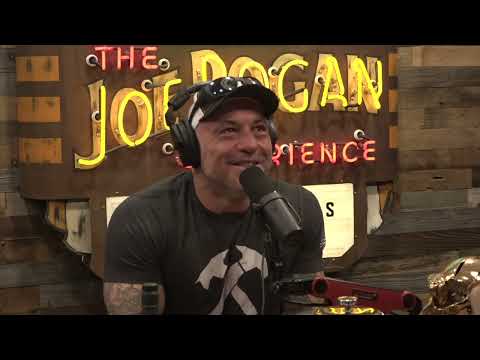
Joe Rogan Experience #1956 - Luke Combs
Narrator, Joe Rogan (host), Luke Combs (guest)
In this episode of The Joe Rogan Experience, featuring Narrator and Joe Rogan, Joe Rogan Experience #1956 - Luke Combs explores luke Combs on doubt, success, OCD, hunting, and hard-earned humility Luke Combs joins Joe Rogan for a wide-ranging conversation that moves from music, creativity, and fame to OCD, mental health, hunting, and physical transformation. Combs explains how self-doubt and constant self-analysis drive his songwriting and how Vine and early social media helped launch his career before Nashville fully understood online fanbases.
Luke Combs on doubt, success, OCD, hunting, and hard-earned humility
Luke Combs joins Joe Rogan for a wide-ranging conversation that moves from music, creativity, and fame to OCD, mental health, hunting, and physical transformation. Combs explains how self-doubt and constant self-analysis drive his songwriting and how Vine and early social media helped launch his career before Nashville fully understood online fanbases.
He opens up in detail about living with a severe form of OCD, how intrusive thoughts nearly derailed his life and college career, and how he’s learned to function, create, and perform at the highest level while managing it. Rogan and Combs also dive deep into hunting and conservation, discussing Steve Rinella, big-game stories, and the appeal of hard, technical pursuits like elk hunting.
Later, they talk candidly about body image and health: Combs describes long-term frustration with his weight, a desire to be fit for his son’s future, and his resolve to finally commit to serious, sustained change. Throughout, Rogan frames Combs’ humility and inner battles not as flaws but as part of what makes his art resonate so deeply with fans.
Key Takeaways
Self-doubt can be a productive engine for creative growth.
Combs insists his constant questioning—“is this good enough, is it country enough? ...
Get the full analysis with uListen AI
Building a fanbase early gives artists leverage against traditional gatekeepers.
His early use of Vine—posting six-second covers of the strongest hooks in country classics—meant he arrived in Nashville already selling music, which shocked labels and gave him unusual negotiating power.
Get the full analysis with uListen AI
OCD isn’t just about visible rituals; intrusive thoughts can be crippling and invisible.
Combs describes “purely obsessional” OCD where unwanted, disturbing thoughts trigger panic, and the compulsion is mental rumination and reassurance-seeking—often while he’s on stage in front of thousands, with no one aware.
Get the full analysis with uListen AI
Avoidance and constant reassurance can worsen obsessive thoughts.
He explains that trying to suppress thoughts or seeking others to say “you’re fine” gives those thoughts more power; paradoxically, accepting uncertainty (“I might think that, and that’s okay”) is what weakens the cycle.
Get the full analysis with uListen AI
Fame rarely feels like the emotional climax people imagine.
Both Rogan and Combs say big awards and milestones don’t produce huge emotional highs; the real satisfaction comes from the work itself—the new joke that lands or the song that makes someone sob in the front row.
Get the full analysis with uListen AI
Authenticity and humility are strategic advantages in a celebrity culture.
Combs is acutely aware that his crew represents him; he works to stay approachable, credit his team, and resist the diva model of stardom, which Rogan argues helps sustain both career and character over time.
Get the full analysis with uListen AI
Physical change is a long, scientific process—especially after years of neglect.
Combs candidly admits his weight is his “mountain,” that short bursts of effort haven’t worked, and that he now feels a deep obligation as a father to commit to a slow, disciplined path of exercise and diet for long-term health.
Get the full analysis with uListen AI
Notable Quotes
“My biggest fear is, like, making the same record 100 times.”
— Luke Combs
“Don't make a living, make a life.”
— Luke Combs
“It’s almost like you’re living two lives at the same time.”
— Luke Combs (on intrusive OCD thoughts while performing)
“Jon Jones is a bad guy who’s trying to be a good guy.”
— Joe Rogan
“I feel like if I don't overcome this [weight], in my lifetime it will be my biggest regret.”
— Luke Combs
Questions Answered in This Episode
How does Luke Combs’ experience with pure-O OCD change your perception of what high-functioning mental illness can look like?
Luke Combs joins Joe Rogan for a wide-ranging conversation that moves from music, creativity, and fame to OCD, mental health, hunting, and physical transformation. ...
Get the full analysis with uListen AI
What tradeoffs should artists consider when they reinvent their sound and risk alienating early fans versus staying in a safe, familiar lane?
He opens up in detail about living with a severe form of OCD, how intrusive thoughts nearly derailed his life and college career, and how he’s learned to function, create, and perform at the highest level while managing it. ...
Get the full analysis with uListen AI
In what ways do hunting and time outdoors function as psychological counterweights to the pressures of fame and constant public scrutiny?
Later, they talk candidly about body image and health: Combs describes long-term frustration with his weight, a desire to be fit for his son’s future, and his resolve to finally commit to serious, sustained change. ...
Get the full analysis with uListen AI
How might Luke’s honesty about body image and long-term struggle with weight influence fans who are quietly dealing with similar issues?
Get the full analysis with uListen AI
What does this conversation suggest about the difference between the public fantasy of “making it” and the internal reality of creative success?
Get the full analysis with uListen AI
Transcript Preview
(drum roll) Joe Rogan podcast, check it out. The Joe Rogan Experience.
Train by day, Joe Rogan podcast by night. All day. (rock music) Cheers, sir.
Thank you, cheers.
Pleasure to meet ya.
Yeah, and likewise, man. (liquid slurping)
Mm. Ah. I love your shit, dude.
Thanks, man. Appreciate that.
You got a great voice and great songwriting.
(slurping) I try my best. I really do.
It's great shit. S- solid country.
Yeah, I try, man. I really do, you know? It's ... You never know. A lot of, a lot of, uh ... I don't know. You al- ... I guess you always have doubts, something that comes with ... You know, at least I do. You know?
Yeah.
Constantly, like, is this good enough or is it country enough or is it ... I don't know, it just always... I'd be lying if I said I didn't have-
I think that's what makes you great. I think you have to have those doubts to e- m- ... You're- ... You have to ... I think every artist is always, like, s- self-analyzing and-
Always.
You have to be.
Yeah, you have to, I mean, or else you're just ... You know, my biggest fear is, like, making the same record 100 times, you know?
(inhaling through the nose) Yeah-
'Cause we-
... 'cause we all know people who've done that before.
Mm-hmm. And stuff.
And when you're a fan of someone and they do that.
Mm-hmm.
That's one of the things I love about Sturgill, is like every album, it's like he's a new artist.
Yeah.
It's like, "Who are you?"
It's very different. Yeah, everything's way different with him, man. I-
Yeah.
I remember Turtles All The Way Down coming out and I was like, "Man, this is just such a departure from the last thing."
Yeah.
And that can be scary as an artist too, 'cause you're like, "Well, all my fans that I have were the fan of this previous thing," right?
Yeah.
So does the new thing alienate those people? It's just tough, man. It's weird.
I think if you ... E- people have to do that, though. If you, you know, if that's what you feel, it's-
Yeah.
... like I think they go along with you. Especially today, I think people are more willing than ever to let people take chances.
No doubt, and I mean, I think that comes with the artist now has the power in a lot of ways.
Mm-hmm.
Right? With the rise of the internet.
Yes.
I mean, I think I was really kind of one of the first people who was able to bring something to ... Like when I got my first deal, it was like, well, I already had all- ... A built-in fan base, and that wasn't really ever happening at that time. Like as I was on this social media app called Vine. Do you remember that?
Install uListen to search the full transcript and get AI-powered insights
Get Full TranscriptGet more from every podcast
AI summaries, searchable transcripts, and fact-checking. Free forever.
Add to Chrome