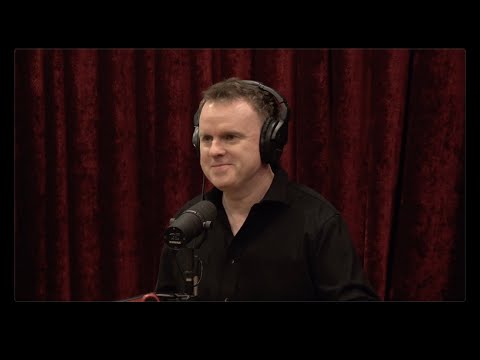
Joe Rogan Experience #2448 - Andrew Doyle
Joe Rogan (host), Joe Rogan (host), Andrew Doyle (guest), Joe Rogan (host), Andrew Doyle (guest), Joe Rogan (host)
In this episode of The Joe Rogan Experience, featuring Joe Rogan and Joe Rogan, Joe Rogan Experience #2448 - Andrew Doyle explores debating woke authoritarianism, free speech, censorship, and culture-war backlash today Andrew Doyle argues “woke” politics functioned as a soft-sounding but authoritarian impulse—often using euphemistic language (equity, inclusion, gender-affirming care) to justify coercion and exclusion—while warning the pendulum can swing into right-wing authoritarianism too.
Debating woke authoritarianism, free speech, censorship, and culture-war backlash today
Andrew Doyle argues “woke” politics functioned as a soft-sounding but authoritarian impulse—often using euphemistic language (equity, inclusion, gender-affirming care) to justify coercion and exclusion—while warning the pendulum can swing into right-wing authoritarianism too.
A major focus is the UK’s speech regime: Doyle and Rogan cite arrests over “grossly offensive” posts, “non-crime hate incidents,” and high-profile cases to illustrate how vague standards and police discretion chill expression compared with US First Amendment protections and the Brandenburg incitement test.
They criticize legacy media and institutions (BBC editorial manipulation claims, university culture, NGO-funded activism) and link misinformation/rumor dynamics to social media incentives—while also crediting platforms like X (and Community Notes) for enabling counter-speech and real-time fact-checking.
The conversation expands into cultural revisionism in arts, trans politics and youth medicalization, and concludes that sustained discourse, legal safeguards, and institutional reform are necessary to avoid cycles of censorship, backlash, and social destabilization.
Key Takeaways
Soft language can mask coercive politics.
Doyle argues terms like “equity,” “inclusion,” and “gender-affirming care” can be used to sell policies that functionally punish dissent and enforce ideological conformity, making authoritarianism feel like kindness.
Get the full analysis with uListen AI
Vague speech standards invite selective enforcement.
They highlight UK statutes using subjective thresholds (“grossly offensive,” “needless anxiety”), arguing these enable arrests over memes/retweets and create chilling effects regardless of intent or actual harm.
Get the full analysis with uListen AI
Clear incitement tests limit government overreach.
Doyle contrasts the US Brandenburg standard (intent, likelihood, imminence) with UK approaches centered on perceived offense, claiming the former better preserves political dissent while still targeting true calls for violence.
Get the full analysis with uListen AI
Institutional incentives can reward narrative over truth.
They frame media editing, partisan framing, and rumor amplification as systems that spread sticky narratives faster than later corrections—making reputational damage durable even when claims collapse.
Get the full analysis with uListen AI
Suppression breeds backlash and “counter-revolution.”
Rogan and Doyle argue forced consensus—on speech, gender ideology, or culture—produces resentment that can reduce support for adjacent rights (e. ...
Get the full analysis with uListen AI
Open discourse is a pressure-release valve.
They credit podcasts and less-restricted online spaces for letting people contest taboo claims, arguing that when debate is blocked, “goofy” or extreme ideas can expand unchecked inside institutions.
Get the full analysis with uListen AI
Reform requires more than elections—institutions must change.
Doyle claims UK governance is constrained by captured “quangos,” policing guidance, and civil service resistance; even a new party must dismantle mechanisms like non-crime hate recording and speech-policing training.
Get the full analysis with uListen AI
Notable Quotes
““Most people want to be kind and want to be fair, and when you hear these activists saying, ‘Be kind, be compassionate, or else,’ … they’re pretty scary.””
— Andrew Doyle
““The most preposterous the idea is … the more violent the enforcement of that idea will be.””
— Joe Rogan
““In the UK … all we’ve got is whether people found it offensive.””
— Andrew Doyle
““Rights lost are never regained. Never.””
— Joe Rogan
““We’re living in two separate worlds at the same time, and we can’t see what the other side is.””
— Andrew Doyle
Questions Answered in This Episode
What specific UK laws (Public Order Act, Malicious Communications Act, Communications Act) are most responsible for the rise from ~3,000 to ~12,000 arrests, and what reforms would Doyle prioritize first?
Andrew Doyle argues “woke” politics functioned as a soft-sounding but authoritarian impulse—often using euphemistic language (equity, inclusion, gender-affirming care) to justify coercion and exclusion—while warning the pendulum can swing into right-wing authoritarianism too.
Get the full analysis with uListen AI
In the Lucy Connolly case, what legal standard was applied—incitement, harassment, public order—and how would the outcome differ under Brandenburg-style imminence requirements?
A major focus is the UK’s speech regime: Doyle and Rogan cite arrests over “grossly offensive” posts, “non-crime hate incidents,” and high-profile cases to illustrate how vague standards and police discretion chill expression compared with US First Amendment protections and the Brandenburg incitement test.
Get the full analysis with uListen AI
Doyle says woke authoritarianism may re-emerge from the right—what early warning signs would distinguish legitimate “counter-woke” reform from right-wing censorship?
They criticize legacy media and institutions (BBC editorial manipulation claims, university culture, NGO-funded activism) and link misinformation/rumor dynamics to social media incentives—while also crediting platforms like X (and Community Notes) for enabling counter-speech and real-time fact-checking.
Get the full analysis with uListen AI
How credible is the claim that BBC’s “LGBT desk” had veto power over stories, and what governance changes would prevent ideological capture without creating partisan control?
The conversation expands into cultural revisionism in arts, trans politics and youth medicalization, and concludes that sustained discourse, legal safeguards, and institutional reform are necessary to avoid cycles of censorship, backlash, and social destabilization.
Get the full analysis with uListen AI
Rogan suggests mass migration policies are ‘organized’ to create chaos and justify crackdowns—what concrete evidence would validate or falsify that hypothesis?
Get the full analysis with uListen AI
Transcript Preview
[upbeat music] Joe Rogan Podcast, check it out!
The Joe Rogan Experience.
Train by day, Joe Rogan Podcast by night, all day. [upbeat music] Yes, Andrew.
Hello.
Good to see you, brother.
Good to see you, too.
Um, it has been, you said, six years almost to the day-
Almost to the day
... last time. So-
Lots changed. [chuckles]
Right before everything went crazy.
That's it.
Right before.
Yeah, the whole world sort of shifted after that.
'Cause everything went kooky around March, right?
Yeah, so it was February 2020, and then, then we have COVID, and then we have... You know, we've had Trump in between of that. We had BLM. That summer of 2020, everything just exploded and went a bit mad.
Yeah.
And, um, yeah, and then everything shifted, so-
And then you wrote a book.
I wrote a book.
It's called The End of Woke: How the Culture War Went Too Far and What to Expect from the Counter-Revolution. Isn't that how it always goes, though? It goes like, we go too far-
Yeah
... and then we overcorrect, and we become Nazis.
Yeah.
Or [laughing] --
That's it, exactly. [laughing] Well, you know-
Or it's, or it's the opposite: we go socialist.
Yeah.
You know, it's-
It's a big pendulum. I get that. It sort of goes back and forth. I mean, I was trying to s- in that book, I was-- I'm trying to make the point that what woke was, was like a kind of the latest manifestation of an, a kind of innate authoritarian impulse. I think human beings are, by default, quite, uh, inclined towards just shutting people up if they don't like them.
Yeah.
Just imposing their authority. And so woke wa- I mean, a lot of people are annoyed that I've called it the end of woke. I'm not saying it's all over, let's just go home, forget about it. It's still going on. But the point about it is, is that in its current manifestation, things are changing now so rapidly. We are moving into some sort of new phase, and that authoritarianism, which we've associated with the left, might come up from the right. It could come up from anywhere. It's what you say about the pendulum.
Yeah.
So you just have to be kind of vigilant about it. I don't think we were vigilant. I think that's why woke happened. We weren't vigilant against this prospect that, you know, pe- authoritarianism could emerge in what we thought was a free society.
Well, authoritarianism, authoritarianism, it snuck in through, uh, a sheep costume.
Yeah.
You know, it was-
A wolf in a sheep's costume.
Yeah, it was a, it was a costume of being more inclusive, being more open-minded-
Right
... being a better society, being kinder, you know?
Yeah.
It, it, it led to, you know, child trans surgeries. It led to chaos. It led to, like, a lot of, like, really fucking freaky things that you'd have never expected. People, people saying that the First Amendment's not important.
Install uListen to search the full transcript and get AI-powered insights
Get Full TranscriptGet more from every podcast
AI summaries, searchable transcripts, and fact-checking. Free forever.
Add to Chrome