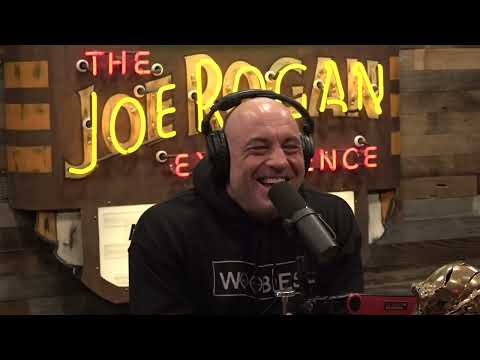
JRE MMA Show #135 with Paul Felder
Paul Felder (guest), Joe Rogan (host), Narrator, Narrator, Narrator, Narrator
In this episode of The Joe Rogan Experience, featuring Paul Felder and Joe Rogan, JRE MMA Show #135 with Paul Felder explores paul Felder’s Second Fight: From UFC Wars To Triathlon Obsession Joe Rogan and Paul Felder spend the episode tracing Felder’s evolution from late-start regional MMA prospect to elite UFC lightweight, then into retirement, commentary, and amateur triathlons. They dig into the physical toll of high-level fighting: brutal weight cuts, broken bones, lung surgery, and the fine line between toughness and long-term damage. The conversation repeatedly zooms out into broader combat-sports talk—scoring problems, weight-cut culture, generational skill jumps, and the rise of Eastern European and Dagestani killers in MMA and boxing. Underneath it all is a discussion about obsession, identity after fighting, and how athletes try to replace the adrenaline and purpose of the cage with something healthier.
Paul Felder’s Second Fight: From UFC Wars To Triathlon Obsession
Joe Rogan and Paul Felder spend the episode tracing Felder’s evolution from late-start regional MMA prospect to elite UFC lightweight, then into retirement, commentary, and amateur triathlons. They dig into the physical toll of high-level fighting: brutal weight cuts, broken bones, lung surgery, and the fine line between toughness and long-term damage. The conversation repeatedly zooms out into broader combat-sports talk—scoring problems, weight-cut culture, generational skill jumps, and the rise of Eastern European and Dagestani killers in MMA and boxing. Underneath it all is a discussion about obsession, identity after fighting, and how athletes try to replace the adrenaline and purpose of the cage with something healthier.
Key Takeaways
A purposeful ‘second sport’ can ease the post-retirement void for fighters.
Felder describes stumbling into triathlons after MMA and realizing he needed a new, structured challenge to replace the stakes, preparation, and adrenaline of the cage—something many ex-athletes lack and should actively seek out.
Get the full analysis with uListen AI
Weight cutting is normalized but fundamentally destructive and often career-shortening.
Stories of 18–20 pound cuts, rhabdomyolysis, cola-colored urine, and kidney monitoring illustrate how ‘making weight’ is essentially sanctioned self-harm that affects organs, longevity, and cognition far beyond fight night.
Get the full analysis with uListen AI
Modern fighters must grow up in “MMA” itself, not in single disciplines.
Rogan and Felder note that new prospects (e. ...
Get the full analysis with uListen AI
Training smarter—not just harder—is becoming essential for career length.
They criticize old-school camps built on daily gym wars and celebrate more scientific approaches (zone training, structured strength/conditioning, selective hard sparring), arguing that constant maximal output guarantees burnout and injury.
Get the full analysis with uListen AI
Judging and scoring still lag behind the complexity of MMA.
Using examples like confusing 10–9 rounds, takedowns without damage, and submission attempts from bottom, they argue the boxing-based 10-point must system can’t capture MMA’s nuance and should be replaced or heavily reworked.
Get the full analysis with uListen AI
Durability and damage tolerance are partly genetic and wildly individual.
Comparing fighters like the Diaz brothers, Mark Hunt, and Rashad Evans to others who suffer fast decline, they emphasize that brain and joint resilience differ person-to-person, so career and sparring decisions must be individualized.
Get the full analysis with uListen AI
Successful commentators and analysts need credibility but also emotional detachment from online reaction.
Felder talks about imposter syndrome alongside champions in the booth and learning not to read comments or argue online; he highlights that having ‘been in there’ matters, but public criticism is unavoidable and often uninformed.
Get the full analysis with uListen AI
Notable Quotes
““I started with a 70.3 like an absolute jabroni that I am.””
— Paul Felder
““If there’s a thing I could take away from fighting, it would be weight cutting… it’s sanctioned cheating.””
— Paul Felder
““You only have so many years you can operate at that level before the wheels fall off.””
— Joe Rogan
““I always told everyone: if I don’t think I can fight and win the championship, I’ll retire. And that day came.””
— Paul Felder
““Talent is not fair in its distribution.””
— Joe Rogan
Questions Answered in This Episode
How much of Felder’s improved endurance and recovery from triathlon-style training could have extended his MMA prime if adopted earlier?
Joe Rogan and Paul Felder spend the episode tracing Felder’s evolution from late-start regional MMA prospect to elite UFC lightweight, then into retirement, commentary, and amateur triathlons. ...
Get the full analysis with uListen AI
What would an ideal, MMA-specific scoring system look like if we abandoned the 10-point must standard completely?
Get the full analysis with uListen AI
Where should athletic commissions draw the line on drastic weight cuts, and could mandatory hydration testing realistically work in the UFC?
Get the full analysis with uListen AI
Given how quickly new generations arrive fully ‘MMA-native,’ how long can late starters still break into the elite ranks?
Get the full analysis with uListen AI
For fighters like Cody Garbrandt or Tony Ferguson, who’ve taken several knockout losses, who should ultimately decide when it’s time to stop—fighter, coaches, promotion, or regulators?
Get the full analysis with uListen AI
Transcript Preview
(drumming music) Joe Rogan podcast, check it out. The Joe Rogan Experience.
Train by day, Joe Rogan podcast by night, all day. (rock music) Paul Felder, ladies and gentlemen. How are you, sir?
I'm good, man. Thanks for having me, dude.
My pleasure.
Yeah.
You, I, I love what you've done because, uh, I think every professional athlete, every fighter, when you're done competition, you need something to drive you. And you decided to go into triathlons, which I think is fucking awesome.
Yeah. Um, and I kinda ... I stumbled upon it. I didn't have any idea what I was gonna do when it was all said and done. I thought, you know, I'll be like everybody else. I'll do grappling competitions, I'll hit pads, I'll, I'll stay active. But, eh, that's still not the same as getting into the cage and, and actually fighting somebody. And I stumbled u- upon this guy, Lionel Sanders, who I kinda found on YouTube just looking up run workouts, 'cause I was getting bored during the pandemic. I, you know, I was going outside, I was going for these runs and they were getting boring. You just run miles. I was like, "How do guys do this?" You're just running to run all the time?
(laughs)
And y- y- like, there's no, there's no structure or anything? And I found one of his workouts in Arizona where he was running. It was like a 107 degrees and he's doing like crazy tempo workouts and I was like, "Oh my God, that guy is-"
What's a, what's a tempo workout?
So like, all your runs kind of break down into e- You know, you have your easy miles, aerobic, right? And then you have where you kind of go a little bit ... You're not quite going as hard as you're gonna go for a race, and that's like tempo. So you, you're upping your heart rate into that kind of zone three area where you're keeping it right there. You're not going threshold, which, you know, kind of just below all out. Um, and he was doing that, and it was like a 100 and something degrees. And I was like-
(exhales) .
... "This dude's out of his f- fucking mind." And I started following all his stuff, and then I started realizing how crazy this sport is. If you really watch these guys, I mean, they're freak athletes, these guys.
Yeah.
Plus MMA, right? You, you ... Wrestling, jujitsu, kickboxing, boxing, traditional martial arts. Well, now I found this other sport that's totally new to me that I know nothing about that I can dive into, and it's all these different disciplines. So I can be an idiot all over again-
(laughs)
... and not just pick one sport. I can do a- a- all three of these things. And I didn't even know how to swim.
Install uListen to search the full transcript and get AI-powered insights
Get Full TranscriptGet more from every podcast
AI summaries, searchable transcripts, and fact-checking. Free forever.
Add to Chrome