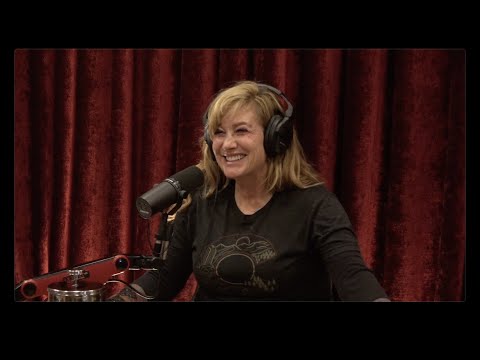
Joe Rogan Experience #2137 - Michelle Dowd
Joe Rogan (host), Michelle Dowd (guest)
In this episode of The Joe Rogan Experience, featuring Joe Rogan and Michelle Dowd, Joe Rogan Experience #2137 - Michelle Dowd explores escaping The Field: Surviving A Childhood Cult And Finding Self Michelle Dowd recounts growing up in a multigenerational, apocalyptic Christian cult called The Field, founded by her self‑proclaimed prophet grandfather who controlled boys and later entire families through extreme rules, abuse, and isolation. She and Joe Rogan unpack how cults form, the psychology of charismatic leaders, and the methods they use to control behavior, information, thoughts, and emotions—especially in children. Dowd describes her eventual escape at 17, the long, awkward process of integrating into normal society, and how survival training, nature, yoga, and writing her memoir *Forager* helped her reclaim her identity. The conversation broadens into parallels between cults, organized religion, online mobs, and political movements, while also touching on survival skills, biophilia, psychedelics, and the enduring human search for meaning.
Escaping The Field: Surviving A Childhood Cult And Finding Self
Michelle Dowd recounts growing up in a multigenerational, apocalyptic Christian cult called The Field, founded by her self‑proclaimed prophet grandfather who controlled boys and later entire families through extreme rules, abuse, and isolation. She and Joe Rogan unpack how cults form, the psychology of charismatic leaders, and the methods they use to control behavior, information, thoughts, and emotions—especially in children. Dowd describes her eventual escape at 17, the long, awkward process of integrating into normal society, and how survival training, nature, yoga, and writing her memoir *Forager* helped her reclaim her identity. The conversation broadens into parallels between cults, organized religion, online mobs, and political movements, while also touching on survival skills, biophilia, psychedelics, and the enduring human search for meaning.
Key Takeaways
Cults often look like tight-knit religious or sports communities from the outside.
The Field recruited children through a ‘sports camp’ model, then selectively groomed the most compliant and high-performing kids into inner circles, making it easy for parents and outsiders to miss the warning signs.
Get the full analysis with uListen AI
Effective cults systematically control behavior, information, thoughts, and emotions.
Dowd and Rogan reference Steve Hassan’s BITE model to show how rules, isolation, fear of hell, forced reporting on others, and demonizing ex-members combine to erase critical thinking and make members police themselves.
Get the full analysis with uListen AI
Child indoctrination removes the option to “just leave later.”
Taken from birth, denied normal education, social bonds, and external reference points, children like Michelle sincerely believed they’d be first in line to “drink the Kool‑Aid” and saw obedience—even to death—as holy duty.
Get the full analysis with uListen AI
Leaving a cult creates a second, hidden trauma: shame and social illiteracy.
After being expelled at 17 for seeing a movie, Michelle had to learn basic social norms, dating, friendship, and even pop culture decades late, while hiding her past from fear of judgment and feeling permanently ‘feral’ and out of step.
Get the full analysis with uListen AI
Nature and embodied practices can help rewire a cult-conditioned mind.
Dowd credits survival skills, time in wild places, yoga, and literal contact with soil and trees (biophilia) with grounding her, rebuilding trust in her own perceptions, and countering the disembodied, top‑down control of cult life.
Get the full analysis with uListen AI
Cult dynamics echo in mainstream religion, politics, and online culture.
They draw parallels between classic cults, high-control religious groups, and modern ‘woke’ or ideological mobs—each with purity tests, excommunication, enforced language, and intense in‑group/out‑group policing.
Get the full analysis with uListen AI
Knowledge of survival and critical skepticism are powerful antidotes to manipulation.
Michelle’s training in navigation, water sourcing, and threat assessment, combined with a learned instinct to ‘be suspicious’ of anyone claiming exclusive truth from God or ideology, becomes a framework for staying free in any system.
Get the full analysis with uListen AI
Notable Quotes
“If someone gets ahold of you as a child, they can program you to think almost anything, especially if they’re good at it.”
— Michelle Dowd
“One of the ways you know something is a cult is they will always tell you that anyone who left is of the devil.”
— Michelle Dowd
“It’s not that God’s not real. It’s that people are full of shit.”
— Joe Rogan
“I felt like I was an adult body who just had an infant brain.”
— Michelle Dowd
“Light pollution is spiritual poisoning.”
— Joe Rogan
Questions Answered in This Episode
How can someone distinguish between a healthy religious/community group and a high-control cult when they’re inside it or just joining?
Michelle Dowd recounts growing up in a multigenerational, apocalyptic Christian cult called The Field, founded by her self‑proclaimed prophet grandfather who controlled boys and later entire families through extreme rules, abuse, and isolation. ...
Get the full analysis with uListen AI
What specific practices or experiences helped Michelle start trusting her own judgment again after a childhood of enforced obedience?
Get the full analysis with uListen AI
In what ways do modern online movements and ‘cancel culture’ mirror the excommunication and policing methods of traditional cults?
Get the full analysis with uListen AI
How should families or friends respond if they suspect a loved one is being groomed by a group that looks benign on the surface?
Get the full analysis with uListen AI
What role can nature, physical training, and embodied practices realistically play in helping people recover from deep psychological conditioning?
Get the full analysis with uListen AI
Transcript Preview
(drumbeats) Joe Rogan podcast, check it out.
The Joe Rogan Experience.
Train by day, Joe Rogan podcast by night, all day. (instrumental music) So thanks for coming in, Michelle.
Thanks, Joe, for having me. (laughs)
My pleasure.
I love your man cave.
Oh, thank you, thank you.
(laughs) I really do. It's awesome.
Yeah. It's, uh, it's fun. Um, so when I heard your story, I was like, "This sounds completely insane."
Hmm.
And, um, just to fill people in, just explain what happened.
Well, uh, I was born into a cult, a high-control group that I didn't know to call a cult, because, you know, I was born there.
'Cause you were a child, yeah.
That was my whole experience. My grandfather started in 1931, so my mother was also born into the cult in the 1940s. My dad-
Wow.
... was, um, let's just say he was 12 when he first met my grandfather, who would later become his father-in-law, and my grandfather became his father figure. So my mom was married off to this, uh, man who was a follower of her father, and I am the second child of their union.
Wow.
And, yeah.
Where'd, where'd all this take place?
So this took place, um, that he originally started it near LA in Pasadena, which most people know because of the Rose Parade and-
Mm-hmm.
... other things like that. Um, when he first started it, it started... My understanding is he was a Boy Scout leader, and he was an orphan. He had come from Oklahoma when he was a young man, and, uh, the Boy Scouts didn't allow him to have as much control as he wanted to have of the boys.
Oh, boy.
So (laughs) yeah, which is a lot of control. So he left the Boy Scouts, and he took the boys with him, and some of the boys from his original troop in 1931 stayed with him past his death. One of the first boys took over after him in the late 1980s.
Wow.
Or the early 1980s, actually. Yeah, so he was really good at getting followers.
What was his background? Like, what, what did he... What did he do before he did all this?
Nothing. (laughs)
Nothing?
He was complete... I don't think he graduated from high school. I don't know that for sure. He lied about everything, and he said he had a PhD from Stanford later when he... (laughs)
(laughs)
Yeah. "It wasn't until I got to college that none of this, this..."
Yeah.
I'm not even 100% sure he knew how to read, to be quite honest.
Really?
Um, he came from a family where, uh, he was the only child that lived out of his particular mother, who was married to a man. It was a second marriage, and his first wife had died, and then, you know, he had a bunch of kids or whatever. So he had a bunch of half-siblings, but no full siblings, and apparently, now this could be lore too, they kind of excommunicated him. He compared himself to Joseph-
Install uListen to search the full transcript and get AI-powered insights
Get Full TranscriptGet more from every podcast
AI summaries, searchable transcripts, and fact-checking. Free forever.
Add to Chrome