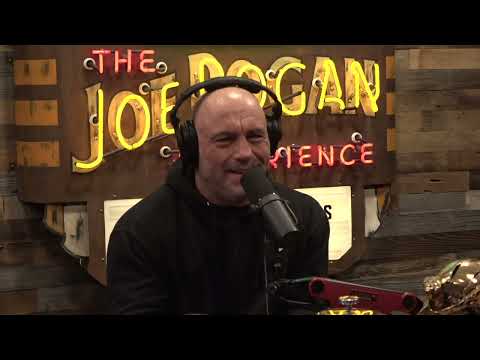
Joe Rogan Experience #1976 - James Fox
James Fox (guest), Narrator, Joe Rogan (host), Narrator, Narrator, Narrator, Narrator
In this episode of The Joe Rogan Experience, featuring James Fox and Narrator, Joe Rogan Experience #1976 - James Fox explores filmmaker details Brazilian UFO crash and global non-human encounter evidence Joe Rogan interviews UFO documentarian James Fox about his film *Moment of Contact*, centered on the alleged 1996 Varginha, Brazil UFO crash involving recovered non-human beings and a major military cover‑up. Fox recounts his initial skepticism, then explains how years of fieldwork, witness tracking, and corroborating testimony convinced him the case may be genuine. They broaden the discussion to historic UFO incidents tied to nuclear sites, radar and pilot encounters, and the apparent existence of classified high‑resolution evidence and crash‑retrieval programs. The conversation repeatedly returns to the tension between strong, consistent eyewitness accounts and continued government secrecy, and to Fox’s call for new whistleblowers and evidence to come forward.
Filmmaker details Brazilian UFO crash and global non-human encounter evidence
Joe Rogan interviews UFO documentarian James Fox about his film *Moment of Contact*, centered on the alleged 1996 Varginha, Brazil UFO crash involving recovered non-human beings and a major military cover‑up. Fox recounts his initial skepticism, then explains how years of fieldwork, witness tracking, and corroborating testimony convinced him the case may be genuine. They broaden the discussion to historic UFO incidents tied to nuclear sites, radar and pilot encounters, and the apparent existence of classified high‑resolution evidence and crash‑retrieval programs. The conversation repeatedly returns to the tension between strong, consistent eyewitness accounts and continued government secrecy, and to Fox’s call for new whistleblowers and evidence to come forward.
Key Takeaways
Treat Varginha as an active, solvable case, not folklore.
Fox frames the 1996 Varginha incident—multiple witnesses, alleged recovered beings, hospital involvement, and U. ...
Get the full analysis with uListen AI
Prioritize patterns across many strong cases rather than any single story.
He argues credibility emerges from consistent details across decades—craft behavior, silent flight, sudden right‑angle maneuvers, disc wobble, telepathic impressions—repeated by unconnected military, pilots, and civilians worldwide.
Get the full analysis with uListen AI
Focus on the 5–10% of incidents that resist conventional explanation.
Both men acknowledge most sightings are misidentifications, but Fox emphasizes a residual core with radar data, physical traces, and multiple trained observers that defy prosaic explanations and deserve serious study.
Get the full analysis with uListen AI
Recognize a persistent link between UFO activity and nuclear assets.
From missile shutdowns at Malmstrom to beams over weapons bunkers and clusters of sightings around Trinity and other test areas, Fox cites extensive testimony suggesting non‑human interest in human nuclear capability.
Get the full analysis with uListen AI
Understand why governments may resist full disclosure even if they accept non‑human origins.
They explore how secrecy snowballed from early incidents like Roswell, and how admitting a technologically superior, uncontrollable presence would undercut state authority and require complex international coordination.
Get the full analysis with uListen AI
Use new legal tools and public platforms to encourage whistleblowers.
Fox highlights recent U. ...
Get the full analysis with uListen AI
Maintain skepticism toward hoaxes while remaining open to extraordinary evidence.
Rogan repeatedly stresses his default distrust of people and ease of fakery, yet concedes that some witnesses (e. ...
Get the full analysis with uListen AI
Notable Quotes
““It’s either the most elaborate, complex hoax that involves half the town of Varginha, or a UFO crashed, live aliens were recovered, and the Americans stepped in. There’s no in‑between.””
— James Fox
““I’m looking this guy in the eyes and I’m like, ‘This guy probably drove an alien around,’ and it tripped me out so hard.””
— James Fox
““The way I see it, it’s kind of like taking matches out of the hands of a baby.””
— Robert Salas, as quoted by James Fox on UFOs shutting down nuclear missiles
““What we’re saying is there is a physical phenomenon taking place—nuts and bolts craft—that are flying rings around our fastest jets… and we don’t know where they come from.””
— James Fox
““If this was true, that would be the most important thing ever… I’m convinced it’s happening, so how do I walk away from it?””
— James Fox
Questions Answered in This Episode
If high‑resolution satellite and cockpit imagery of non‑human craft truly exists, what concrete steps can journalists and lawmakers take to force its controlled release?
Joe Rogan interviews UFO documentarian James Fox about his film *Moment of Contact*, centered on the alleged 1996 Varginha, Brazil UFO crash involving recovered non-human beings and a major military cover‑up. ...
Get the full analysis with uListen AI
How should governments ethically balance national security concerns with humanity’s right to know about potential non‑human intelligences?
Get the full analysis with uListen AI
What kinds of independent scientific protocols (forensics, medical review, materials analysis) would be needed to validate alleged crash debris or biological remains from cases like Varginha?
Get the full analysis with uListen AI
Why do some credible witnesses stay silent for decades, and what kinds of guarantees—legal, financial, psychological—would genuinely bring more of them forward?
Get the full analysis with uListen AI
If multiple advanced civilizations are monitoring or interacting with Earth, how might that diversity explain the different craft types, behaviors, and reported entity appearances across cases?
Get the full analysis with uListen AI
Transcript Preview
(drumbeats) Joe Rogan podcast, check it out.
The Joe Rogan Experience.
Train by day, Joe Rogan podcast by night, all day. (rock music) Hello, James.
Hello.
Good to see you, my man.
Thank you so much for having me on.
Oh, my pleasure. The moment I saw that documentary, I was like, "W-," uh, let me just be honest, off, off the bat. I loved your first documentary, but when someone says there's a documentary about a crashed UFO and it happened in Brazil, I'm always like, "Man, people tell stories." You know? I'm like, "Maybe it was one of those."
Yeah.
Like, I didn't think too much of it. When I hear stories, even Roswell, I always go, "Meh, I don't know. I don't know." It's so hard to know. 1947, you know, I think some shenanigans were going on, but what, what was it really, and how much of this is just people tell stories? And those stories grow and change over the years, and, and, you know, almost like the story becomes their real memory after a while, 'cause they've been doing it for, you know, so many, so many years. But then this one. This one, just right away, the way you captured all the, the information and the evidence and th- the eyewitness accounts, the photographs that people got, the, the depictions of the actual being, the fact that there was live beings, this is a re- it- and everyone that didn't even know each other having these, like, really similar stories about what they saw and when people got ahold of the wreckage. Like, when you first started making this documentary, did you have any apprehension, like, "Oh, this one may not ... How, how do I sell a documentary on a crashed UFO?" Like, "What's the best way to put this together?" 'Cause that's part of the art of what you do, right?
You were skeptical. Let me tell you how skeptical I was.
(laughs)
Okay? So I was making my second documentary on UFOs in the late '90s. I just finished a documentary called UFOs: 50 Years of Denial. I started on my second film. It was 1999. And I partner up with a couple of guys. Boris Zubov has been a partner. I'm still working with him today. And this guy Tim Coleman, who's a British reporter. And, uh, we ... Like, mapping out the film concept, like, "Hey, we should cover this case, and we should do that." And he's like, "Hey, mate, we gotta do this amazing UFO crash in Brazil where these aliens were walking around the town." And I looked at the guy, and I thought, "I think I picked the wrong partner. This guy's fucking batshit crazy." And literally, I dismissed it on the spot, and I refused to even read one word about it. I said, "There's no way in hell that that happened and the whole world doesn't know about it."
Install uListen to search the full transcript and get AI-powered insights
Get Full TranscriptGet more from every podcast
AI summaries, searchable transcripts, and fact-checking. Free forever.
Add to Chrome