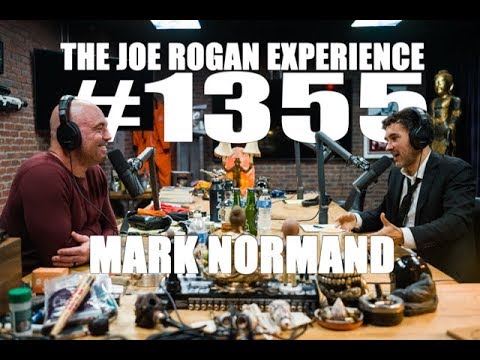
Joe Rogan Experience #1355 - Mark Normand
Mark Normand (guest), Joe Rogan (host), Narrator, Narrator, Narrator, Narrator, Narrator, Narrator, Narrator, Narrator
In this episode of The Joe Rogan Experience, featuring Mark Normand and Joe Rogan, Joe Rogan Experience #1355 - Mark Normand explores joe Rogan and Mark Normand dissect comedy, outrage, and culture’s shift Joe Rogan and comedian Mark Normand have a long-form, freewheeling conversation that ranges from language quirks and classic film references to the mechanics and ethics of modern stand‑up comedy. They dig into generational differences in media consumption, how social media and outrage culture affect comedians, and why live, gritty comedy still matters. The pair swap war stories about terrible corporate gigs, New York danger and poverty, and the grind of becoming a real comic on the road. Along the way they debate diet politics, factory farming, gender and identity debates, and how overcorrection and forced ‘diversity’ can damage merit and art.
Joe Rogan and Mark Normand dissect comedy, outrage, and culture’s shift
Joe Rogan and comedian Mark Normand have a long-form, freewheeling conversation that ranges from language quirks and classic film references to the mechanics and ethics of modern stand‑up comedy. They dig into generational differences in media consumption, how social media and outrage culture affect comedians, and why live, gritty comedy still matters. The pair swap war stories about terrible corporate gigs, New York danger and poverty, and the grind of becoming a real comic on the road. Along the way they debate diet politics, factory farming, gender and identity debates, and how overcorrection and forced ‘diversity’ can damage merit and art.
Key Takeaways
Stand‑up is a long, iterative craft that needs room to fail.
Rogan and Normand emphasize that great bits often take months or years of bombing and tweaking, and early recordings of ‘unfinished’ material taken out of context (like Louis C. ...
Get the full analysis with uListen AI
‘Edgy’ is usually a marketing label; what matters is whether it’s actually funny.
They both dislike the word ‘edgy,’ seeing it as try-hard branding from executives or civilians—audiences ultimately respond to sharp writing, surprise, and authenticity, whether it’s clean, dark, loose, or precise.
Get the full analysis with uListen AI
Corporate and TV constraints often sand off the very grit that makes comics good.
Normand recounts brutal corporate and hosting jobs where clients demanded ‘vicious’ roasts then panicked at real jokes, and Rogan notes networks’ obsession with polish (suits, notes, tone) frequently undermines genuine personality and humor.
Get the full analysis with uListen AI
Social media outrage incentivizes performative morality over real conversation.
They argue many critics publicly attack jokes to signal virtue, not to fix real problems—private dialogue or context is ignored, and serious labels like ‘racist’ or ‘sexist’ are often used carelessly for clout or clicks.
Get the full analysis with uListen AI
Forced diversity quotas can weaken comedy if merit isn’t the first filter.
Rogan describes friends being pushed to staff writers’ rooms by ‘how it looks’ rather than who’s actually funniest, and both maintain the fairest system is a true meritocracy: hire and book whoever is best, regardless of identity.
Get the full analysis with uListen AI
Modern abundance and digital comfort can dull people’s sense of perspective.
Comparing today’s complaints to World War I soldiers’ conditions or poor neighborhoods in New Orleans and Newark, they argue many modern grievances are amplified because basic survival pressures have been removed and everyone has a broadcast channel.
Get the full analysis with uListen AI
Diet and environmental narratives are more complex than simple anti‑meat slogans.
Rogan pushes back on Andrew Yang’s suggestion to tax meat heavily, citing regenerative ranching, the relatively small methane share from cattle, and the hidden animal death in grain agriculture, arguing for ethical, grass‑fed meat rather than blanket elimination.
Get the full analysis with uListen AI
Notable Quotes
““There’s something about jokes that really crawls up people’s sphincter… it sounds like you’re just talking.””
— Joe Rogan
““We’re the cockroaches of the entertainment world… you can’t bomb us. We’ll keep coming back ‘cause you need the truth, folks.””
— Mark Normand
““If you take chances, you’re gonna bomb. If you write new jokes, they’re gonna fall.””
— Joe Rogan
““The better things are, the more people complain.””
— Mark Normand
““The real problem is actual racism… not ‘force diversity.’ The response to racism is not to hire somebody who sucks.””
— Joe Rogan
Questions Answered in This Episode
How can comedy clubs and platforms better protect the ‘workshop’ nature of stand‑up so unfinished bits aren’t weaponized out of context?
Joe Rogan and comedian Mark Normand have a long-form, freewheeling conversation that ranges from language quirks and classic film references to the mechanics and ethics of modern stand‑up comedy. ...
Get the full analysis with uListen AI
Where should comics draw their own personal line between dark humor and topics they’re unwilling to joke about, and how do they recalibrate that over time?
Get the full analysis with uListen AI
Is there a responsible way for networks and streamers to pursue representation goals without undermining merit and the quality of shows?
Get the full analysis with uListen AI
What would a more honest, nuanced public conversation about meat, climate impact, and ethical farming actually look like, beyond slogans on both sides?
Get the full analysis with uListen AI
In a world where everyone has a public platform, how should creators decide which criticism deserves engagement and which is just bandwidth‑wasting noise?
Get the full analysis with uListen AI
Transcript Preview
Pen, Pen Gillette said that.
Pen Gillette told you that it's fort, not forte?
Yeah. And he's, he don't, I don't fuck with-
He's, he's a well-read man.
Oh, yeah.
He's, uh, he was just on.
(laughs)
Oh, yeah.
He's an interesting cat. Is that true? Is he correct, Jamie?
There's, uh-
There's a little thing over the E, right?
He gives two pronunciations for it.
Ah.
Ah.
One is forte, like, f- yeah, how she wants.
Well, that's like the word literally. You know, the, the term literally has, we've actually changed the meaning because so many people used it wrong.
Mm-hmm.
Okay, for-
Forte with the A right there, to-
Uh-huh.
... f- I don't know.
And then, well, the A is first.
And fort.
And then they'll pronounce that O.
Interesting. So there's two different ones. Huh.
But it might be like selfie, how it just creates itself over a while, you know?
Yeah. A thing that someone excels at. Small talk was not his forté or fort.
(laughs)
Well, maybe fort was original and then someone kept fucking it up, like tumeric.
Yeah, turmeric.
It's just, yeah. I, we were just talking about how tumeric has an R in there. It's T-U-R, which I didn't know at all until, um, Laird Hamilton put his coffee machine in here. Did you just turn the volume down? Which one did you do?
Oh, sorry. Is that my mic?
'Cause I just want, 'cause it's the main one.
Am I high, am I hit? Cans are a little hot.
Yeah, I'll turn it down.
Oh, I appreciate it, sir.
You can just hear really- is that better?
Yeah, sure. I gotta stop touching stuff.
You sound really good to hear stuff. Maybe, uh-
I get crazy ears.
Pat Carney likes to hear himself loud when he talks shit.
(laughs)
He's gotta have, uh, some hearing problems. He's a drummer.
Oh, yeah.
Rock star.
Oh, yeah.
Yeah.
Rock star, drummer, all those guys go deaf, right?
Yeah.
Or they have issues. The, well, the, that's the dude from AC/DC, the lead singer. He can't sing anymore, right? Because his ears are just shot. That's awful, man.
Yeah. Every song sounds the same.
They're the best.
Ah, I don't know about the best.
Come on, bro.
I don't know, man, I like them. They're fun.
The fucking best.
I don't know about the best.
Well, they are an iconic band.
I'll give you that. I like the-
Their songs, there's certain songs, I'm on the highway to hell.
Yeah, they're great road trip, video game songs-
Yes.
But I feel like they kind of bleed together.
Install uListen to search the full transcript and get AI-powered insights
Get Full TranscriptGet more from every podcast
AI summaries, searchable transcripts, and fact-checking. Free forever.
Add to Chrome