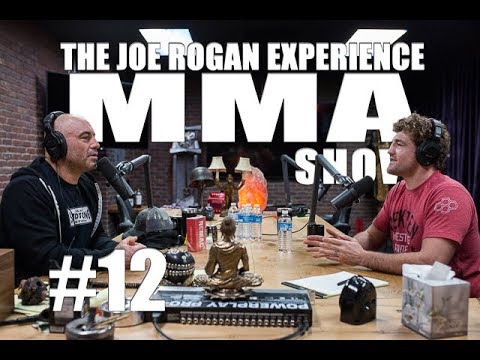
JRE MMA Show #12 with Ben Askren
Ben Askren (guest), Joe Rogan (host), Guest (third person in studio) (guest), Narrator, Narrator, Narrator
In this episode of The Joe Rogan Experience, featuring Ben Askren and Joe Rogan, JRE MMA Show #12 with Ben Askren explores ben Askren Reveals UFC Snub, Wrestling’s Power, And Fighter Mindset Ben Askren explains in detail why, despite being an undefeated Bellator champion, he never made it into the UFC, outlining confusing contract negotiations, personal friction with Dana White, and the business politics between promotions.
Ben Askren Reveals UFC Snub, Wrestling’s Power, And Fighter Mindset
Ben Askren explains in detail why, despite being an undefeated Bellator champion, he never made it into the UFC, outlining confusing contract negotiations, personal friction with Dana White, and the business politics between promotions.
He and Joe Rogan dive deep into why elite wrestling is the most important base for MMA, how Askren’s damage-avoiding style extended his career, and why many strikers fail to commit to grappling at the necessary intensity.
They broaden the discussion to systemic issues in combat sports and athletics, including Olympic and NCAA exploitation of athletes, CTE concerns in contact sports, PED use, and the gap between how organizations profit and how fighters and wrestlers are protected.
Askren also shares his philosophy on sports psychology, coaching, and training structure, arguing that mental preparation, structured practice, and a wrestler’s mindset are what separate consistent winners from everyone else.
Key Takeaways
Wrestling remains the most decisive base in MMA.
Askren and Rogan emphasize that the ability to dictate where the fight takes place—especially taking strikers down and nullifying their offense—is the true competitive trump card, as shown by fighters like GSP, Khabib, and Stipe Miocic.
Get the full analysis with uListen AI
Politics and personalities can override merit in fight careers.
Askren’s account of being released from Bellator, then abruptly rejected by the UFC despite prior interest, shows how executive grudges, business positioning vs. ...
Get the full analysis with uListen AI
Most fighters undertrain their weakest disciplines.
Askren argues that strikers rarely immerse themselves in wrestling the way he immersed himself in striking—doing six to seven striking sessions a week early on—so they never close the skill gap needed to stop elite takedown artists.
Get the full analysis with uListen AI
Mindset is as trainable—and as neglected—as physical skills.
He describes tailoring mental strategies (e. ...
Get the full analysis with uListen AI
Current amateur and Olympic systems often exploit athletes.
They criticize the NCAA and Olympic model for generating billions while athletes are barred from earning on their own name/image, calling it archaic and “theft” that stifles young people’s initiative and long‑term well‑being.
Get the full analysis with uListen AI
Weight-cutting culture is dangerous and structurally fixable.
Askren praises ONE FC’s hydration + weight system, which effectively moves everyone up a class and makes severe dehydration cuts impossible, arguing that the UFC and other promotions should adopt similar protocols to prevent health crises and canceled fights.
Get the full analysis with uListen AI
Training structure strongly influences long‑term excellence.
Comparing college wrestling rooms (highly structured, high-volume, situational work) to most jiu-jitsu and MMA gyms (“roll for five minutes”), Askren contends that better practice design—more situations, less unstructured sparring—would rapidly accelerate fighter development.
Get the full analysis with uListen AI
Notable Quotes
““If you can’t knock me out, I’m gonna eventually get you on the ground and I’m gonna beat your ass.””
— Ben Askren
““Fighting is not what’s exciting for people to watch. Fighting is what actually works.””
— Joe Rogan
““I think MMA’s a terrible career path… For a couple people it’s probably right. For a majority of people, probably not a great career path.””
— Ben Askren
““Not only will they not pay you anything, but the fact that they can’t make money off their own image and likeness… it should be criminal.””
— Ben Askren, on the NCAA
““As an intelligent individual, you can’t just take what mainstream media tells you and say, ‘Well, I guess that’s how it happened.’””
— Ben Askren
Questions Answered in This Episode
If ONE FC’s hydration-based weigh-in system is clearly safer, what is realistically stopping the UFC and other Western promotions from adopting a similar model?
Ben Askren explains in detail why, despite being an undefeated Bellator champion, he never made it into the UFC, outlining confusing contract negotiations, personal friction with Dana White, and the business politics between promotions.
Get the full analysis with uListen AI
How much of a fighter’s success is attributable to innate mentality versus learnable sports-psychology skills, and how could MMA teams systematically build those skills?
He and Joe Rogan dive deep into why elite wrestling is the most important base for MMA, how Askren’s damage-avoiding style extended his career, and why many strikers fail to commit to grappling at the necessary intensity.
Get the full analysis with uListen AI
Given how dominant elite wrestlers have become in MMA, what specific changes in training or rules (if any) would create a more balanced landscape between grapplers and strikers?
They broaden the discussion to systemic issues in combat sports and athletics, including Olympic and NCAA exploitation of athletes, CTE concerns in contact sports, PED use, and the gap between how organizations profit and how fighters and wrestlers are protected.
Get the full analysis with uListen AI
In light of the NCAA and Olympic structures discussed, what reforms would meaningfully protect athletes’ financial and long-term health interests without destroying those institutions?
Askren also shares his philosophy on sports psychology, coaching, and training structure, arguing that mental preparation, structured practice, and a wrestler’s mindset are what separate consistent winners from everyone else.
Get the full analysis with uListen AI
Where should combat sports draw the ethical line between allowing adults to choose high-risk careers and banning or radically restricting activities that almost certainly cause brain damage?
Get the full analysis with uListen AI
Transcript Preview
Yeah, my oldest one's s- super-
Here we go, five-
Okay.
... four, three, two, one. (claps) Ben Askren, ladies and gentlemen. Dude, I've talked about you on this podcast-
Yeah.
... at least a dozen times. You are the number one guy that I'm most disappointed never fought in the UFC.
Yeah. And I, I always get, uh, whenever you talk about me, I get like 15 texts, like, "Hey, Joe, Joe's talking about you now."
(laughs)
And, you know, they'll send me clips or whatever. So obviously appreciate that. Um, but yeah, I never, I never really got to fight those top guys, and it was for reasons beyond my control.
Yeah, and you're done now.
Yeah, I, so I said, I said... I, I don't wanna say I'm done period. I said I'm done excluding the fact that I get to fight and prove I'm number one. That would be the excluding factor.
So if you could get in the UFC, you'd be willing to do it again?
I mean, I don't care where it is, right? I, I, I really-
Right.
... genuinely don't. And obviously that would be the, the thing that makes sense. But there is legislation, like the Ali Act and other things going through, so I don't know that maybe... You know, I'm still 33, so I'm not old, and you know, if you look at GSP, he took four years off-
Yeah.
... from one fight to the next fight. So I'm not g- it's not like I'm gonna age overnight. Um...
Well, your style too. You avoided so much-
Yeah.
... damage.
I didn't get, I didn't get hit o- once this, in 20- 2017, so...
Really? (laughs)
Yeah, I didn't get hit once.
(laughs)
Yeah, in three fights. So yeah, I, I-
And that was ... Uh, you should tell people, you were fighting in ONE FC-
Mm-hmm.
... which is a big Asian organization.
Yeah.
It's like the Asian version of the UFC.
Yeah, so O- ONE FC started in 2012, I think. Um, obviously my contract with Bellator came up in 2013, and then there was that negotiation process, which obvi- obviously went south.
And what happened there? You were the champ-
Yeah.
... of Bellator-
Yes.
... and then all of a sudden you left, and everyone-
Yeah.
... was like... So you're, you're still undefeated, right?
I'm undefeated, 18-0.
So what the- what the fuck happened that Bellator let the champion go?
Well, that wasn't what happened. So-
No.
And there's, there's so much misinformation out there-
Okay.
... and, you know, I, I'm popular but I'm not that popular. And so a, lots of times my story gets mistold because I get spoken over by other people, right?
Install uListen to search the full transcript and get AI-powered insights
Get Full TranscriptGet more from every podcast
AI summaries, searchable transcripts, and fact-checking. Free forever.
Add to Chrome