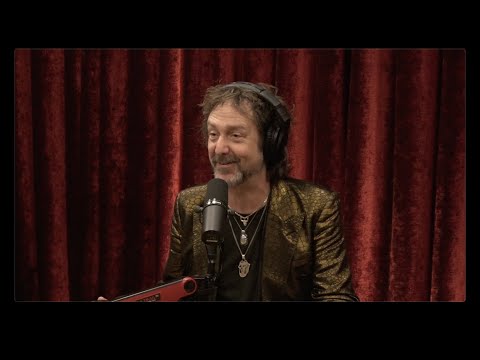
Joe Rogan Experience #2177 - Chris Robinson
Narrator, Chris Robinson (guest), Joe Rogan (host), Narrator
In this episode of The Joe Rogan Experience, featuring Narrator and Chris Robinson, Joe Rogan Experience #2177 - Chris Robinson explores chris Robinson and Joe Rogan Explore Music, Rebellion, and Reality Joe Rogan and Chris Robinson (The Black Crowes) dive into how music, counterculture, and authenticity have evolved from the 1970s to today, contrasting analog record-store eras with algorithm-driven culture.
Chris Robinson and Joe Rogan Explore Music, Rebellion, and Reality
Joe Rogan and Chris Robinson (The Black Crowes) dive into how music, counterculture, and authenticity have evolved from the 1970s to today, contrasting analog record-store eras with algorithm-driven culture.
Robinson reflects on his musical upbringing, punk and folk influences, the early days of The Black Crowes, and his lifelong battle to keep rock-and-roll “pure” from corporate and industry pressures.
They discuss live music as a uniquely human experience, the decline in album culture, the impact of social media and TikTok on attention and art, and the difference between real rebellion and manufactured edginess.
The conversation widens into travel, psychedelics, history, cities, natural disasters, and aging artists, using everything from Jamaica to Sicily, the Rolling Stones, and the Roman Colosseum as touchpoints for how humans search for meaning and connection.
Key Takeaways
Authentic art often conflicts with corporate expectations.
Robinson’s stories about rejecting sponsors (e. ...
Get the full analysis with uListen AI
Real counterculture is created, not branded.
They distinguish between genuine rebellion (Dead Kennedys, early punk, Nirvana mocking playback TV) and today’s ‘formulated rebels’ crafted by labels and marketing teams to look edgy but remain safe.
Get the full analysis with uListen AI
Albums and physical media still matter as deep experiences.
Robinson’s lifelong relationship with vinyl and record stores—digging, discovering, and DJing—illustrates how albums function as curated, immersive statements, not just content chunks for playlists.
Get the full analysis with uListen AI
Live music provides irreplaceable human connection.
The pandemic highlighted how vital concerts are not just for musicians’ livelihoods but for audiences’ emotional lives; seeing bands in tiny clubs or huge stadiums offers a communal, embodied experience screens can’t duplicate.
Get the full analysis with uListen AI
The algorithm economy encourages compliance over risk-taking.
They argue that modern artists often optimize for TikTok, streams, and virality instead of expression, leading to safe, hollow work and fewer acts willing to make executives—or audiences—uncomfortable.
Get the full analysis with uListen AI
Travel and direct experience are ‘cognitive nutrition.’
Robinson’s stories of Sicily, Jamaica, Europe, and old cities like Palermo or New Orleans frame travel, food, and local music scenes as vital ways to understand people, history, and oneself beyond digital life.
Get the full analysis with uListen AI
The ‘muse’ rewards devotion and punishes distraction.
Robinson views inspiration as a jealous, almost mystical force: if he stops writing, singing, and caring about every creative detail, he believes the muse will leave—and with it his capacity to make meaningful work.
Get the full analysis with uListen AI
Notable Quotes
“We were one of the last bands who felt it was our duty to never truly give in to the other side.”
— Chris Robinson
“Let me make the mistake. This is my band, so if it’s wrong, we’ll eat it.”
— Chris Robinson (on refusing to play the single on SNL)
“TikTok is tasty garbage. It’s bad for you and you can’t put it down.”
— Joe Rogan
“Music might be the only place where I’m truly free.”
— Chris Robinson
“Formulating a rebel is so gross.”
— Joe Rogan
Questions Answered in This Episode
How would younger artists today realistically maintain the kind of noncompliance and integrity Chris describes while still surviving financially?
Joe Rogan and Chris Robinson (The Black Crowes) dive into how music, counterculture, and authenticity have evolved from the 1970s to today, contrasting analog record-store eras with algorithm-driven culture.
Get the full analysis with uListen AI
In an algorithm-dominated music landscape, what practical steps can fans take to support authentic, risk-taking artists and scenes?
Robinson reflects on his musical upbringing, punk and folk influences, the early days of The Black Crowes, and his lifelong battle to keep rock-and-roll “pure” from corporate and industry pressures.
Get the full analysis with uListen AI
What might a modern ‘counterculture’ look like in an age where almost everything, including rebellion, can be commodified and branded?
They discuss live music as a uniquely human experience, the decline in album culture, the impact of social media and TikTok on attention and art, and the difference between real rebellion and manufactured edginess.
Get the full analysis with uListen AI
How can people deliberately replace some of their ‘tasty garbage’ screen time with deeper artistic or real-world experiences without feeling deprived?
The conversation widens into travel, psychedelics, history, cities, natural disasters, and aging artists, using everything from Jamaica to Sicily, the Rolling Stones, and the Roman Colosseum as touchpoints for how humans search for meaning and connection.
Get the full analysis with uListen AI
If the muse is ‘jealous,’ as Chris suggests, how should artists balance devotion to their work with family, health, and the desire to explore other parts of life?
Get the full analysis with uListen AI
Transcript Preview
(drumming) Joe Rogan podcast, check it out.
The Joe Rogan Experience. Train by day, Joe Rogan podcast by night, all day. (rock music) Especially like the first seasons, like 1972 or '3, I think.
Columbo, I almost forgot about that show. They were, they used to tell him not to smoke?
Well, no, like the character. I could tell they're probably just building up. Like, like you notice that he has a cigar in his hands-
Right.
... the whole series, or every episode. But, but I, it's funny in 1972, people were like, "Please don't smoke in here." Or, or, "Mr. Columbo," or, "Lieutenant Columbo." He's always being, like, reprimanded for it.
Interesting. I forgot about that.
And he's always really, you know, Peter Falk's charact... He's always like, "Oh, oh, sorry." And he puts it out always. He's never like upset or anything.
Yeah, he was... That was an interesting character, right? Because he was like this bumbling guy who was actually not. He was kind of setting you up the whole time, letting you underestimate him. Acting all... "Pa- pa- pardon me."
Yeah.
"But another thing."
He's always about to leave-
Yeah.
... but he's like, "Oh yeah." And he comes back and like hits the-
And he's annoying people, and they're like, "Ugh." And then all of a sudden-
Incredible, though, uh, aesthetic. And like the other day I'm watching this episode that Jonathan Demme directed, Steven Spielberg. I mean, like all of these famous directors start to cut their teeth in TV and on episodic things like that, but-
Oh, really?
There's a real tone to it and stuff that's cool, and the way everyone looked. But one other funny thing about it that I've noticed (laughs) in Columbo is there, always starts with a murder, and then... Usually, a l- a lot of times in the arc of the story, someone shows up to the crime scene, (clears throat) usually whoever did it or whatever, right? And so... But they're never upset. You know? (laughs) There's never someone who runs in, "What happened here?" "Your uncle's been murdered." "Oh, I didn't do it." You know? (laughs) Like it's kinda like how it starts instead of some dramatic, you know, like, "Oh my God," you know, "How could this have..." You know, no one's even f- They're just like, "Okay, uh, well, you're bothering me now." You know? In cop shows you can always tell police, even SVU, they're always like, "I've had enough. Can you guys leave?" And they leave. I'm like, is that how it goes? I- I don't know.
No.
(laughs)
(laughs) It's weird how many of those shows there are where they catch the bad guy. Like that is, it's like something that I guess people with anxiety need to let them feel like if someone is a bad person and they do commit a murder, they're gonna get caught.
Install uListen to search the full transcript and get AI-powered insights
Get Full TranscriptGet more from every podcast
AI summaries, searchable transcripts, and fact-checking. Free forever.
Add to Chrome