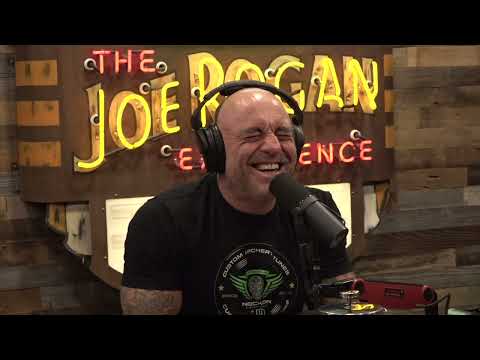
Joe Rogan Experience #2034 - Jeremy Jones
Jeremy Jones (guest), Narrator, Joe Rogan (host)
In this episode of The Joe Rogan Experience, featuring Jeremy Jones and Narrator, Joe Rogan Experience #2034 - Jeremy Jones explores road gambling, pool culture, and precision: Jeremy Jones on cue Joe Rogan and legendary American pool player Jeremy Jones spend the episode unpacking the culture, psychology, and evolution of professional pool, with a heavy focus on road gambling and high‑level nine‑ball. They trace Jeremy’s late start in the game, his years traveling town to town hustling and playing for a living, and how that old-school action culture contrasts with today’s global, more structured pro scene. The conversation dives into technical fundamentals, modern equipment like carbon fiber shafts, pressure in tournaments versus gambling, and the mental side of performing under extreme stakes. They also reminisce about iconic pool films, wild gambling stories, and explore what might reignite a mainstream boom in pool today.
Road gambling, pool culture, and precision: Jeremy Jones on cue
Joe Rogan and legendary American pool player Jeremy Jones spend the episode unpacking the culture, psychology, and evolution of professional pool, with a heavy focus on road gambling and high‑level nine‑ball. They trace Jeremy’s late start in the game, his years traveling town to town hustling and playing for a living, and how that old-school action culture contrasts with today’s global, more structured pro scene. The conversation dives into technical fundamentals, modern equipment like carbon fiber shafts, pressure in tournaments versus gambling, and the mental side of performing under extreme stakes. They also reminisce about iconic pool films, wild gambling stories, and explore what might reignite a mainstream boom in pool today.
Key Takeaways
Fundamentals and deliberate practice separate true elites from strong players.
Jones emphasizes that modern greats like Fedor Gorst and Shane Van Boening build their dominance on near-perfect, repeatable fundamentals and long, focused practice sessions—hundreds of quality balls a day rather than mindless hours.
Get the full analysis with uListen AI
Tournament pressure feels very different from gambling pressure.
Jeremy notes he was rarely nervous in money games—even at $30–40k a set—but struggled early in pro tournaments where you can’t just “flip the coin again,” which makes nerves and performance psychology a bigger factor.
Get the full analysis with uListen AI
Gambling culture historically powered pool’s ecosystem and skill development.
The road-game era—stakehorses, side bets, and marathon sessions—created environments where players improved fast, learned to read people, and built charisma; Jones argues eliminating gambling would strip away a core part of pool’s identity.
Get the full analysis with uListen AI
Equipment advances have changed how the modern game is played.
Livelier cloth, tighter but more consistent pockets, and carbon fiber shafts that generate more spin with less effort have enabled a more precise, aggressive style compared to 1980s-era tournaments.
Get the full analysis with uListen AI
Pool’s popularity is quietly growing again through streaming and leagues.
Between 24/7 YouTube streams, Matchroom and Predator events, and booming amateur leagues, there’s more accessible high-level pool content and organized play than ever, and table sales spiked during the pandemic.
Get the full analysis with uListen AI
One-pocket remains the gamblers’ game because it’s easier to handicap.
Unlike nine-ball, where handicaps often make the game unwinnable for one side, one-pocket offers many ways to spot balls and races so players of different levels can still create a fair, high-stakes match.
Get the full analysis with uListen AI
Charisma and personality are as important as technical brilliance for growing the sport.
Jones points out that older generations—Keith McCready, Efren Reyes, Earl Strickland—had visible flair and sportsmanship; he believes modern pros engaging more with crowds, Mosconi-style, is key to attracting new fans.
Get the full analysis with uListen AI
Notable Quotes
““I thought pool was kinda like a game you played waiting on a bowling alley lane. I didn’t know you could play it for a living.””
— Jeremy Jones
““It’s the hard way to make an easy living.””
— Jeremy Jones (on being a pool gambler)
““When it’s played at a good level, it never stops being exciting. It’s one of the most engaging physical games I’ve ever participated in.””
— Joe Rogan
““Gambling was gambling and personal was personal. In Houston it was the most cut and dry I’d ever been around.””
— Jeremy Jones
““You don’t need a thousand balls a day; you need 300 quality balls a day.””
— Jeremy Jones
Questions Answered in This Episode
How could a modern documentary or series realistically capture the Derby City Classic and broader gambling culture without glamorizing the worst parts of addiction?
Joe Rogan and legendary American pool player Jeremy Jones spend the episode unpacking the culture, psychology, and evolution of professional pool, with a heavy focus on road gambling and high‑level nine‑ball. ...
Get the full analysis with uListen AI
What specific practice routines or drills would Jeremy Jones recommend to a serious amateur who only has a few hours a week but wants to make real progress?
Get the full analysis with uListen AI
How might pool governing bodies embrace gambling’s historical role while creating a safer, more regulated environment for players and fans?
Get the full analysis with uListen AI
In what ways has the explosion of global talent—especially from Europe and Asia—changed what an American player has to do differently to reach the top now versus in the 1990s?
Get the full analysis with uListen AI
Could a Mosconi Cup–style, high-energy crowd environment be adapted to individual events in a way that purists accept but still attracts mainstream sports audiences?
Get the full analysis with uListen AI
Transcript Preview
(drum roll) Joe Rogan podcast, check it out.
The Joe Rogan Experience.
Train by day, Joe Rogan podcast by night, all day. (rock music plays) Jeremy Jones, what's happening, baby?
Not much, not much.
We finally did this.
Trying to r- yeah, trying to run out, you know. (laughs)
Yeah, man, uh, playing you was a very humbling experience. I should tell everybody, Jeremy Jones, professional pool player, um, the team captain of the Mosconi Cup, which is the most prestigious international team tournament in all the world of pool. But, what, what I r- really enjoyed about talking with you for the last couple days is you're just- you're a very smart guy, very interesting guy. There's a lot of, y- you know, like, a lot of interests in all kinds of different things. You're a very fascinating guy.
Y-
That's why you're so good at commentary.
Yeah, I guess so. Maybe just growing up watching all that stuff and, uh, I think my parents, you know, they- they had pretty vast interest, even though maybe didn't afford it all the time to be able to, you know, kinda go with it. But, yeah, number five of six kids, you learn a lot of stuff.
Well, it's just always been fascinating to me, the people that are really good at pool are some of the fucking smartest people I've ever met in my life. There's just- they just got that bug. They got that bug to chase this one thing, geometry and pockets and balls and collisions, and, you know, they got that bug to chase it, but some of the best players that I- I've talked to, they're some of the smartest people I've ever met.
Oh, absolutely. I mean, that just tells you about the game, right?
Yeah.
How much there is to it, and, uh, yeah, I mean, it's just- it- it grabs you and- and, you know, if you're watch- paying attention to what goes on, it's, like, hardly ever the same thing.
Yeah.
You know, you- you don't realize how much control you have. I thought- I thought pool was kinda like a game you played waiting on a bowling alley lane. You know, prior to playing it.
Right.
I didn't know you could play it well. I didn't know you could play it for a living. You know, there's movies out there and stuff, but, I mean, ph- it just didn't seem real.
When you- wh- what- how old were you when you first started playing?
Uh, really playing, 17. I was 17 years old. Yeah, I started late.
I started really late. I was 25, I think. Somewhere around 24. 24 or 25, yeah.
Yeah. Yeah, yeah. I worked two jobs, and one of them, uh, we'd, you know, have a few beers on the weekends at a pizza restaurant and play poker with our money, our tip money, and one of the guys would go to the game room and play pool. And he, uh, took me down there one day and kinda hustled me (laughs) a little bit, you know. We kinda knew each other like that, and, uh, the only thing I wanted to do was be able to beat him, Joe. That's, uh- like, that's what I wanted to do.
Install uListen to search the full transcript and get AI-powered insights
Get Full TranscriptGet more from every podcast
AI summaries, searchable transcripts, and fact-checking. Free forever.
Add to Chrome