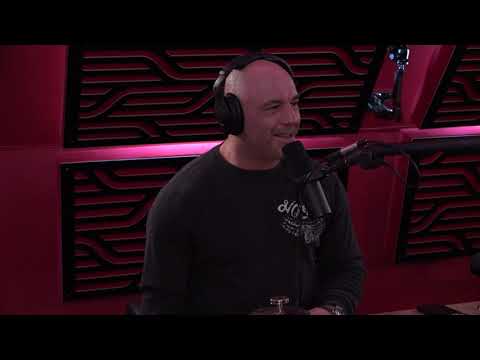
JRE MMA Show #101 with Kevin Holland & Travis Lutter
Joe Rogan (host), Kevin Holland (guest), Travis Lutter (guest), Guest (likely brief interjection from in-room person) (guest), Guest (third-mic participant) (guest), Guest (third-mic participant) (guest), Guest (third-mic participant) (guest), Guest (third-mic participant) (guest), Guest (third-mic participant) (guest), Guest (third-mic participant) (guest)
In this episode of The Joe Rogan Experience, featuring Joe Rogan and Kevin Holland, JRE MMA Show #101 with Kevin Holland & Travis Lutter explores kevin Holland’s Raw Mindset, Jiu-Jitsu Truths, And MMA’s Evolving Game Joe Rogan sits down with UFC middleweight Kevin Holland and his longtime coach, jiu-jitsu expert Travis Lutter, to talk injuries, training philosophy, talent versus work ethic, and Holland’s rapid rise in the UFC.
Kevin Holland’s Raw Mindset, Jiu-Jitsu Truths, And MMA’s Evolving Game
Joe Rogan sits down with UFC middleweight Kevin Holland and his longtime coach, jiu-jitsu expert Travis Lutter, to talk injuries, training philosophy, talent versus work ethic, and Holland’s rapid rise in the UFC.
They dig into the evolution of jiu-jitsu rules and leg locks, the UFC vs. Bellator talent debate, the realities of fighting during COVID, and how lifestyle, discipline, and recovery affect performance and longevity.
Holland’s unconventional approach—loving to fight but hating hard workouts and structure—is contrasted with Lutter’s perspective on what it takes to become truly elite and how much raw talent Holland has.
The conversation ranges widely into combat sports history, legendary fighters, concussion and eye injuries, PED speculation, and how MMA has transformed martial arts culture from the ’90s to today.
Key Takeaways
Teaching jiu-jitsu forces deeper understanding of positions and concepts.
Lutter explains that when students ask questions from angles he’s never considered, it obliges him to break techniques down more precisely, which sharpens his own jiu-jitsu far beyond just drilling.
Get the full analysis with uListen AI
If you coach a physical art, you should still actively train it.
Lutter argues that when instructors stop training and only demonstrate, their skills and judgment become “perishable,” leading to stale or even ineffective technique being passed on.
Get the full analysis with uListen AI
Raw talent can be extraordinary, but discipline decides how far it goes.
Lutter repeatedly calls Holland the most naturally gifted athlete he’s ever trained (more talented than GSP in his view), but stresses that Holland’s ceiling depends on how much he embraces hard conditioning, wrestling, and structure.
Get the full analysis with uListen AI
Rule sets shape how grappling is practiced and watched.
They dissect IBJJF, ADCC, and EBI rules—showing how point structures, guard-pull penalties, overtime back-takes, or no-time-limit formats dramatically change strategy, excitement, and even match length.
Get the full analysis with uListen AI
High-level MMA careers are constrained by wear, time, and lifestyle choices.
Eye damage, neck and knee injuries, and brain trauma come up repeatedly; they use examples like Michael Bisping, Nick Lentz, Cain Velasquez, and Khabib to underline that staying too long or mismanaging health can cost fighters their long-term quality of life.
Get the full analysis with uListen AI
The best organizations win with depth, storytelling, and brand, not just money.
Comparing UFC, Pride, and Bellator, they argue that UFC’s first-mover advantage, deep rosters, and mainstream recognition (like the NFL vs. ...
Get the full analysis with uListen AI
COVID policies exposed a clash between health risk management and athletic reality.
They criticize blanket shutdowns of gyms, inconsistent rules on masks and dining, and the lack of science-based nuance (e. ...
Get the full analysis with uListen AI
Notable Quotes
““If I’m gonna teach jiu-jitsu, I have to stay doing the art… When people just teach and they don’t train, that’s when you start seeing bullshit jiu-jitsu.””
— Travis Lutter
““Kevin’s the most talented guy that I’ve ever trained with, by far… I’ve trained with Randy, I’ve trained with GSP. Kevin’s different.””
— Travis Lutter
““I don’t like hard workouts… People are like, ‘I live for that.’ I’m like, you’re tripping, bro. What are you smoking? I’m smoking weed. I want to chill.””
— Kevin Holland
““Nobody’s great. Nobody’s fucking great… When you retire, you can say you had a great career, but nobody’s great.””
— Kevin Holland
““Jiu-jitsu’s a great equalizer. Nobody is good when they first join… Kevin was the exception.””
— Travis Lutter
Questions Answered in This Episode
How far can Kevin Holland realistically go if he fully commits to structured conditioning and wrestling without losing his playful style?
Joe Rogan sits down with UFC middleweight Kevin Holland and his longtime coach, jiu-jitsu expert Travis Lutter, to talk injuries, training philosophy, talent versus work ethic, and Holland’s rapid rise in the UFC.
Get the full analysis with uListen AI
Should major grappling events standardize rules across organizations, or is diversity in rule sets actually good for the sport’s evolution?
They dig into the evolution of jiu-jitsu rules and leg locks, the UFC vs. ...
Get the full analysis with uListen AI
In a post-COVID world, what’s the right balance between personal risk tolerance for athletes and centralized public health mandates on training and events?
Holland’s unconventional approach—loving to fight but hating hard workouts and structure—is contrasted with Lutter’s perspective on what it takes to become truly elite and how much raw talent Holland has.
Get the full analysis with uListen AI
How much should fans and promotions care about PED use when evaluating all-time greats across different eras and rule environments?
The conversation ranges widely into combat sports history, legendary fighters, concussion and eye injuries, PED speculation, and how MMA has transformed martial arts culture from the ’90s to today.
Get the full analysis with uListen AI
With more kids starting combat sports at very young ages and training “MMA from day one,” how might the next generation of fighters change what’s considered possible in the cage?
Get the full analysis with uListen AI
Transcript Preview
Okay, we're rolling. (phone chimes) Kevin, what's up?
What's up, Joe?
Was that your phone?
Yep, I'm not sure. Um-
Travis Sluiter.
Sorry.
(laughs)
(laughs)
(laughs)
So, uh, first of all, welcome. Thanks for doing this. Appreciate it.
No, thank you.
And it's good to see you again, man. I haven't seen you in forever.
Yeah, man. It's been a- it's been a few years.
Try to keep this, like, uh-
Sorry.
... like a fist from your face.
A fist from my face, huh? Well.
Yeah.
Well...
We were talking right before about, uh, injuries. You know, it's like, I always like to talk to guys who have been doing Jiu-Jitsu a long time 'cause they always have this laundry list-
(laughs)
... of injuries. And you were talking about neck fusions and disc issues.
Yeah.
And, you know?
Yeah, I mean, uh, you know, I'm just like everybody else. We get... You know, everybody gets injured, we all get old. Uh, it just takes time, and- and... But, you know, my opinion is, if I'm gonna teach Jiu-Jitsu, I- I have to stay doing the art.
Yeah.
I think that, um, when people just teach and they don't train, they- they, you know, it's like a... It's a perishable.
Yes.
You know, it's like your skills are perishable, and then it's also your thoughts. It's like, yeah, you know, it's like, "Oh, uh, wha- if we just..." That's when you start seeing bullshit Jiu-Jitsu.
Yeah.
And- and so, it's like, if I'm gonna teach, I have to train, and it's like, you know what? I love training. I'd much prefer to, you know... I- I wish I could still fight, but I- I can't, so it's like I... But I do train, and it's like... And, you know, I have to.
Did you notice a difference in improving of your skills when you started teaching?
Yeah, for sure. I thi- I think that teaching d- definitely, you know, helps you improve, because I... The way that I think about it is, is that, you know, when- when, uh, when you're, uh... when you're teaching, you have to think about how he's looking at a problem. So he's- he... You show him a move, and then you come back and- and he comes back with a question. And- and it might be in a way that you've never thought about it before. And then, so then you've gotta break down how to answer that question for them so that they- it makes sense to on their level at- at their- in their wavelength, you know, so it's like, that helps me, 'cause now I understand the position even essentially better. Yeah, I could do this position before, but now it's like I've answered so many different questions over the years, uh, you know, that it really, really improves your Jiu-Jitsu.
Install uListen to search the full transcript and get AI-powered insights
Get Full TranscriptGet more from every podcast
AI summaries, searchable transcripts, and fact-checking. Free forever.
Add to Chrome