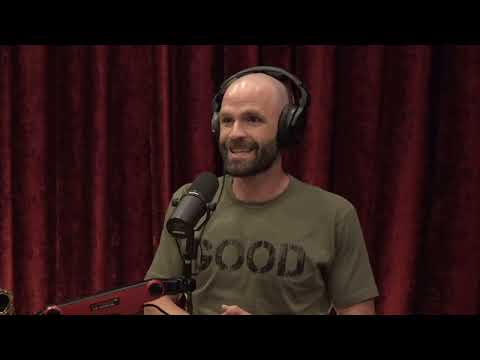
Joe Rogan Experience #1955 - Cliff Gray
Cliff Gray (guest), Narrator, Narrator, Joe Rogan (host), Narrator, Narrator, Narrator, Narrator, Narrator
In this episode of The Joe Rogan Experience, featuring Cliff Gray and Narrator, Joe Rogan Experience #1955 - Cliff Gray explores ex–Wall Street Trader Becomes Wilderness Outfitter, Debates Wolves And Hunting Joe Rogan and hunting guide/outfitter Cliff Gray trace Cliff’s journey from a finance career to running a horse-and-mule wilderness hunting operation in Colorado. They dig into the realities of deep backcountry elk, sheep, goat, and lion hunting, including logistics, horses, Amish guides, and the physical and mental demands on hunters. A large portion of the conversation tackles predator management—especially wolf reintroduction in Colorado, mountain lions, and bears—and how ballot-box wildlife policy clashes with on‑the‑ground reality. They close by discussing hunting’s steep learning curve, the value of wild game meat, and why difficult outdoor pursuits can transform people’s lives.
Ex–Wall Street Trader Becomes Wilderness Outfitter, Debates Wolves And Hunting
Joe Rogan and hunting guide/outfitter Cliff Gray trace Cliff’s journey from a finance career to running a horse-and-mule wilderness hunting operation in Colorado. They dig into the realities of deep backcountry elk, sheep, goat, and lion hunting, including logistics, horses, Amish guides, and the physical and mental demands on hunters. A large portion of the conversation tackles predator management—especially wolf reintroduction in Colorado, mountain lions, and bears—and how ballot-box wildlife policy clashes with on‑the‑ground reality. They close by discussing hunting’s steep learning curve, the value of wild game meat, and why difficult outdoor pursuits can transform people’s lives.
Key Takeaways
You can radically change careers if you accept uncertainty and lean on support.
Cliff left a stable, well-paid finance job to buy a failing outfitting business, relying on his upbringing, his wife’s backing, and his parents’ encouragement; he emphasizes that you can’t re-do life, so commit to the path you’re on instead of wishing for a different past.
Get the full analysis with uListen AI
True backcountry hunting is logistically intense and physically grueling.
Guided elk and sheep hunts in Colorado’s roadless wilderness require packing in wall tents, feed, and gear with horses and mules, caring for 10–15 animals in remote camps, and sometimes hiking or riding many miles just to reach heavily pressured elk or goats.
Get the full analysis with uListen AI
Skill-based, hands‑on education can be as valuable as formal schooling.
Cliff describes 18‑year‑old Amish workers who can saddle mules, build doors, and manage livestock from years of real work, illustrating how practical competencies and work ethic can rival or exceed conventional credential-focused education in many contexts.
Get the full analysis with uListen AI
Ballot‑driven wildlife policy often ignores ecological and economic realities.
Colorado’s wolf reintroduction passed via urban voters who won’t live with wolves’ consequences, while rural residents and outfitters will absorb livestock loss, dog predation, and ungulate declines; Cliff notes that each wolf effectively “eats” tens of thousands of dollars in potential elk-tag revenue annually.
Get the full analysis with uListen AI
Predators are fascinating but create real conflicts when unmanaged.
They describe wolves’ pack tactics and surplus killing, mountain lions’ specialized diets learned from their mothers, and bears’ variable behavior (from rolling in fox scat to attacking tents), arguing that love for predators must be tempered with a plan for population control and human–wildlife coexistence.
Get the full analysis with uListen AI
Hunting with dogs and technology feels “unfair” to outsiders but is often essential management.
Rogan and Gray point out that effective lion control without hounds is nearly impossible, and that states like California still kill lions with paid professionals instead of licensed hunters—losing conservation revenue while creating the illusion of moral superiority.
Get the full analysis with uListen AI
Difficult outdoor pursuits build resilience and meaning in modern life.
Rogan explains that archery elk hunting—planning, training year‑round, managing adrenaline, butchering, and feeding his family—is more intense and rewarding than his high-profile career work, showing how voluntary hardship in nature can reset stress and re‑anchor people in reality.
Get the full analysis with uListen AI
Notable Quotes
“If you're happy, you chose the right thing. But no one—there's no right thing. There's just life. Life and decisions.”
— Joe Rogan
“I was looking at financial models one day, and three weeks later I was packing elk out of the wilderness on mules.”
— Cliff Gray
“Everybody that voted for wolves doesn’t have to deal with the downside. The people who did vote no are the ones who are going to live with them.”
— Cliff Gray
“Wolves are amazing, but they’re dominant, intelligent, calculating predators. They eradicated them from the West for a reason.”
— Joe Rogan
“Hunting can change somebody’s life. A hobby can turn into something that makes you train harder, eat better, and completely reset how you see the world.”
— Joe Rogan
Questions Answered in This Episode
Should wildlife reintroductions like wolves be decided by public vote, or reserved for biologists and land managers who understand the full ecological and economic trade‑offs?
Joe Rogan and hunting guide/outfitter Cliff Gray trace Cliff’s journey from a finance career to running a horse-and-mule wilderness hunting operation in Colorado. ...
Get the full analysis with uListen AI
How much “unfairness” in hunting methods—like using hounds for mountain lions or advanced optics for sheep—is acceptable if the larger goal is effective wildlife management and conservation funding?
Get the full analysis with uListen AI
In an increasingly urban, tech‑centric society, what’s the best way to reconnect people with the realities of death, meat, and where their food comes from without alienating them?
Get the full analysis with uListen AI
Could models like Maui Nui’s wild deer harvest or structured wild hog courses in Texas be scaled nationwide to both control invasives and reintroduce Americans to wild meat?
Get the full analysis with uListen AI
What personal barriers—time, knowledge, gear, social pressure—most realistically keep people from trying hunting or deep backcountry adventures, and how might those be lowered without oversimplifying the risks?
Get the full analysis with uListen AI
Transcript Preview
(drumming music) Joe Rogan podcast. Check it out.
The Joe Rogan Experience.
Train by day, Joe Rogan podcast by night. All day. (rock music)
Hello, Cliff. What's happening?
What's up, man?
Nice to meet you in person.
You too.
We've been chatting back and forth online for quite a while now.
Yeah, man. You know, it's funny. I was looking at it. I think it's been, like, five or six years since our first, like, interaction. (laughs)
(laughs) How did you get involved-
(sighs)
... uh, being a, a hunting guide? What was your, what's your path to that?
Yeah, man. So it's a, I guess it's a, a long story. You know, I, I grew up in a rural area. My da-, my dad was a cattle rancher, and then he did a little outfitting when I was a kid. And then it, well, it's kind of a long story, man, 'cause I thought this was normal when I was a kid. But when I was, when my dad was an adult, he was a cattle rancher, and then he went back to vet school. And so, he actually left outfitting and cattle ranching and pursued that, and that was when he was, like, in his 40s, you know. And so, that was my first exposure to, you know, being an outfitter or guiding was through my father. And then honestly, man, like, growing up, I hunted all the time. I've been, I've, I've been obsessed with, you know, hunting since I was 10, 12 years old. And then I went and kind of did a more traditional, I guess, lifestyle. I went to school, went to undergrad, went to business school, and then I worked in finance for a few years. And, I mean, we can, we can get, uh, deep into, like, why that didn't last, you know. I, I got, I got-
Maybe you can help us ex- pl- explain why the banks are failing right now. (laughs)
(laughs) I don't know, man. It's been so long since I've, I've been in that world.
What a, what a different contrast, though. The contrast between that world and the world that you live in now.
Dude, it's cra- it's crazy to think about because I still know people that, you know, are finance guys. My brother's a finance guy.
Does he live in hell?
Uh, well, well-
He can't be happy. (laughs)
Yeah, yeah. He, he's, he's doing all right 'cause he doesn't, you know, he doesn't, uh, um, all his, the investment strategies that he's do, for the most part, are, like, hedge type of strategies. But, uh, but he's doing okay. But yeah, it's a different, it's a different world, man. You know?
It's definitely a different world.
Yeah.
Yeah.
And I always, I always look back on my path and I think, like, "Well, did I choose, you know, did I choose the right thing?" P- I don't know, but I'm happy. So, I guess, you know-
Install uListen to search the full transcript and get AI-powered insights
Get Full TranscriptGet more from every podcast
AI summaries, searchable transcripts, and fact-checking. Free forever.
Add to Chrome