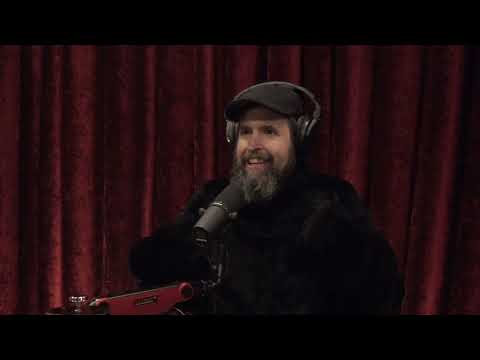
Joe Rogan Experience #2000 - Duncan Trussell
Narrator, Joe Rogan (host), Duncan Trussell (guest), Narrator, Narrator, Narrator, Narrator, Narrator, Narrator, Narrator, Narrator, Narrator, Narrator, Narrator, Narrator, Narrator, Narrator, Narrator, Narrator, Narrator
In this episode of The Joe Rogan Experience, featuring Narrator and Joe Rogan, Joe Rogan Experience #2000 - Duncan Trussell explores joe Rogan and Duncan Trussell Explore UFOs, Power, Karma, and Control Joe Rogan and Duncan Trussell’s 2000th episode ranges from goofy furry-costume antics to dense, free-form conversations about power, war, drugs, consciousness, and UFOs.
Joe Rogan and Duncan Trussell Explore UFOs, Power, Karma, and Control
Joe Rogan and Duncan Trussell’s 2000th episode ranges from goofy furry-costume antics to dense, free-form conversations about power, war, drugs, consciousness, and UFOs.
They critique institutional control—governments, media, pharma, and censorship—arguing these systems shape behavior through fear, narrative, and economic incentives rather than honest leadership.
The pair dive into spirituality and psychology (karma, reincarnation, trauma, epigenetics, meditation, psychedelics), framing personal transformation as the antidote to both personal suffering and collective manipulation.
Throughout, they repeatedly return to the idea that humans are programmable, that propaganda and fear erode critical thinking, and that experiences like physical struggle, psychedelics, and honest self-inquiry can break those loops.
Key Takeaways
Question who benefits from the narratives you’re consuming.
Rogan and Trussell argue that media, pharma, and political narratives frequently serve financial or power interests; asking “who gains from me believing this? ...
Get the full analysis with uListen AI
Recognize “cops in the head” as internalized control.
They describe how heavy policing and propaganda eventually make people police themselves, following state or social expectations out of fear and habit rather than explicit force.
Get the full analysis with uListen AI
Treat physical struggle as mental health hygiene, not vanity.
Rogan notes that just a couple days without training spikes his anxiety and dulls his mood, framing rigorous exercise as essential to emotional regulation and resilience, not just fitness.
Get the full analysis with uListen AI
Use psychedelics (carefully) as a reset, not a lifestyle.
They liken psilocybin or DMT to “control–alt–delete for the brain,” an opportunity to see your patterns (the “My Old Bullshit” folder) and choose whether to keep or delete them—provided it’s done intentionally and safely.
Get the full analysis with uListen AI
Adversity can be developmental fuel if you don’t stay stuck in it.
Both stress that growing up poor, sick, or traumatized can sharpen perception and drive, but only if you eventually choose to stop reenacting old defense mechanisms and consciously evolve.
Get the full analysis with uListen AI
Beware moralistic scolding as a political or activist tactic.
They argue that shaming people—about war, vaccines, climate, or anything else—tends to entrench opposition rather than create change, and often signals ego or status-seeking more than genuine care.
Get the full analysis with uListen AI
Stay open to radical information (like UFO claims) without surrendering skepticism.
They’re fascinated by whistleblower accounts of crash retrieval programs but emphasize that if such things are real, secrecy has immense ethical implications—about who controls world-changing knowledge and why.
Get the full analysis with uListen AI
Notable Quotes
“Your body is your dog. If you don’t walk it, it gets nervous and weird.”
— Duncan Trussell
“You don’t get to decide whether human beings go from cradle to the grave without information that would literally change the way we think about the universe itself.”
— Joe Rogan
“We remember information; we don’t remember the source. That’s how you get mentally pick‑pocketed.”
— Duncan Trussell
“If you remove adversity from a life, you do an incredible disservice to the potential of that life.”
— Joe Rogan
“Stop being an idolater. Don’t let a middleman trick you into thinking he’s got a direct line to the divine that you don’t have.”
— Duncan Trussell
Questions Answered in This Episode
If large institutions are structurally incentivized to mislead or withhold, what practical safeguards—legal or cultural—could realistically keep them honest?
Joe Rogan and Duncan Trussell’s 2000th episode ranges from goofy furry-costume antics to dense, free-form conversations about power, war, drugs, consciousness, and UFOs.
Get the full analysis with uListen AI
How can an individual distinguish between healthy skepticism and total cynicism in an information environment where every source is suspect?
They critique institutional control—governments, media, pharma, and censorship—arguing these systems shape behavior through fear, narrative, and economic incentives rather than honest leadership.
Get the full analysis with uListen AI
If psychedelics can act as a psychological ‘reset,’ how should a society integrate them responsibly without creating new forms of exploitation or dependency?
The pair dive into spirituality and psychology (karma, reincarnation, trauma, epigenetics, meditation, psychedelics), framing personal transformation as the antidote to both personal suffering and collective manipulation.
Get the full analysis with uListen AI
Assuming some UFO crash‑retrieval stories are true, who should have moral authority over that technology and information: governments, international bodies, scientists, or the public at large?
Throughout, they repeatedly return to the idea that humans are programmable, that propaganda and fear erode critical thinking, and that experiences like physical struggle, psychedelics, and honest self-inquiry can break those loops.
Get the full analysis with uListen AI
In an age of algorithmically amplified outrage, what does effective, non‑moralizing activism actually look like at the neighborhood and community level?
Get the full analysis with uListen AI
Transcript Preview
(drum roll) Joe Rogan podcast, check it out. The Joe Rogan Experience.
Train by day, Joe Rogan podcast by night, all day. (energetic music plays) Hi, Meow-Meow.
Hi, Ruff-Nuff.
Um, I'm so excited to be here with you today.
Yeah.
This is our first podcast coming out as our true selves.
We're furries!
Yeah, we've been holding it in forever.
This is my true identity, uh, and you know what? It just eats me alive to not tell how we met at a furry con.
(laughs)
(laughs)
Well, we didn't know that we met there. Remember?
Well, yeah. I didn't know who you were for a long time.
Yeah, we didn't know. I'm like, "Oh my God, you're Meow-Meow?"
Dude, it blew my mind. I mean, to me, that is proof we're in a simulation.
Hmm.
'Cause what are the odds?
They're not good.
What are the odds, man, that I would be-
The odds are also not good that I'm gonna keep this fucking helmet on.
(laughs)
Oh my God, I'm sweating.
This is, like, not good for me. I'm not keeping this on, dude. It's a fuck-
I can barely breathe!
How do they do it?
I don't know. They fuck with these things on.
How do you fuck with this on? I mean-
They're heroes.
N- Total respect.
Those people are heroes.
Total respect for furries now.
Respect for the furry community.
Oh, it's like-
Look, I got the feet on and everything.
It's like Bikram fucking.
Yeah. It's very hot in here. If you can fuck with this on, you're an American hero.
(laughs) Yeah.
That's how I feel.
(laughs) David Goggins-
(laughs)
... needs to put on one of these things-
Yeah.
... and fuck for an hour.
He should. Yeah, you think you're so cool running for 1,000 miles?
(laughs)
How about fuck for four and a half minutes with this on?
(laughs)
(laughs)
I can't fuck for four and a half minutes without it on, but ...
This is like sprinting uphill.
This is really brutal. And just thinking about padding around a ramada in one of these things. I just don't-
But I get it.
Or- Orlando outside-
Huh? What do you mean, you get it?
... in the summer. (laughs)
I get it when I put it on. I get it. I know why they do it. But I don't know why all of them do it. (exhales)
Wait, why? Why do you think they do it?
I really have a hard time breathing. I think they do it because it offers you an anonymity that is impossible any other way.
Right.
Install uListen to search the full transcript and get AI-powered insights
Get Full TranscriptGet more from every podcast
AI summaries, searchable transcripts, and fact-checking. Free forever.
Add to Chrome