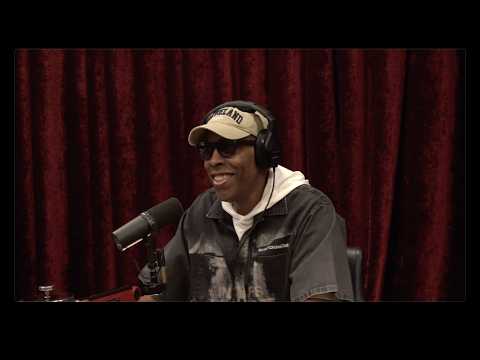
Joe Rogan Experience #2480 - Arsenio Hall
Joe Rogan (host)
In this episode of The Joe Rogan Experience, featuring Joe Rogan, Joe Rogan Experience #2480 - Arsenio Hall explores arsenio Hall and Joe Rogan reflect on comedy, culture, change Rogan and Hall argue that comedy needs protected spaces to experiment, praising phone-locking policies that reduce “snitching” and preserve the messy, developmental nature of stand-up.
Arsenio Hall and Joe Rogan reflect on comedy, culture, change
Rogan and Hall argue that comedy needs protected spaces to experiment, praising phone-locking policies that reduce “snitching” and preserve the messy, developmental nature of stand-up.
They compare substances and performance—creatine for cognition under sleep deprivation, weed’s mixed effects, and the risks of stimulants and sleep meds—framing sleep as the core performance enhancer.
Hall recounts how The Arsenio Hall Show reshaped late-night TV by removing the desk, centering music and authentic conversation, and influencing how politicians campaign (e.g., Clinton playing sax).
They criticize modern politics as team-based manipulation driven by money, misdirection, and unpunished corruption, while acknowledging news consumption can damage mental health despite comedians needing it for material.
The conversation turns nostalgic and biographical: mentorship and history at The Comedy Store (Mitzi Shore, Pryor, Mooney), Hall’s stories about Prince and Quincy Jones, and reflections on simplifying life after fame.
Key Takeaways
Stand-up requires a “sandbox” to fail publicly without permanent receipts.
They argue comedians must be able to riff, miss, and course-correct; phones in bags reduce premature virality and allow honest experimentation without fear of decontextualized clips.
Get the full analysis with uListen AI
Sleep is the non-negotiable performance variable; stimulants are a trap.
Rogan ties a public memory mix-up to exhaustion and describes creatine as a researched cognitive aid during sleep loss, while both warn that Adderall/Ambien cycles can spiral into dependence.
Get the full analysis with uListen AI
Weed can enhance body awareness for some, but it’s highly individual.
Rogan describes improved coordination and proprioception for training, while stressing downsides—procrastination, anxiety/paranoia, and possible psychosis risk in vulnerable people.
Get the full analysis with uListen AI
Arsenio’s “no desk” was more than aesthetics—it changed intimacy and power dynamics.
Hall explains the desk blocked natural interaction; removing it enabled physical closeness (even holding a guest’s hand) and made the show feel less like a lecture and more like a conversation.
Get the full analysis with uListen AI
Late-night’s old economics and format can’t compete with long-form, on-demand media.
They cite commercials every few minutes, high production costs, and fragmented audiences; podcasts/YouTube offer uninterrupted depth and viewing at any time, undermining traditional appointment TV.
Get the full analysis with uListen AI
Fame and money can add complexity that reduces happiness.
Hall’s Pryor story (“This reminds me of when I was happy”) becomes a lesson in scaling down life—fewer staff, fewer unused spaces, and less pressure compared with peak-career intensity.
Get the full analysis with uListen AI
The best comics tolerate silence and do the most unglamorous reps.
They highlight deliberate practice—Rock and Wayans workshopping, and Damon Wayans archiving every set—arguing that greatness comes from iterative refinement, not only polished performances.
Get the full analysis with uListen AI
Notable Quotes
““Stand-up is the only art form that you have to kinda create in front of a crowd.””
— Joe Rogan
““This reminds me of when I was happy.””
— Arsenio Hall (quoting Richard Pryor)
““They wanted me to do Joe Rogan before there was a Joe Rogan.””
— Arsenio Hall
““That’s the story of American politics.””
— Arsenio Hall (about misdirection)
““I’m politically homeless.””
— Joe Rogan
Questions Answered in This Episode
How did Arsenio’s decision to remove the desk change guest dynamics, bookings, and network expectations in practical day-to-day production?
Rogan and Hall argue that comedy needs protected spaces to experiment, praising phone-locking policies that reduce “snitching” and preserve the messy, developmental nature of stand-up.
Get the full analysis with uListen AI
What specific evidence/studies is Rogan referencing about creatine improving cognition during sleep deprivation, and what dosing/safety constraints does he follow?
They compare substances and performance—creatine for cognition under sleep deprivation, weed’s mixed effects, and the risks of stimulants and sleep meds—framing sleep as the core performance enhancer.
Get the full analysis with uListen AI
Arsenio says executives pushed him to be “less Black” and reduce music—what were the concrete pressures (ratings, affiliates, advertisers), and how did he resist or compromise?
Hall recounts how The Arsenio Hall Show reshaped late-night TV by removing the desk, centering music and authentic conversation, and influencing how politicians campaign (e. ...
Get the full analysis with uListen AI
Rogan argues phone-locking improves comedy experimentation—what are the best practices for clubs to implement it without harming audience experience or accessibility needs?
They criticize modern politics as team-based manipulation driven by money, misdirection, and unpunished corruption, while acknowledging news consumption can damage mental health despite comedians needing it for material.
Get the full analysis with uListen AI
Arsenio credits his show with changing presidential campaigning after the Clinton sax moment—what other examples did he see of politicians adapting to entertainment formats?
The conversation turns nostalgic and biographical: mentorship and history at The Comedy Store (Mitzi Shore, Pryor, Mooney), Hall’s stories about Prince and Quincy Jones, and reflections on simplifying life after fame.
Get the full analysis with uListen AI
Transcript Preview
Joe Rogan Podcast, check it out.
The Joe Rogan Experience.
Train by day, Joe Rogan Podcast by night. All day. [upbeat rock music]
All right. Slap some headphones on. Let's rock and roll, sir.
Hello. Yes. Our old friend would be so happy. And n- not just that picture, but so much that you've done. Do ... Like, do you believe that people who have gone on know what we're doing or see us?
I don't know. Y- you'd like to think that it ... you're that important. [laughs]
Oh, yeah. Yeah.
I have a feeling they have more important stuff to do on the other side.
Yeah, I guess if you're in heaven, you're not thinking about the mothership.
Right.
But, um-
Well, the mothership definitely is from her.
Yes, yes.
Yeah.
Well, I mean, that's an incredible tribute to her, um, that the-
Well, the bar's named after her.
Yeah. I, I've heard all the comics. I've heard Shane and Ian and all the guys talk about it after they came back. Um, and that's just an honor, man, that, that ... Plus, you know, I used to say to people, "If you haven't taken something from watching Richard Pryor, you're probably doing it wrong."
Right.
And Mitzi made the greatest comedy mecca ever, and you gotta copy what she did.
100%, yeah.
Yeah. Wow. And this is cool.
Yeah. She taught me everything about how to run a club, how to do it right. Basically, kinda let the comedians run it. Let the inmates run the asylum.
Yeah.
You know?
Yeah, we're, uh, perfect inmates for that.
[laughs]
And, and, and right now, the Comedy Store is greater than ever.
That's awesome.
Yeah, it's, it, it, it's wonderful there because, you know, I even got Jay Leno to come back, you know, 'cause he remembered the old days and hadn't gone back, and I'm like, "Dude, it's different. They, they pay you [laughs] for coming. They split the door in a different way now, and there are phones in bags." I had to explain that concept.
Yeah. We had encouraged them to do all that.
Yeah, that was your era.
Yeah.
Um-
Well, once we left, we started doing that at the mothership for all the shows. Then other comedy clubs started following suit. It's the way to do it. People are too fucking distracted.
Yeah, and I think it, it frees us up in a way. I'll say things and try things and not worry about seeing them on YouTube, uh, when they're not ready, or when I've made a mistake and gone too far and said something, you know?
Oh, 100%. It's also, you have to be free to fuck around and experiment, and if someone takes that fucking around and exper- ... And you don't know what's coming out of your mouth. Like right now, I don't know what's coming out of my mouth right before-
[laughs]
... I say it, right?
Yeah, right.
Install uListen to search the full transcript and get AI-powered insights
Get Full TranscriptGet more from every podcast
AI summaries, searchable transcripts, and fact-checking. Free forever.
Add to Chrome