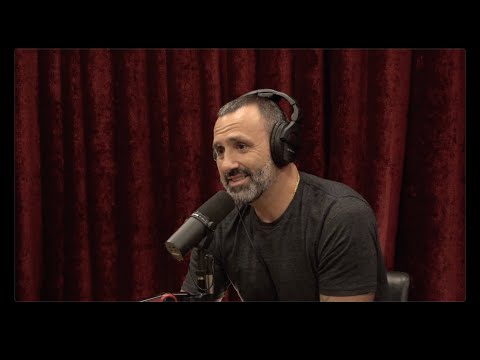
Joe Rogan Experience #2432 - Josh Dubin
Narrator, Joe Rogan (host), Josh Dubin (guest), Narrator, Narrator, Narrator
In this episode of The Joe Rogan Experience, featuring Narrator and Joe Rogan, Joe Rogan Experience #2432 - Josh Dubin explores inside America’s Justice Failures: Wrongful Convictions, Clemency, and Cannabis Joe Rogan and attorney Josh Dubin dive deeply into the failures and rare victories within the American justice system, focusing on wrongful convictions, prosecutorial misconduct, and the almost impossible path to clemency or exoneration. Dubin walks through jaw-dropping cases: stolen DNA used to frame billionaires, a man serving decades despite a “smoking gun” in someone else’s hand, an immigrant grandfather facing deportation for a 50‑year‑old near‑self‑defense killing, and drug offenders warehoused under outdated laws. They also discuss political cowardice around pardons, how power and ego prevent officials from admitting error, and how advocacy and public pressure can occasionally force change. The conversation closes with broader debates on drug policy, psychedelics, marijuana rescheduling, personal responsibility, and a brief detour into combat sports and culture.
Inside America’s Justice Failures: Wrongful Convictions, Clemency, and Cannabis
Joe Rogan and attorney Josh Dubin dive deeply into the failures and rare victories within the American justice system, focusing on wrongful convictions, prosecutorial misconduct, and the almost impossible path to clemency or exoneration. Dubin walks through jaw-dropping cases: stolen DNA used to frame billionaires, a man serving decades despite a “smoking gun” in someone else’s hand, an immigrant grandfather facing deportation for a 50‑year‑old near‑self‑defense killing, and drug offenders warehoused under outdated laws. They also discuss political cowardice around pardons, how power and ego prevent officials from admitting error, and how advocacy and public pressure can occasionally force change. The conversation closes with broader debates on drug policy, psychedelics, marijuana rescheduling, personal responsibility, and a brief detour into combat sports and culture.
Key Takeaways
Wrongful convictions often stem more from bias and tunnel vision than overt framing.
Dubin argues that outright framing is less common than detectives forming a hunch, then unconsciously bending evidence and ignoring contradictions to make the facts fit their theory.
Get the full analysis with uListen AI
Forensic evidence like DNA is powerful but easily corrupted by human behavior.
The Perlmutter case shows how stolen DNA, unaccredited labs, pressure to “find a match,” and contamination can turn an almost infallible tool into a weapon for defamation and false accusation.
Get the full analysis with uListen AI
Exoneration rarely leads to prosecution of the true perpetrator or the corrupt actors involved.
Even when defense lawyers clearly identify the real killer or a crooked detective’s pattern (like Louis Scarcella’s 21 overturned cases), municipalities almost never charge those people, largely for liability and political reasons.
Get the full analysis with uListen AI
Clemency and pardons are more about politics and optics than justice.
Dubin describes multiple meritorious cases—like Michael Giles in Florida or federal drug offenders—where overwhelming support exists, but governors or presidents balk to avoid perceived “soft on crime” attacks.
Get the full analysis with uListen AI
Old drug and immigration laws continue to destroy lives decades after the underlying conduct.
From a 1970s Albanian immigrant facing removal after 51 law‑abiding years to men still imprisoned under obsolete drug sentencing schemes, the system rarely adjusts punishment to present‑day values or behavior.
Get the full analysis with uListen AI
Trauma processing can require revisiting pain in a controlled, structured way.
Dubin’s experience with EMDR—and Rogan’s discussion of psychedelics and breathwork—suggests that deep emotional healing often involves safely re‑entering traumatic memories or altered states so they lose their physiological grip.
Get the full analysis with uListen AI
Public engagement and scrutiny are essential levers for justice reform.
They repeatedly stress that voters, local media, and civic pressure can influence DAs, governors, and pardon boards—especially when people actually read trial transcripts and records instead of just headlines.
Get the full analysis with uListen AI
Drug policy built on fear and propaganda creates cartels and mass incarceration, not safety.
Rogan traces marijuana’s criminalization to economic conspiracies and notes how prohibition of various drugs empowers cartels and produces more overdoses than a regulated, honest system likely would.
Get the full analysis with uListen AI
Notable Quotes
““Science shouldn’t be vulnerable. It should be…either yes or no, especially with DNA.””
— Josh Dubin
““If billionaires can get awarded $50 million, that’s the jury saying her reputation mattered.””
— Josh Dubin
““The cop who literally caught the murderer with the smoking gun is ignored—and the innocent kid does 26 years.””
— Josh Dubin (paraphrasing the Nelson Cruz case)
““You can help people with second chances—you can’t help them with what they do with it.””
— Josh Dubin
““One of the things about being a human being is as much freedom as you can give people, the better—as long as they know what they’re doing.””
— Joe Rogan
Questions Answered in This Episode
How common are cases like Nelson Cruz’s, where a clearly innocent person serves decades while the real killer goes free?
Joe Rogan and attorney Josh Dubin dive deeply into the failures and rare victories within the American justice system, focusing on wrongful convictions, prosecutorial misconduct, and the almost impossible path to clemency or exoneration. ...
Get the full analysis with uListen AI
What structural changes to forensic science and lab accreditation would have prevented the Perlmutter DNA abuse case?
Get the full analysis with uListen AI
How could clemency and pardon processes be redesigned to be more transparent, consistent, and insulated from political risk?
Get the full analysis with uListen AI
In what ways does media coverage—both legacy and social—help or hurt wrongful conviction work and public understanding of justice issues?
Get the full analysis with uListen AI
What practical steps can ordinary people take in their own states or counties to hold prosecutors, judges, and police accountable in wrongful conviction and excessive sentencing cases?
Get the full analysis with uListen AI
Transcript Preview
(drum beat plays) Joe Rogan podcast. Check it out. The Joe Rogan Experience.
Train by day, Joe Rogan podcast by night. All day. (rock music plays) Hello, Michael. How you doing, brother?
Brother Joe.
I can see you again. (laughs)
Nice to see you, man.
What's happening?
Everything's happening. Uh, I got a lot on my mind. I got notes today and everything.
Beautiful. So, let's kick it off. What do you got?
(laughs) No, I, I was just, um ... I, I was thinking that the more you do this work, the more routine the stories would get, and you would start to see fact patterns and situations repeat. But I'm starting to think the more you do it, the more nutty and bizarre it gets, and you find yourself in these situations where you're like, "That can't be. You gotta check that out." So, I, I have, like, multiple cases going on where I feel that way and, um ... And they range from wrongful convictions to why was this person charged in the first place, where you're seeking clemency. I mean, um, yeah, it's a, it's a weird world.
Yeah, your world in particular. The world of wrongfully accused and wrongfully convicted people is a, one of the darkest worlds in the world, because you're taking away a person's freedom.
Yeah.
And they do it all the time for corruption. They, they do it 'cause they're corrupt. They do it 'cause they're dirty. They do it 'cause they want convictions. They do it 'cause they said someone was guilty and then they just wanna fucking lock them up anyway.
You know, I started to read this, um ... Malcolm Gladwell just published a new book called Revenge or the Tipping Point, and I'm only like 15 pages in. And the way he starts it out is about ... I, I think he's gonna come back to it at the end, but I think it's the opioid scandal. He's leaving it blank until the end of the book, about how when they testified, the executives of the company testified before Congress, that they couldn't bring themselves to apologize or admit that they were wrong, and they keep on using the words, "Our drug has been associated with, associated with addiction." And it's almost this... So I'm starting to think that this inability to admit fault, that you're wrong, um, that you're sorry, it, it, it transcends the legal system. And, uh, you know, I'm starting to believe that the cases where these cops are out to frame someone are far more, um ... Well, maybe not far more, but they're less common than the cases where law enforcement's trying to do the right thing and a detective has a hunch and they just get to where they think they need to be on the evidence by following the hunch, which is often wrong. So, yeah, it's a mix of all that shit.
Install uListen to search the full transcript and get AI-powered insights
Get Full TranscriptGet more from every podcast
AI summaries, searchable transcripts, and fact-checking. Free forever.
Add to Chrome