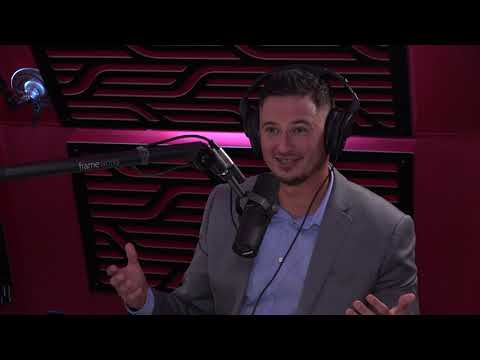
JRE - End Of The World #2
Narrator, Narrator, Tim Dillon (guest), Joe Rogan (host), Kyle Kulinski (guest), Tim Dillon (guest), Jamie Vernon (guest), Jamie Vernon (guest), Jamie Vernon (guest), Jamie Vernon (guest), Tim Dillon (guest), Narrator, Jamie Vernon (guest), Tim Dillon (guest), Joe Rogan (host), Narrator, Narrator, Narrator
In this episode of The Joe Rogan Experience, featuring Narrator and Narrator, JRE - End Of The World #2 explores politics, media, war, and tech collide in chaotic election night This wide‑ranging JRE “End of the World” election special with Tim Dillon and Kyle Kulinski jumps between 2020 horse‑race analysis and systemic critiques of U.S. politics, media, war, and tech. Kulinski argues Biden is structurally favored via polling and mail‑in dynamics, while Rogan and Dillon continuously question poll reliability and institutional narratives. They dig into media failures around Iraq and Russiagate, the military‑industrial complex, domestic surveillance, and how corporate interests shape both parties’ behavior. The conversation also veers into tech ethics—like smartphone supply‑chain slavery and social‑media censorship—alongside dark comedy about civil unrest, culture wars, and the absurdity of America’s current political moment.
Politics, media, war, and tech collide in chaotic election night
This wide‑ranging JRE “End of the World” election special with Tim Dillon and Kyle Kulinski jumps between 2020 horse‑race analysis and systemic critiques of U.S. politics, media, war, and tech. Kulinski argues Biden is structurally favored via polling and mail‑in dynamics, while Rogan and Dillon continuously question poll reliability and institutional narratives. They dig into media failures around Iraq and Russiagate, the military‑industrial complex, domestic surveillance, and how corporate interests shape both parties’ behavior. The conversation also veers into tech ethics—like smartphone supply‑chain slavery and social‑media censorship—alongside dark comedy about civil unrest, culture wars, and the absurdity of America’s current political moment.
Key Takeaways
The 2020 outcome hinges heavily on mail‑in ballots and a few key states, especially Pennsylvania.
Kulinski explains that in places like Pennsylvania, Michigan, and Wisconsin, day‑of votes are counted first (skewing toward Trump), while millions of mail‑in ballots—overwhelmingly Democratic—are tallied later, meaning early returns can be misleading and final results may take days.
Get the full analysis with uListen AI
Polls can be both directionally useful and structurally flawed, especially when capturing “shy” or low‑trust voters.
Kyle cites national and swing‑state polling showing a Biden lead larger than Clinton’s in 2016, while Rogan and Dillon counter that the type of people who answer polls are unrepresentative, underscoring why Trump may systematically outperform survey expectations.
Get the full analysis with uListen AI
U.S. media often functions as an extension of state and corporate power rather than an adversarial check.
Using Iraq WMD coverage, Russiagate, and the Yemen/Saudi arms story, they argue big outlets hire and promote journalists who won’t “rock the boat,” reliably echo government talking points, and downplay scandals that implicate elites on their own side.
Get the full analysis with uListen AI
The war machine persists across administrations because powerful entrenched interests profit from it.
They describe how both Bush/Obama expanded the security state, Trump campaigned on ending wars but didn’t, and politicians openly defend arms sales on “jobs” grounds—illustrating how defense contractors and the ‘military‑industrial complex’ lock in endless conflict.
Get the full analysis with uListen AI
Domestic surveillance and intelligence agencies wield enormous, largely unaccountable power over elected officials.
Citing the NSA’s mass data collection, FISA rubber‑stamping, Schumer’s warning about “intelligence community” retaliation, and JFK’s clash with the CIA, they suggest presidents who seriously challenge these agencies risk being neutralized—or worse.
Get the full analysis with uListen AI
Economic precarity and a sense of hopelessness fuel radicalization and political violence across the spectrum.
Kulinski argues that when people live paycheck to paycheck, see elites bailed out while they’re abandoned (e. ...
Get the full analysis with uListen AI
Tech platforms now act as de facto public squares but apply speech rules in opaque and politicized ways.
They criticize Twitter and Facebook for blocking the New York Post’s Hunter Biden story, note algorithmic favoritism toward corporate media on YouTube, and argue that if we care about free expression, these platforms should be regulated more like public utilities.
Get the full analysis with uListen AI
Notable Quotes
““The political establishment has trillions of dollars at stake in this election.””
— Kyle Kulinski (quoting and analyzing Trump’s 2016 closing ad)
““If we’re gonna bail out anybody, it should be students… Student debt and medical debt.””
— Kyle Kulinski
““We bail out bankers. We bail out Wall Street. We have endless amounts of money for war.””
— Joe Rogan
““You can either have a welfare state and borders, or no welfare state and no borders.””
— Tim Dillon
““It’s not left versus right. It’s establishment versus anti‑establishment.””
— Tim Dillon (paraphrasing a broader point made in the discussion)
Questions Answered in This Episode
How accurate were Kyle Kulinski’s state‑by‑state projections and concerns about mail‑in ballot timing, viewed in hindsight?
This wide‑ranging JRE “End of the World” election special with Tim Dillon and Kyle Kulinski jumps between 2020 horse‑race analysis and systemic critiques of U. ...
Get the full analysis with uListen AI
Which media failures around Iraq and Russiagate do you find most significant, and how should news organizations be held accountable?
Get the full analysis with uListen AI
Do you agree that economic despair is a primary driver of current political extremism, or are cultural factors more important?
Get the full analysis with uListen AI
Should social media companies be treated as public utilities with First Amendment‑like obligations, and if so, how would that be implemented?
Get the full analysis with uListen AI
What practical steps could an average consumer take—if any—to reduce complicity in exploitative tech supply chains without disengaging from modern life?
Get the full analysis with uListen AI
Transcript Preview
(drumbeats) Joe Rogan podcast, check it out.
The Joe Rogan Experience.
Train by day, Joe Rogan podcast by night. All day. (instrumental music)
Is it real?
It's live. This is it. End of the world, part two. Tim Dillon, you savage. It's good to see you my friend.
Thank you for having me. We're back.
Kyle Kulinski, voice of reason, the person who actually understands politics.
That's debatable. (laughs)
De- it is debatable but-
We'll see how much the voice of reason I am.
I will say, uh, I will lean towards you knowing what you're talking about. Um, what's going on?
I'm gonna check.
Oh. So, do you... Do you have an opinion about how this is gonna go down?
Yeah, do I, yeah, do I have a prediction?
Yeah. Yes.
Yes. Uh, it's very likely to be Joe Biden winning.
And what, what, what makes you say this?
First of all, let me just, let me just make clear so you, we don't get mass down-voted, I'm not saying that because I necessarily-
Let's get mass down-voted.
... want that to happen, I'm saying that empirically I think it's very likely that he's gonna win. And the reason I say that is, I, I actually sent this to you Jaime, if you, uh, wanna pull it up, but, um, when you look at the polls, and I know, we can get into whether or not you should even believe the polls, right?
Right.
Because-
2016.
... you don't think so, right?
Well, my thing with polls, I, I even have a bit on it, is like, who answers polls? Morons. So if you're listening to morons, like 46% of morons believe this. But nobody, a normal person with like a regular life, they, "Hey Kyle, may I have a few minutes of your time to ask you about politics?" You don't say yes to that. Morons say yes to that. So the people that you're polling are almost all morons.
Yeah.
Or lonely, or sad.
(laughs) Lonely or sad.
Right?
It's true. I, I wanna get polled.
I can talk to a pollster. (laughs)
Nobody polls me. I'm waiting every night for a call, I wanna talk for hours about, and no one cares.
Yeah. Have you ever answered a poll?
I've never answered a poll, no.
Never. Have you?
I've never been called.
Jaime, have you ever answered a poll?
Not like a real one, though.
No.
Not a real one. For like, Kleenex.
I don't know any more.
Kleenex reached out to you or something. (laughs)
I don't know who they call and why they call them though.
I don't believe in polls and I don't believe in Nielsen families. I don't think they're real.
Install uListen to search the full transcript and get AI-powered insights
Get Full TranscriptGet more from every podcast
AI summaries, searchable transcripts, and fact-checking. Free forever.
Add to Chrome