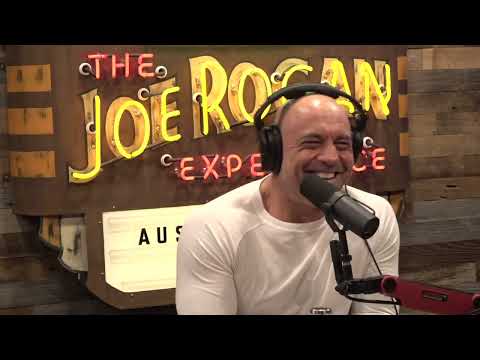
Joe Rogan Experience #2104 - Chris Williamson
Joe Rogan (host), Narrator, Chris Williamson (guest), Jamie Vernon (host), Narrator, Narrator, Narrator, Narrator, Narrator, Narrator, Narrator, Jamie Vernon (host), Narrator, Narrator, Narrator, Narrator, Narrator
In this episode of The Joe Rogan Experience, featuring Joe Rogan and Narrator, Joe Rogan Experience #2104 - Chris Williamson explores joe Rogan and Chris Williamson Deconstruct Power, Culture, and Resilience Joe Rogan and Chris Williamson range across topics from personal freedom, parenting, crime, and addiction to war stories, elite performance, and the costs of fame and success.
Joe Rogan and Chris Williamson Deconstruct Power, Culture, and Resilience
Joe Rogan and Chris Williamson range across topics from personal freedom, parenting, crime, and addiction to war stories, elite performance, and the costs of fame and success.
They critique modern policy priorities, arguing that Western societies ignore root causes of crime and social breakdown while obsessing over symbolic issues and ‘luxury beliefs’ held by elites.
The conversation repeatedly returns to status, masculinity, violence, and how culture normalizes or condemns behaviors—from domestic abuse and drunk driving to trans women in sports and hardline crime crackdowns.
They also explore how technology, social media, and politics are reshaping relationships, anxiety levels, and public trust, while emphasizing personal discipline, physical training, and meaningful work as antidotes.
Key Takeaways
Policy is often symbolic and inconsistent, prioritizing optics over real harm.
Rogan contrasts bans on flavored nicotine with lax responses to violent crime and open-air drug use, arguing laws target easy, visible issues rather than confronting deeply rooted problems that actually destroy lives.
Get the full analysis with uListen AI
Childhood trauma is a major driver of violent crime, yet is rarely addressed structurally.
Rogan insists most horrific adult behavior stems from brutal, chaotic upbringings; but justice systems focus narrowly on the crime, not the origins, leading to cycles of incarceration instead of prevention.
Get the full analysis with uListen AI
‘Luxury beliefs’ let elites signal virtue while imposing costs on the poor.
Williamson cites Rob Henderson’s concept and examples like ‘defund the police’ flags on homes with private security, and elite anti‑chivalry feminism that inadvertently removes protective norms for working-class women vulnerable to violent men.
Get the full analysis with uListen AI
Masculinity and power must be constrained by norms that stigmatize abusing the weak.
They argue real strength includes refusing to harm those at a physical disadvantage—be it domestic violence or a heavyweight destroying a smaller fighter—illustrating how martial arts culture codifies this ethic via norms and weight classes.
Get the full analysis with uListen AI
Fame, status shocks, and drugs can warp personalities and judgment.
They discuss child stars and Jordan Peterson’s rapid ascent plus benzodiazepine dependence, noting that sudden elevation in status without prior ‘navigation experience’ virtually guarantees serious mistakes and psychological strain.
Get the full analysis with uListen AI
Discipline and intentional routines are essential for resilience and creativity.
From hammering jet lag with immediate workouts to forcing writing sessions through resistance, they describe structure (training, documentaries, archery practice) as the only reliable way to stay functional in chaotic, travel-heavy lives.
Get the full analysis with uListen AI
People overinvest in visible success metrics and underinvest in invisible wellbeing.
Williamson urges tracking ‘hidden metrics’—sleep, commute time, relationship quality, unstructured time—arguing many trade those away for raises, titles, and status symbols, then wonder why they feel miserable despite ‘winning’.
Get the full analysis with uListen AI
Sex differences in brains and cognition create enduring, non-hormonal performance gaps.
Williamson cites research on early-emerging visuospatial advantages in males (e. ...
Get the full analysis with uListen AI
Performative empathy (‘toxic compassion’) can harm the very people it claims to protect.
They criticize narratives like ‘weight doesn’t affect health’ or ‘single-parent outcomes are no different’ as feel-good lies that prioritize short-term emotional comfort over long-term wellbeing, masking real risk factors and policy needs.
Get the full analysis with uListen AI
Modern anxiety is amplified by information overload, social media, and perceived loss of control.
From COVID chaos to political gaslighting, they say people increasingly feel the world happens *to* them, leaving them vulnerable to tribalism, conspiracies, and extreme leaders promising certainty or safety.
Get the full analysis with uListen AI
Notable Quotes
“If you let someone tell you what you can't do, they're gonna expand that power of telling you what you can't do. Always.”
— Joe Rogan
“Your heroes aren't gods, they're just regular people who probably got good at one thing by sacrificing literally everything else.”
— Chris Williamson
“All wins feel the same… You've already achieved goals you said would make you happy.”
— Chris Williamson
“It's not compassionate or progressive to let biological males beat up on women. That's just stupid.”
— Joe Rogan
“When punishment for what people say becomes widespread, people will stop saying what they think, and instead say whatever is needed to thrive.”
— Chris Williamson
Questions Answered in This Episode
How should societies balance personal freedom with public safety without creating the slippery slope of ever-expanding control Rogan warns about?
Joe Rogan and Chris Williamson range across topics from personal freedom, parenting, crime, and addiction to war stories, elite performance, and the costs of fame and success.
Get the full analysis with uListen AI
If childhood trauma is such a strong predictor of criminal violence, what practical, large-scale interventions could realistically reduce that pipeline?
They critique modern policy priorities, arguing that Western societies ignore root causes of crime and social breakdown while obsessing over symbolic issues and ‘luxury beliefs’ held by elites.
Get the full analysis with uListen AI
Are ‘luxury beliefs’ an inevitable part of status competition, or can elites be incentivized to support beliefs that actually help lower-income groups?
The conversation repeatedly returns to status, masculinity, violence, and how culture normalizes or condemns behaviors—from domestic abuse and drunk driving to trans women in sports and hardline crime crackdowns.
Get the full analysis with uListen AI
Given brain-based sex differences in visuospatial and social cognition, what would a genuinely fair sports framework for trans athletes look like?
They also explore how technology, social media, and politics are reshaping relationships, anxiety levels, and public trust, while emphasizing personal discipline, physical training, and meaningful work as antidotes.
Get the full analysis with uListen AI
How can individuals in high-pressure or high-status careers systematically protect their ‘hidden metrics’—relationships, health, inner peace—while still pursuing excellence?
Get the full analysis with uListen AI
Transcript Preview
(drumbeats) Joe Rogan podcast, check it out!
The Joe Rogan Experience.
Train by day, Joe Rogan podcast by night! All day! (rock music plays) Cheers, sir. (glasses clink) Peace.
Cheers.
Mm. (glass thuds)
What is that? Black Rifle?
Black Rifle, yeah. What up, Chris? What's up, baby? How are ya?
Good to see you, man.
H- so, how long you been in Texas now?
Two years.
Wow.
First-
Do you feel like this is where you live? Or do you like, every day-
This feels like home. Now.
Really?
Yeah.
Wow.
Yeah. I went back home for Christmas in the UK, and it's so strange to go back to a place that you know so well, you're super familiar with, but you're kind of different. And everything's changed, but everything's the same, and you fall back into old patterns. You remember that tree that you used to walk past on your morning walk and all of ... It's very disquieting. But it's fun. It's nice.
The oddest thing for me is the contrast in the amount of freedom you have for things that you would never think were important. Like, uh, these little nicotine things? In California, you can't buy this because it's flavored.
Mm-hmm.
In California, you can put a tent in front of people's houses and fucking cook meth and no one says anything, no one does anything. You could commit violent crime, and you get arrested and released with no bail. They never find you again. There's the, there's ... The laws are so ridiculous. But, you are not allowed to have flavored nicotine. Flavored nicotine is dangerous, Chris.
They're trying to ban flavored vapes in the UK very aggressively.
(laughs)
Super aggressively. It's like, that's the big deal. That being said-
(laughs)
... I think it's like some non-insignificant percentage of schoolchildren are using vapes. Like there's a-
It's very addictive.
There's a No Vapes sign-
Yeah.
... in schools. Like, like that wasn't something that was already self-evident.
Well, cigarettes were a big deal when I was in high school. You know, uh, lot of kids smoked cigarettes. It was a cool kids thing to do.
What's the smoking age in America?
I think it's 18.
Yep.
18?
Uh, legally, yeah.
Legally?
Yeah.
Yeah. It's 18. But when I was a kid, uh, people got cigarettes. Someone got you cigarettes. I don't know, when I was young, I remember before I turned 18 they changed the legal drinking age. 'Cause the legal drinking age, I believe, used to be 18, and then they bumped it up to 21. I was like, "Damn it."
Dude, have you ever seen the video of when DUIs came in in the 1980s-
Yes.
... and they're interviewing people in cars?
Install uListen to search the full transcript and get AI-powered insights
Get Full TranscriptGet more from every podcast
AI summaries, searchable transcripts, and fact-checking. Free forever.
Add to Chrome