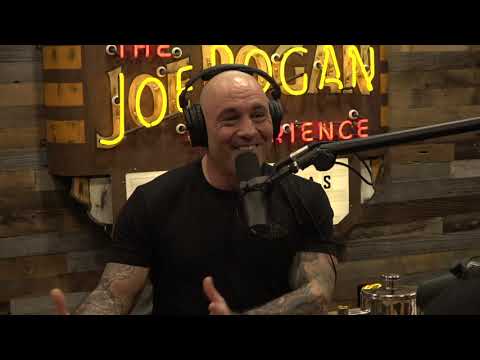
Joe Rogan Experience #1644 - Ethan Suplee
Ethan Suplee (guest), Narrator, Joe Rogan (host), Narrator, Narrator, Narrator
In this episode of The Joe Rogan Experience, featuring Ethan Suplee and Narrator, Joe Rogan Experience #1644 - Ethan Suplee explores ethan Suplee Reveals Hard Truths Behind Massive 280-Pound Transformation Joe Rogan and actor Ethan Suplee dive deep into Ethan’s decades‑long journey from 550 pounds to a muscular 270, unpacking the psychological, biological, and cultural forces behind extreme obesity and sustained weight loss.
Ethan Suplee Reveals Hard Truths Behind Massive 280-Pound Transformation
Joe Rogan and actor Ethan Suplee dive deep into Ethan’s decades‑long journey from 550 pounds to a muscular 270, unpacking the psychological, biological, and cultural forces behind extreme obesity and sustained weight loss.
They explore diet fads versus long‑term habit change, food addiction, body dysmorphia, and why simply “choosing” to lose weight often fails without addressing underlying beliefs and behaviors.
The conversation branches into exercise as mental health medicine, determinism versus free will, cancel culture, and how societal narratives about fatness, health, and shame help or harm people trying to change.
Ethan shares candid stories of liquid diets, skin‑removal surgery, relapse, and finally building a sustainable lifestyle, positioning his experience as both a cautionary tale and a source of practical hope for others.
Key Takeaways
Address why you overeat before obsessing over how to lose weight.
Ethan emphasizes that every successful phase of his journey only stuck once he examined the habits, beliefs, and emotional patterns that led him to 550 pounds, not just the mechanics of calorie restriction.
Get the full analysis with uListen AI
Extreme diets can work short-term but often fail without a maintenance plan.
Liquid diets, keto, and total carb avoidance helped Ethan drop huge amounts of weight quickly, but without a clear plan for how to eat and live afterward, he repeatedly rebounded 100+ pounds.
Get the full analysis with uListen AI
Exercise is more powerful for your mind than your waistline.
Both Rogan and Suplee frame training—whether walking, lifting, or hot yoga—as primarily mental hygiene that reduces anxiety and builds self-respect; weight loss is a secondary benefit, not the only goal.
Get the full analysis with uListen AI
Start with tiny, winnable physical goals to rebuild self-belief.
At 550 pounds, Ethan’s “workout” was walking slightly past his car; stacking small daily wins created momentum and a sense that his body could accomplish things again, independent of the scale.
Get the full analysis with uListen AI
Moderation and food quality beat rigid “poison vs. miracle” diet thinking.
After years of believing carbs and gluten were essentially toxic, Ethan shifted to a more evidence‑based approach: mostly lean protein and vegetables, some measured carbs, and attention to total intake rather than demonizing single ingredients.
Get the full analysis with uListen AI
Body dysmorphia doesn’t magically disappear with weight loss.
Even at very low weights and peak performance (like riding every stage of the Tour de France), Ethan still saw himself as fat and unattractive; he had to consciously work on his self-perception and find small parts of his body he could appreciate.
Get the full analysis with uListen AI
Personal change exists in tension between determinism and free will.
Influenced by thinkers like Robert Sapolsky, Ethan accepts that trauma, genetics, and environment heavily shape behavior, yet he insists that, day-to-day, he has to act as if he has free will and can choose better habits—even if that choice fails many times before it sticks.
Get the full analysis with uListen AI
Notable Quotes
““Under every obese person, there’s a person with more than average muscle.””
— Ethan Suplee
““I’ve lost 200 pounds a couple of times.””
— Ethan Suplee
““I went and rode every stage of the Tour de France… and I was miserable. I still thought I was fat.””
— Ethan Suplee
““If somebody wants to be overweight, if that’s a trade‑off they’re willing to make… that’s fine with me.””
— Ethan Suplee
““We’re most happy when we’re in this together. If you think you’re not, you’re fucked.””
— Joe Rogan
Questions Answered in This Episode
How can someone distinguish between genuine physical hunger and emotionally driven eating in the moment, especially when they’ve ignored those signals for years?
Joe Rogan and actor Ethan Suplee dive deep into Ethan’s decades‑long journey from 550 pounds to a muscular 270, unpacking the psychological, biological, and cultural forces behind extreme obesity and sustained weight loss.
Get the full analysis with uListen AI
What’s the healthiest way to balance powerful diet tools (like keto, fasting, or liquid diets) with the need for a realistic, lifelong way of eating?
They explore diet fads versus long‑term habit change, food addiction, body dysmorphia, and why simply “choosing” to lose weight often fails without addressing underlying beliefs and behaviors.
Get the full analysis with uListen AI
How should society talk about obesity and metabolic health without falling into either fat shaming or “everything is fine” denialism?
The conversation branches into exercise as mental health medicine, determinism versus free will, cancel culture, and how societal narratives about fatness, health, and shame help or harm people trying to change.
Get the full analysis with uListen AI
In practical terms, how can a person struggling with their weight apply the idea of determinism without using it as an excuse to give up on change?
Ethan shares candid stories of liquid diets, skin‑removal surgery, relapse, and finally building a sustainable lifestyle, positioning his experience as both a cautionary tale and a source of practical hope for others.
Get the full analysis with uListen AI
Given what we now know about exercise, vitamin D, and obesity’s role in COVID outcomes, what should future public health messaging look like in a similar crisis?
Get the full analysis with uListen AI
Transcript Preview
(drum music) Joe Rogan podcast, check it out.
The Joe Rogan Experience.
Train by day, Joe Rogan podcast by night, all day. (rock music) So what's up, man? Dude, you, if I didn't know who you were, and I ran into you, I would have no idea that you're the same guy.
It's crazy.
You're a fucking completely different human.
Yeah.
You went from this guy that looked like you were really in bad shape to a guy who looks like a guy I would avoid in jujitsu.
(laughs)
I'd be like, "Fuck that guy. Let me get away from him. He's too big."
(laughs)
You look fucking great, man.
That's awesome. This is the greatest compliment I've ever gotten.
(laughs)
Thank you very much. By the way, all I want is to, to look like a big dude who's not just gigantic and fat. That's all I want.
Dude, you look like a gorilla. You look like a dangerous human being. Like, how did you do it?
Uh, well, over the past 20 years, I've gone back and forth with dieting. I've g- I've lost a shit load of weight. I've gained a shit load of weight back. Um, how did I do it? Uh, I think that the, the thing that I've done that has been sustainable is undoing kind of... Y- y- look, a lot of diets come in and say, "Just do this and you'll lose weight." But we're not focused at all on how we got to whatever point we were at that we consider non-optimal that we wanna change. And so, uh, undoing the bad habits that I had that I would associate with allowing myself to get up to 550 pounds is really more important than anything that I could say, "This is what I did to lose weight." Does that make sense?
Yes. Yes. Um, so when did the process start? So you kind of went back and forth.
Yeah.
But you've obviously been on a very steady course for how long now?
20 years.
20 years.
Uh, 19 years. 2002 was the first time I s- thought I really wanna change my life, and I started then.
And how much weight have you lost since then?
2002, I went from 550, I did a liquid diet for two months and lost 80 pounds. That 80 pounds, I've never dipped back into. But so I was 450, and I went down to close to just under 300, then went back up to 400, then went down to 200, then back up to 350. And for the past five years, I've been around the weight I'm at now. So I've, I've really gotten that under control.
And what are you at right now?
270.
That is incredible. That is, that is so incredible. So you've lost more than 200 pounds?
Install uListen to search the full transcript and get AI-powered insights
Get Full TranscriptGet more from every podcast
AI summaries, searchable transcripts, and fact-checking. Free forever.
Add to Chrome