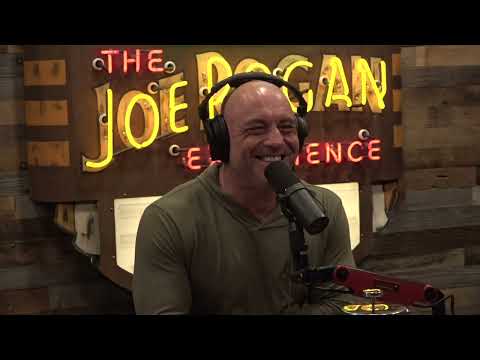
Joe Rogan Experience #2014 - Jim Gaffigan
Joe Rogan (host), Jim Gaffigan (guest), Narrator, Narrator, Narrator
In this episode of The Joe Rogan Experience, featuring Joe Rogan and Jim Gaffigan, Joe Rogan Experience #2014 - Jim Gaffigan explores joe Rogan and Jim Gaffigan dissect health, kids, corruption, and chaos Joe Rogan and Jim Gaffigan range widely across topics including diet, plastics, sugar, addiction, parenting, social media, political corruption, and environmental collapse. They contrast modern food and health practices with older ways of living, questioning GMOs, pharmaceuticals, pesticides, and social media’s mental health impact. The conversation repeatedly returns to how money and power distort everything from medicine and agriculture to politics, media, and war. Despite the bleak themes, they frame standup, meaningful work, nature, and small personal disciplines as ways to stay sane in an overwhelming world.
Joe Rogan and Jim Gaffigan dissect health, kids, corruption, and chaos
Joe Rogan and Jim Gaffigan range widely across topics including diet, plastics, sugar, addiction, parenting, social media, political corruption, and environmental collapse. They contrast modern food and health practices with older ways of living, questioning GMOs, pharmaceuticals, pesticides, and social media’s mental health impact. The conversation repeatedly returns to how money and power distort everything from medicine and agriculture to politics, media, and war. Despite the bleak themes, they frame standup, meaningful work, nature, and small personal disciplines as ways to stay sane in an overwhelming world.
Key Takeaways
Ultra-processed carbs, liquid sugar, and plastic exposure are quietly wrecking health.
Rogan and Gaffigan discuss how bread, pasta, sodas, juices, and plastics in water and food drive inflammation, endocrine disruption, and long-term disease—while whole foods, fruit (with fiber), and glass-bottled water are safer choices.
Get the full analysis with uListen AI
Recycling barely touches plastic waste; systemic changes are needed.
They note that ~90% of single-use plastic isn’t truly recycled and often ends up in landfills or overseas, suggesting we need biodegradable alternatives (like hemp-based plastics) and consumption reduction rather than relying on the recycling myth.
Get the full analysis with uListen AI
Social media is a major, under-acknowledged mental health hazard for kids.
Referencing Jonathan Haidt’s work, they highlight spikes in teen self-harm and suicide, especially among girls, driven by online bullying, comparison to filtered unreality, and the lack of face-to-face empathy in digital cruelty.
Get the full analysis with uListen AI
Financial incentives distort medicine, food, and politics at scale.
From GMOs and pesticides to pharma advertising and congressional insider trading, they argue that corporate profit and lobbying often override public health and democratic representation, leaving most citizens underrepresented and overexposed to risk.
Get the full analysis with uListen AI
Fentanyl and unregulated drugs create a silent youth crisis.
They describe kids in places like New York getting ultra-strong, adulterated weed and pills (sometimes laced with fentanyl) from gray-market shops, leading to overdoses, psychotic episodes, and deaths that families often hide out of shame.
Get the full analysis with uListen AI
Cold plunges, sauna, movement, and meaningful work strongly support mental health.
Rogan explains daily cold plunges, sauna, and strength work as powerful anti-depressant routines, while both comedians emphasize that demanding, interesting work (like standup or farming/gardening) provides purpose and psychological stability.
Get the full analysis with uListen AI
Media outrage and partisan framing keep people distracted from deeper issues.
They argue that 24/7 outrage—Trump vs. ...
Get the full analysis with uListen AI
Notable Quotes
“We’re not designed to deal with the information that comes from eight billion people.”
— Joe Rogan
“I don’t think that we, as a society, have embraced the fact that social media is one of the worst things that has happened to human beings ever.”
— Jim Gaffigan
“Food is an art form and chefs are artists. When you have a great meal, you’re not just consuming nutrients; you’re taking in flavor art.”
— Joe Rogan
“The most miserable people I know have nothing to do.”
— Joe Rogan
“It’s insanely interwoven and complex, and to reduce it down to the right versus the left and ‘we’re the good guys, they’re the bad guys’—you’re being played.”
— Joe Rogan
Questions Answered in This Episode
How should parents realistically manage teens’ access to social media and online porn without completely isolating them from their peers?
Joe Rogan and Jim Gaffigan range widely across topics including diet, plastics, sugar, addiction, parenting, social media, political corruption, and environmental collapse. ...
Get the full analysis with uListen AI
If financial incentives are at the core of so many problems (food, pharma, politics), what concrete reforms could actually reduce that influence?
Get the full analysis with uListen AI
Where is the ethical line between personal responsibility (diet, drugs, news consumption) and systemic responsibility (regulation, corporate accountability)?
Get the full analysis with uListen AI
Given the scale of overfishing and plastic pollution, what changes in personal consumption and public policy would make the most impact fastest?
Get the full analysis with uListen AI
How can individuals balance staying informed about global crises with protecting their own mental health and avoiding outrage addiction?
Get the full analysis with uListen AI
Transcript Preview
(drumming music plays) Joe Rogan podcast. Check it out. The Joe Rogan Experience. Train by day, Joe Rogan podcast by night. All day. (rock music plays)
No, no. Yeah, I know. No, I just-
(laughs)
... I just saw that clip of Jordan. "I, I don't e-... I don't miss it either." Yeah, he's got weird autoimmune issues. So for him, there was like an elimination diet, and he found out that it was just a bunch of things that his body was reacting to in a very negative way, and one of them, apparently, was vegetables. A lot of it is like just complex carbohydrates. You know, a lot of it is, uh, bread and pasta and stuff like that. A lot of people get really inflamed eating that, and it causes a host of issues. Isn't that great? I mean, it's... Well, eventually, it... isn't there... You know, like even the problem with chemo... And, you know, I'm a guy who tells diarrhea jokes, so I know a lot about this.
(laughs)
Isn't it... Isn't the expectation that if they could kind of, uh, concierge your cancer treatment to your specific type of cancer for your type of body or your type of cells, that that's why people are gonna be able to live to 100, rich people are gonna be able to live to 100?
Um, I think there's definitely a lot of research that's done in, in that way. But I, I also think that it, it depen-... It's... There's so many factors when it comes to cancer. There's environmental factors, there's lifestyle factors, like what you're eating, like you, how much stress you're under. There's a lot. There's genetic issues. There's a lot going on when it comes to cancer.
Yeah. I mean, there is like... I mean, you just hear about, you know, people from the Philippines, like an entire family, everyone died of cancer at 40. And you're like, "Uh."
Yeah.
What's, uh... what's going on there?
Yeah.
You know? Like...
Unfortunately, though, some of it is genetic. Some people just have a shit roll of the dice, genetically, you know, and then there's-
Are you saying that because I have all recessive genes?
Do you?
I mean, I am literally-
All of them? 100%?
I'm like everything's recessive.
(laughs)
(laughs) I literally went into the dermatologist and he's like, "You know, well, we're just gonna..." Like, you know, 'cause y-... I don't know if you ever get the cancer stuff of the basal cells. He's like, "W- w- we, we should probably just chop off your arms 'cause they're just all basal cells." (laughs) So, it's like I am, uh, you know... Uh, I am all recessive genes.
How did-
Blonde hair, blue eyes, pale skin-
... white people, really white people, deal with the sun-
I don't know.
Install uListen to search the full transcript and get AI-powered insights
Get Full TranscriptGet more from every podcast
AI summaries, searchable transcripts, and fact-checking. Free forever.
Add to Chrome