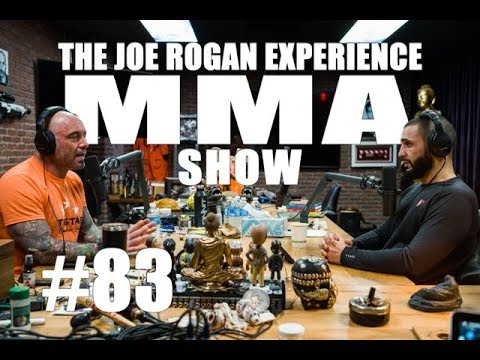
JRE MMA Show #83 with Firas Zahabi
Joe Rogan (host), Firas Zahabi (guest), Guest (secondary clip/excerpt) (guest), Narrator
In this episode of The Joe Rogan Experience, featuring Joe Rogan and Firas Zahabi, JRE MMA Show #83 with Firas Zahabi explores firas Zahabi Dissects Power, Style, Safety And Evolution In Fighting Joe Rogan and coach Firas Zahabi use recent combat sports events—Deontay Wilder, Francis Ngannou, Masvidal‑Diaz, and Kevin Lee’s resurgence—as launchpads to analyze power, strategy, and style in MMA and boxing.
Firas Zahabi Dissects Power, Style, Safety And Evolution In Fighting
Joe Rogan and coach Firas Zahabi use recent combat sports events—Deontay Wilder, Francis Ngannou, Masvidal‑Diaz, and Kevin Lee’s resurgence—as launchpads to analyze power, strategy, and style in MMA and boxing.
They dive deeply into how elite fighters discover and optimize their own style rather than copying others, why smart training and controlled sparring extend careers, and how rule sets and weight classes shape what works in real fights.
A large portion explores jiu‑jitsu’s evolution (Danaher’s system, leg locks, Gracie history), the mental game (visualization, self‑image, social media, bullying), and how bad coaching or gym culture quietly destroys fighters’ longevity.
Throughout, Zahabi shares inside stories on Georges St‑Pierre, Kevin Lee, Kron Gracie, Khabib, Jon Jones, and others, arguing that technical intelligence, health management, and creativity matter as much as toughness and raw talent.
Key Takeaways
Build your style around your actual strengths, not your idols.
Zahabi contrasts Ali vs. ...
Get the full analysis with uListen AI
Creativity in fighting must be tested, not suppressed.
He argues that sparring is the lab for new ideas: let athletes drop their hands, switch stances, or use unorthodox grips and entries—as long as they can repeatedly make it work in live rounds—rather than forcing everyone into one system.
Get the full analysis with uListen AI
Smart, controlled sparring dramatically extends a fighter’s career.
Rogan and Zahabi condemn hard, frequent “kill or be killed” sparring, citing gym knockouts before big fights, cumulative brain trauma, and examples like James Toney; they advocate technical, lower‑impact rounds with carefully chosen partners and minimal ego.
Get the full analysis with uListen AI
Rule sets and time limits silently dictate which styles succeed.
Zahabi notes that wrestling thrives in 5‑minute rounds with stand‑ups, whereas no‑time‑limit “vale tudo” favored jiu‑jitsu; he floats ideas like longer single rounds or restarting ground positions to let grappling fully flourish, and even jokes about randomizing fight environments.
Get the full analysis with uListen AI
Weight and matchmaking choices can shorten or save careers.
They question smaller champs fighting bigger champs in their prime (Rory vs. ...
Get the full analysis with uListen AI
The mental game—visualization, self‑image, and environment—is decisive.
From Lanny Bassham’s visualization system to GSP’s paranoia and discipline, Rogan and Zahabi highlight how rehearsing success, managing fear, and avoiding distractions (social media, entourages, Vegas nightlife) can determine whether talent actually shows up on fight night.
Get the full analysis with uListen AI
Gym culture and coaching ethics make or break long‑term development.
Zahabi stresses protecting partners, checking egos at the door, refusing watered‑down belt systems, and treating every new student as a long‑term investment—contrasting Tristar’s approach with belt‑for‑attendance schools and unsafe rooms where careers die in sparring.
Get the full analysis with uListen AI
Notable Quotes
“Fighting is two things: first you get to a certain level, then you have to figure out your style.”
— Firas Zahabi
“Don’t use up your punch ticket in the gym.”
— Joe Rogan
“If I feed you, I weaken you. I have to teach my son how to hunt.”
— Firas Zahabi
“Most people don’t know what violence is. They’ve only seen it in movies.”
— Firas Zahabi
“We’ve had more advancement in martial arts in the last 26 years than in the last 2,000.”
— Joe Rogan
Questions Answered in This Episode
How would MMA strategy and training change if there were no time limits or radically different fight surfaces, as Zahabi proposes?
Joe Rogan and coach Firas Zahabi use recent combat sports events—Deontay Wilder, Francis Ngannou, Masvidal‑Diaz, and Kevin Lee’s resurgence—as launchpads to analyze power, strategy, and style in MMA and boxing.
Get the full analysis with uListen AI
What practical steps can amateur fighters take to protect their brain and joints while still improving fast?
They dive deeply into how elite fighters discover and optimize their own style rather than copying others, why smart training and controlled sparring extend careers, and how rule sets and weight classes shape what works in real fights.
Get the full analysis with uListen AI
How can a developing fighter objectively discover their own optimal style instead of copying a favorite champion or rigid coach?
A large portion explores jiu‑jitsu’s evolution (Danaher’s system, leg locks, Gracie history), the mental game (visualization, self‑image, social media, bullying), and how bad coaching or gym culture quietly destroys fighters’ longevity.
Get the full analysis with uListen AI
Given the examples discussed, where should the line be drawn between acceptable risk and irresponsible matchmaking (e.g., smaller champs fighting bigger champs, Sage vs. Cosmo)?
Throughout, Zahabi shares inside stories on Georges St‑Pierre, Kevin Lee, Kron Gracie, Khabib, Jon Jones, and others, arguing that technical intelligence, health management, and creativity matter as much as toughness and raw talent.
Get the full analysis with uListen AI
What would a truly global, unified approach to jiu‑jitsu and MMA rules look like if it prioritized both effectiveness and long‑term athlete health?
Get the full analysis with uListen AI
Transcript Preview
If you're listening to this, uh, uh, an audio version, you're denied the beauty of my salmon-covered, colored T-shirt. Beautiful Tristar-
You look good in it.
I look very good-
(laughs)
... in your shirt. Thanks for coming here, brother.
Pleasure. Glad to be here.
Pleasure to have you, man. I use one of your expressions all the time, the touch of death. And there is no better example than what we saw Saturday night with Deontay Wilder. Jesus Christ, can that guy punch!
I had him losing all the rounds.
Yeah. Me too.
And, uh, I thought one round was really close, could've go either way, but I had it six to none. And that right hand, my God.
(laughs) It's so crazy. It doesn't even make sense.
When you look at that shot, it landed it above, like, kind of like in the forehead, this area.
Yeah.
Not on th- not even on the chin.
No.
Usually here, if you're a powerful puncher, you could daze a guy.
Yeah.
But put him out the way he did?
Yeah.
Wow!
And no windup too.
That's... No windup.
Just right from here, blap!
That's touch of death.
Crazy.
Touch of death.
Like nobody ever... Think about that guy's record, 41 knockouts, one decision, one draw.
It's incredible.
Undefeated, 41 knockouts in 42 fights.
Yes.
I mean, that is bonkers.
And he was getting outboxed, like he's not-
Yeah.
... the best boxer. He might-
Well, he doesn't care to box with you.
Yeah. Yeah. That's right.
He just... He knows-
Yeah. Yeah. Yeah.
... s- like, it's such a crazy strategy because out of anyone that has ever fought in the heavyweight division, he is the one guy that literally can shut everyone's lights out-
Mm-hmm. (laughs)
... with one shot. Everyone's a knockout artist. Foreman was-
Uh-huh.
... a knockout artist. Frazier, Tyson, of course, was a knockout artist. But not like this guy.
No.
This guy's got... It's like another level of craziness.
I would agree. I mean, he knows himself, that's what so beautiful.
Uh-huh.
If he was less strategic, he would've started fighting really early, and maybe-
Yeah.
... maybe zap that power he has. But he knows. He knows-
Yeah.
... exact- he didn't care he lost six rounds. He had no-
No.
... he had no qualms about it. And he got hurt just before, just before he knocked out, uh, Luis. He was hurt, and he stayed calm. He's like, "Oh, now you're gonna come for it? Now you're gonna walk in to the right." And bang!
Yeah.
It's incredible.
Well, I think he also knew that from the first fight, Ortiz started to fade.
Install uListen to search the full transcript and get AI-powered insights
Get Full TranscriptGet more from every podcast
AI summaries, searchable transcripts, and fact-checking. Free forever.
Add to Chrome