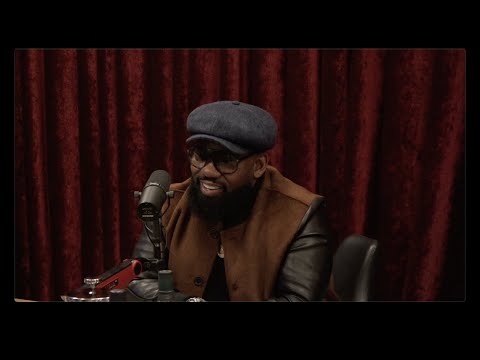
Joe Rogan Experience #2250 - Raekwon
Narrator, Narrator, Raekwon (guest), Joe Rogan (host), Narrator, Narrator
In this episode of The Joe Rogan Experience, featuring Narrator and Narrator, Joe Rogan Experience #2250 - Raekwon explores raekwon and Rogan Rewind Hip-Hop History, Hustle, Wu-Tang Legacy Joe Rogan and Raekwon unpack the origins and impact of Wu-Tang Clan, tracing how nine alpha personalities from rough New York neighborhoods were unified by RZA’s vision into a singular, world-changing hip-hop movement. They revisit the birth and evolution of hip-hop from the early 1980s, the gritty realities of street life and the drug era that shaped their perspective, and how authenticity and lyricism became the genre’s backbone. The conversation also dives into predatory record deals, sacrifice versus independence, and why taking risky opportunities is essential for artists. Raekwon previews his forthcoming Purple Tape documentary and new solo album, framing them as a return to dense, message-driven, architect-level hip-hop in a culture he feels has become too boxed-in and repetitive.
Raekwon and Rogan Rewind Hip-Hop History, Hustle, Wu-Tang Legacy
Joe Rogan and Raekwon unpack the origins and impact of Wu-Tang Clan, tracing how nine alpha personalities from rough New York neighborhoods were unified by RZA’s vision into a singular, world-changing hip-hop movement. They revisit the birth and evolution of hip-hop from the early 1980s, the gritty realities of street life and the drug era that shaped their perspective, and how authenticity and lyricism became the genre’s backbone. The conversation also dives into predatory record deals, sacrifice versus independence, and why taking risky opportunities is essential for artists. Raekwon previews his forthcoming Purple Tape documentary and new solo album, framing them as a return to dense, message-driven, architect-level hip-hop in a culture he feels has become too boxed-in and repetitive.
Key Takeaways
Authentic environments create authentic art.
Raekwon stresses that Wu-Tang’s power came from real experiences with crime, poverty, and survival; you couldn’t fake that background and be believed, and that authenticity is what made their music resonate globally.
Get the full analysis with uListen AI
Visionary leadership can unify many ‘alphas’.
RZA functioned like a mob strategist or a coach—identifying talent from different neighborhoods, getting people who didn’t always get along to ‘put feelings down,’ and convincing nine strong personalities to move as one, which is why Wu-Tang remains unique.
Get the full analysis with uListen AI
Artists must often accept bad early deals—but learn from them.
Both men acknowledge young artists almost inevitably get ‘jerked’ by labels, but Raekwon frames those deals as necessary sacrifices to leave the hood, gain a platform, and treat early exploitation as an expensive education rather than a final sentence.
Get the full analysis with uListen AI
Take the risky opportunity, then outgrow the terms.
Using analogies like accepting “50 pounds” from a connect or Prince fighting his label, they argue artists should grab chances when they believe in themselves—then, once undeniable, renegotiate, reclaim ownership, or go fully independent.
Get the full analysis with uListen AI
Great hip-hop is a 50/50 marriage of beat and lyric.
Raekwon says the beat is what sparks the concept and emotion of a verse, while Rogan counters that lyrics create the ‘oh shit’ moments; they agree neither works in isolation, and Wu-Tang’s magic came from both RZA’s sound and elite MC craftsmanship.
Get the full analysis with uListen AI
Hip-hop once doubled as news, school, and political commentary.
They cite songs from NWA, Public Enemy, KRS-One, Geto Boys, and Wu-Tang as ‘television’ and ‘news’ for the hood—explaining systemic issues, war, police brutality, and social conditions long before mainstream media acknowledged them.
Get the full analysis with uListen AI
There’s still demand for dense, message-heavy ‘classic’ hip-hop.
Rogan notes that young comics and fans light up when they hear 1990s tracks; Raekwon believes the culture is over-controlled and repetitive, and positions his new work and the Purple Tape documentary as a push back toward depth, growth, and originality.
Get the full analysis with uListen AI
Notable Quotes
“You ain't gonna get another one of these.”
— Raekwon (on Wu-Tang Clan’s uniqueness)
“If you don't have the belief in yourself to make it happen, you fucked.”
— Raekwon
“The art itself is representative of real experiences. If you're telling people they can't express themselves about real experiences, you're just going like this—la la la, I'm not listening.”
— Joe Rogan
“We were kind of like saying things that meant so much to us back then, but still dreaming of it being a reality. And the next thing you know, it happens.”
— Raekwon
“Don't ever think we gonna lose that shit. That's like sitting here saying Mike Tyson can't fight.”
— Raekwon
Questions Answered in This Episode
How would Wu-Tang Clan have formed and broken through if they started in today’s streaming and social media environment instead of the early 1990s?
Joe Rogan and Raekwon unpack the origins and impact of Wu-Tang Clan, tracing how nine alpha personalities from rough New York neighborhoods were unified by RZA’s vision into a singular, world-changing hip-hop movement. ...
Get the full analysis with uListen AI
What specific decisions or conversations do you think most clearly prevented Wu-Tang from imploding under the weight of nine strong personalities and early success?
Get the full analysis with uListen AI
Given how exploitative early record deals were, what practical steps should a talented 18-year-old rapper take now to balance opportunity with ownership?
Get the full analysis with uListen AI
If the ‘Purple Tape Files’ documentary becomes a movie, what key moments from Raekwon’s or Wu-Tang’s story absolutely must be depicted to feel honest rather than sanitized?
Get the full analysis with uListen AI
How can modern hip-hop recapture the balance between raw entertainment and the kind of political, social, and educational commentary that groups like Public Enemy, NWA, and Wu-Tang once provided?
Get the full analysis with uListen AI
Transcript Preview
(drum roll) Joe Rogan podcast. Check it out.
The Joe Rogan Experience. (energetic music) Train by day, Joe Rogan podcast by night, all day.
Joe Rogan, this way.
What up?
You need to stay.
That's it. The Chef is in the building, ladies and gentlemen.
What's up? What's up?
Pleasure to meet you, man. You are a part of the most iconic band in all of hip hop. There is no question.
Mm.
There's one Wu-Tang. There's only one Wu-Tang. Nothing else is even close. You guys were so different than every other band that ever existed.
Crazy.
It was a giant group of you.
Yeah, man.
And everybody was a killer.
Fucking mob, man.
It's a crazy band, man. It- like-
Fucking mob.
... no one has ... It's... If you think about it, there's been a lot of hip hop duos.
Mm-hmm.
There's been a lot of producers and MCs. There's been a lot of people to get together in, like, small groups. But there's only one-
Mm-hmm.
... Wu-Tang. There's only one group of nine assassins.
I tell niggas that all the time. Like, you ain't gonna-
It's kinda crazy.
You ain't gonna get another one of these.
It's, it's crazy that it-
Yeah.
... worked.
Yeah. Yeah.
'Cause it's so hard to keep all those alphas together.
It really is crazy, uh, to make it work. The most illest shit, some shit that I never woulda thought would ever exist, it was able to exist because we tried it. But it wasn't ... It wasn't normal.
It wasn't nor-
It wasn't normal.
Well, it s- you tried it, but it was this ... Uh, uh, it almost seems like it was just instinct.
Mm.
Like, it's not like a, a business strategy that anybody would ever come up with.
Right.
Nine dudes.
Nah, nah.
And nine of the realest dudes.
(laughs)
Like, the rawest, realest dudes.
Yeah, yeah.
And it worked?
And it worked, bro.
And it worked?
I tell people all the time, it was like, when RZA ... You know, he came with this whole philosophy of wanting to do it, it was like hitting the lotto for him. Like, he didn't know what to expect. It was more a reputation thing for us. It was like, "Yo, I wanna do this." And, you know, he came to blocking. He talked to some real dudes that was really had other shit planned in their life. You know, but hip hop was always, like, that backpack that we wore every day. But everybody had different plans, so he really literally came in and started to pick motherfuckers that he felt had potential. So it's like the mob. It's like, you know, you know, Lucky Luciano, prime example. You know, he knew that motherfuckers had potential, right? He knew dudes had potential in any way. He's from a different part, he's from a different part, he's from a different part. But yo, what we could do right here is we can make money. So put your fucking feelings down or whatever the case may be, and let's talk about some money.
Install uListen to search the full transcript and get AI-powered insights
Get Full TranscriptGet more from every podcast
AI summaries, searchable transcripts, and fact-checking. Free forever.
Add to Chrome