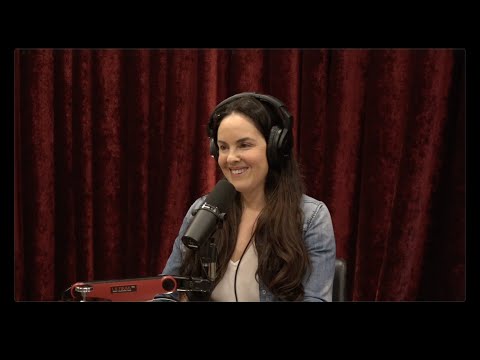
Joe Rogan Experience #2270 - Bridget Phetasy
Joe Rogan (host), Narrator, Bridget Phetasy (guest), Narrator, Narrator, Narrator
In this episode of The Joe Rogan Experience, featuring Joe Rogan and Narrator, Joe Rogan Experience #2270 - Bridget Phetasy explores joe Rogan and Bridget Phetasy Dissect Success, Sanity, Power, and AI Joe Rogan and Bridget Phetasy move from personal themes—addiction, gratitude, success, and creative careers—into a long-form critique of modern media, politics, and online culture. They discuss wealth, happiness, and the danger of surrounding powerful people with yes-men, as well as the mental health toll of analytics, social media, and podcast drama.
Joe Rogan and Bridget Phetasy Dissect Success, Sanity, Power, and AI
Joe Rogan and Bridget Phetasy move from personal themes—addiction, gratitude, success, and creative careers—into a long-form critique of modern media, politics, and online culture. They discuss wealth, happiness, and the danger of surrounding powerful people with yes-men, as well as the mental health toll of analytics, social media, and podcast drama.
A large portion centers on government corruption, NGOs, censorship, Elon Musk, and the shifting media landscape, arguing that a state-aligned propaganda ecosystem has been exposed by independent platforms and citizen sleuths. They also explore AI, surveillance, the erosion of privacy, and speculative futures involving artificial intelligence, virtual reality, and even ancient civilizations.
Throughout, they weave in stand-up comedy life, parenthood, guns and safety, culture-war issues (from gender and free speech to Trump and the Democratic Party), and Rogan’s experiences at the Trump inauguration. The conversation ends with reflections on civilization’s fragility, the inevitability of technological change, and how individuals might keep their sanity and integrity amid it all.
Key Takeaways
Gratitude and perspective are essential antidotes to the perpetual ‘more, more, more’ mindset.
Both note how chasing numbers and status becomes a hamster wheel; deliberately focusing on gratitude—to audience, health, and existing success—helps prevent anxiety, addiction to metrics, and a sense of never being enough.
Get the full analysis with uListen AI
Surrounding yourself with yes-men corrodes both happiness and judgment, especially at high levels of power or wealth.
They describe ultra-wealthy figures who feel ‘poor’ compared to richer peers, and how only friends who tease, push back, and ‘take the piss out of you’ can keep someone grounded and mentally healthy.
Get the full analysis with uListen AI
Online conflict and constant comment fighting are a massive drain on mental resources and self-respect.
Rogan and Phetasy argue that spending all day in social-media feuds makes people progressively more unhinged and leaves them unable to admire themselves, reinforcing a toxic feedback loop.
Get the full analysis with uListen AI
Government, NGOs, and media have formed a self-reinforcing ecosystem that misuses taxpayer money and shapes narratives.
They point to USAID and intertwined NGOs as an enormous, circular slush fund that funds advocacy, propaganda, and censorship—then donates back into politics—while basic domestic crises like Maui or North Carolina fires remain under-addressed.
Get the full analysis with uListen AI
Free speech and skepticism toward centralized control should be non-negotiable, regardless of party.
They criticize the Biden administration’s efforts to pressure social platforms on COVID and other topics, and warn that any political side in control of tech could be tempted to censor; comedians especially, they argue, must defend open expression.
Get the full analysis with uListen AI
AI and surveillance are advancing faster than public understanding, making privacy increasingly illusory.
From Pegasus-style phone exploits to face-recognition geolocation tools and AR glasses that can identify people on sight, they argue that state- or corporate-level access effectively erases privacy and will only intensify with AI.
Get the full analysis with uListen AI
Civilizations rise and fall; ours is not guaranteed permanence, especially under technological and political stress.
Rogan references Younger Dryas impact theory, volcano bottlenecks, and brutal human history to suggest we are descendants of extreme survivors and that modern comfort is fragile—AI, war, or cataclysms could easily reset things.
Get the full analysis with uListen AI
Notable Quotes
“You need your health above it all. It doesn’t matter how rich you are.”
— Joe Rogan
“Gratitude is a powerful mechanism for shifting your perspective because you can get into that feeling of not being enough, not having enough, it never being enough.”
— Bridget Phetasy
“It’s not a battle between two 50/50 opposing viewpoints. It’s like 90/10… and the whole top is people molding their personality to fit a political ideology.”
— Joe Rogan
“What it is, is an enormous slush fund… money just coming and going and flowing, all circular, donating to the Democrats. The whole thing is wild.”
— Joe Rogan, on USAID/NGO funding
“I assume everything is fake. That’s my default… then you try and do your detective work.”
— Joe Rogan
Questions Answered in This Episode
How should ordinary viewers realistically verify information in an era where AI, propaganda, and edited clips make everything suspect?
Joe Rogan and Bridget Phetasy move from personal themes—addiction, gratitude, success, and creative careers—into a long-form critique of modern media, politics, and online culture. ...
Get the full analysis with uListen AI
Are Rogan and Phetasy overstating the scale and coordination of the NGO/government ‘slush fund,’ or is mainstream media understating it?
A large portion centers on government corruption, NGOs, censorship, Elon Musk, and the shifting media landscape, arguing that a state-aligned propaganda ecosystem has been exposed by independent platforms and citizen sleuths. ...
Get the full analysis with uListen AI
What practical steps can content creators take to avoid being consumed by analytics, online conflict, and the pressure for constant growth?
Throughout, they weave in stand-up comedy life, parenthood, guns and safety, culture-war issues (from gender and free speech to Trump and the Democratic Party), and Rogan’s experiences at the Trump inauguration. ...
Get the full analysis with uListen AI
If AI inevitably erodes privacy and may gain survival instincts, what governance or guardrails—if any—could meaningfully protect humans?
Get the full analysis with uListen AI
How can someone who grew up politically on the left reconcile concern for social justice with the criticisms of DEI, censorship, and institutional overreach discussed here?
Get the full analysis with uListen AI
Transcript Preview
(drumming) Joe Rogan podcast, check it out.
The Joe Rogan Experience.
Train by day, Joe Rogan podcast by night, all day. (rock music)
You're a whore.
All right. This is the thing is no one's happy with just being, like, a little successful. You get a little successful and then they wanna get more.
Is that everyone, though?
I don't know. Is that you, Bridget?
I'm- I'm- I'm a little successful.
That's it. (laughs)
And I'm happy.
Yeah. Uh, it's like... I don't know. You just gotta find why you're doing it. You- you don't wanna just be on a hamster wheel.
Well, I think it's easy to get lost in chasing more. You know?
Mm-hmm.
Like, I'm- I'm an addict, so it's very... I try to stay away from analytics and all that stuff, because I can become hyper-focused and obsessed with them.
Oh, right.
And one of the reasons that... After I did, um... Who was it? I was opening for Lando, and I- we would go out and just talk to the people after the show. And it was- it was a- a- they were like, "Oh my gosh, I love Walk & Talk," and, "I love Dumpster Fi-" And that was, like, such a good reminder that you get- like, chasing numbers, and it was like, "Oh, no. These are not just numbers, they're people."
Yeah.
Unless you're like buying bots. But I think it can be easy to just be- get on that hamster wheel and start being like, "We need more, we need more downloads. We need more." And-
Yeah.
... more, more, more. And then you forget and I never wanna take the audience we have for granted.
Yeah.
You know? Like they're- they're amazing. They're- they've been with- some of these people have been with me for forever.
That's kind of the key to it all, right? Is always have... I mean, it sounds so corny because it's such a good new wellness way of looking at things. Have gratitude.
(laughs)
Always have gratitude. But gratitude is, like, very important. It's really important to- to be thankful for what you have.
Yeah. And it w- it was- it was one of the key things in getting sober. I think when I've dealt with, like, anxiety, depression, other things in my life, gratitude is- it is a powerful mechanism for sh- like, shifting your- your perspective because you can get into that feeling of, like, not being enough, not having enough, not-
Yeah.
... it never being enough. And-
Well, Bryan Callen was telling me about his buddy who's a billionaire. His buddy's worth like three billion dollars, and he feels like he's poor-
(laughs)
... because he's friends with people who have $100 billion.
Yeah.
Like, imagine.
No, I mean, this- when I was dating this very wealthy guy who is, like, probably half of a billionaire. Ha- you know, ha- like, five hundred millionaire. And we were in Saint-Tropez and he w- we- he felt poor.
Install uListen to search the full transcript and get AI-powered insights
Get Full TranscriptGet more from every podcast
AI summaries, searchable transcripts, and fact-checking. Free forever.
Add to Chrome