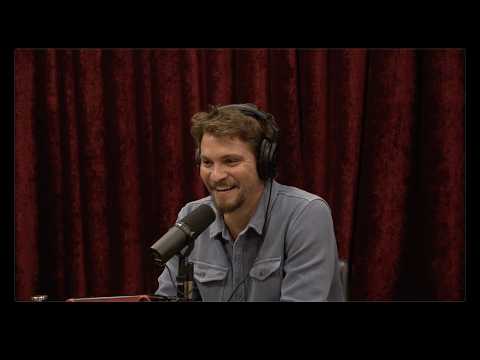
Joe Rogan Experience #2468 - Luke Grimes
Joe Rogan (host), Luke Grimes (guest), Luke Grimes (guest), Luke Grimes (guest)
In this episode of The Joe Rogan Experience, featuring Joe Rogan and Luke Grimes, Joe Rogan Experience #2468 - Luke Grimes explores luke Grimes on Yellowstone fame, music nerves, and Montana life Luke Grimes reflects on Yellowstone’s unexpected success, Taylor Sheridan’s seemingly impossible workload, and the career shift of releasing country music and touring for the first time at 39–40 while managing family life.
Luke Grimes on Yellowstone fame, music nerves, and Montana life
Luke Grimes reflects on Yellowstone’s unexpected success, Taylor Sheridan’s seemingly impossible workload, and the career shift of releasing country music and touring for the first time at 39–40 while managing family life.
A major thread is performance psychology: both men compare stage fright, imposter syndrome, and the role of pressure, losses, and repetition in building confidence across music, comedy, and fighting.
The conversation expands into lifestyle and values—leaving (or disliking) LA culture, finding peace in Montana, skepticism about gambling/Vegas, and why challenging pursuits like jiu-jitsu and elk hunting “re-center” people.
They end with wide-ranging riffs on substances, risk (motorcycles/horseback riding), AI’s effects on culture, and conspiracy folklore (Bigfoot/flat earth), while returning to the idea that nature and real community are antidotes to modern “phone-driven” anxiety.
Key Takeaways
Yellowstone’s breakout felt unforeseeable—even to the cast.
Grimes says he expected an audience but not the phenomenon it became; both credit Taylor Sheridan’s writing engine and ambition rooted in his late-blooming career and “foot on the gas” mentality.
Get the full analysis with uListen AI
Touring is a financial logistics problem as much as an art form.
Grimes explains why musicians often run Thu–Sat runs: the bus, crew, and gear rentals make one-off shows hard to justify, especially for a newer touring act.
Get the full analysis with uListen AI
Stage fright can intensify when you’re “front of mic” for the first time.
Grimes played his first real show at 39, blacked out from nerves, and only gradually acclimated; he’s comfortable in the studio but feels pressure when people buy tickets and expect a “real” artist.
Get the full analysis with uListen AI
Imposter syndrome is a sign of sanity, not incompetence.
Rogan argues most grounded high performers feel it; Grimes notes it’s stronger in music than acting because he has 20+ years of acting reps but far fewer live music reps.
Get the full analysis with uListen AI
LA incentives can mold personalities and dilute creative edge.
Both describe LA as a place where people chase being “picked,” adapt to casting/producer preferences, and self-censor—Rogan calls it a ‘velvet prison’ that can soften comics and performers.
Get the full analysis with uListen AI
Hard pursuits (jiu-jitsu, hunting) function like mental hygiene.
Rogan frames jiu-jitsu as so difficult it makes the rest of life easier; Grimes and Rogan describe elk hunting and wilderness time as a “vitamin” that reduces anxiety and restores focus.
Get the full analysis with uListen AI
Avoiding street fights is a key benefit of learning to fight.
Rogan says real training creates quiet confidence and threat-recognition; engaging is what gets people killed (falls, stomps, weapons escalation), so skill should reduce—not increase—your willingness to fight.
Get the full analysis with uListen AI
Nature and community beat the ‘phone narrative’ of constant crisis.
Grimes says social media can make the world feel awful within a week, while real-life interactions (neighbors, errands, outdoors) quickly restore hope; Rogan agrees phones are a primary ‘bridge to crazy.’
Get the full analysis with uListen AI
Notable Quotes
“His is impossible… could you write 10 television shows single-handedly? No way.”
— Luke Grimes
“I blacked out, man… not drinking—just blacked out on nerves.”
— Luke Grimes
“Everybody who's sane gets imposter syndrome.”
— Joe Rogan
“LA felt like everybody was trying to become the same person—but they don’t know who that person is.”
— Luke Grimes
“If you can choose what’s hard in your life, you’ll be way better off.”
— Joe Rogan
Questions Answered in This Episode
What specifically did Luke see on set (or in scripts) that signaled Yellowstone might become a cultural phenomenon—if anything at all?
Luke Grimes reflects on Yellowstone’s unexpected success, Taylor Sheridan’s seemingly impossible workload, and the career shift of releasing country music and touring for the first time at 39–40 while managing family life.
Get the full analysis with uListen AI
Luke mentioned he blacked out from nerves at his first show—what practical routines (breathing, beta blockers, rehearsal structure) has he tested since, and what actually works for him?
A major thread is performance psychology: both men compare stage fright, imposter syndrome, and the role of pressure, losses, and repetition in building confidence across music, comedy, and fighting.
Get the full analysis with uListen AI
He describes music as ‘less pressure’ because acting pays the bills—does that freedom improve the art, or create new insecurities about legitimacy?
The conversation expands into lifestyle and values—leaving (or disliking) LA culture, finding peace in Montana, skepticism about gambling/Vegas, and why challenging pursuits like jiu-jitsu and elk hunting “re-center” people.
Get the full analysis with uListen AI
Rogan calls LA a ‘velvet prison’—what are concrete examples from Luke’s career where fear of industry backlash changed what he said or did publicly?
They end with wide-ranging riffs on substances, risk (motorcycles/horseback riding), AI’s effects on culture, and conspiracy folklore (Bigfoot/flat earth), while returning to the idea that nature and real community are antidotes to modern “phone-driven” anxiety.
Get the full analysis with uListen AI
Luke said he might need to quit drinking to quit smoking—what does his ideal ‘replacement habit’ look like (jiu-jitsu, fitness, writing), and how would he structure it with a toddler and filming?
Get the full analysis with uListen AI
Transcript Preview
[upbeat music] Joe Rogan Podcast, check it out.
The Joe Rogan Experience.
Train by day, Joe Rogan Podcast by night. All day. [upbeat music]
This is surreal being here, dude.
Is it?
Yeah, I've been listening to the show for years.
[laughs] Well, I've been watching your show for years.
Yeah?
Are we rolling, Jamie? All right, beautiful. I love your fucking show. It's great.
Ah, thanks, man.
It's really awesome, man. Espe- well, I haven't watched Marshals yet. Is it out now?
It is.
When did it come out?
Um, M- March 1st.
Oh, okay.
So they just had the second episode air.
Damn, I like to binge, man.
Yeah, yeah.
I like to wait until-
Wait a little bit then
... stay offline. I like to sit down and binge 'em.
For sure.
Yeah, but Yellowstone's fucking awesome. It's such a great show. Did you have any idea it was gonna be what it is?
Uh, not, no. I don't think anybody did. I thought it would find an audience, for sure. I mean, Taylor was really, you know, hot at the time. He'd, he'd, he'd been nominated for Oscars and I was kinda, like, surprised he was even writing a television show. He was just, like, so hot in the, the film business.
How the fuck does that guy even sleep?
I don't know, man.
Does... Where does he have the time? Every time I look in the news or I t- there's a new show that he's doing, a new thing he's doing. It's like, what, how are you doing all this?
It's impressive, you know.
It's insane.
I feel like, uh, there's a lot of people I've worked with where they do things im- that are impressive, but his is impossible.
Right.
You know, like, someone'll be like, "Could you direct a movie as good as Unforgiven?" I'm like-
Right
... maybe. Maybe if I tried real hard. But, like, could you write 10 television shows single-handedly? N- no. No way. Not possible.
He directed Unforgiven?
No, I'm just saying, like, people-
No
... that I look up to, that I'm impressed by.
Right.
It's like, uh, his is a different level.
Right. Right, right, right.
His is, like, it's, like, impossible.
Who did direct Unforgiven?
Clint Eastwood.
That's the fucking greatest Western movie of all time.
It is.
It's the best.
Yeah.
It's like, y- you know what it, what it was like to me? It was like he was making up for all the silly Westerns, and was like, "Let me show you what it was probably really like."
Yeah.
What it was really like when a man was about to get shot. What it was really like when a dude was a stone cold killer.
Yeah.
What, what was it really, like, the hardships of living back then.
Yeah, and it's interesting too, because he starts out kind of a loser.
Yeah.
Those first, you know, like, the first three quarters of the movie, he's this sort of timid guy who's lost his power, you know? And then he takes that one s- sip of whiskey-
Install uListen to search the full transcript and get AI-powered insights
Get Full TranscriptGet more from every podcast
AI summaries, searchable transcripts, and fact-checking. Free forever.
Add to Chrome