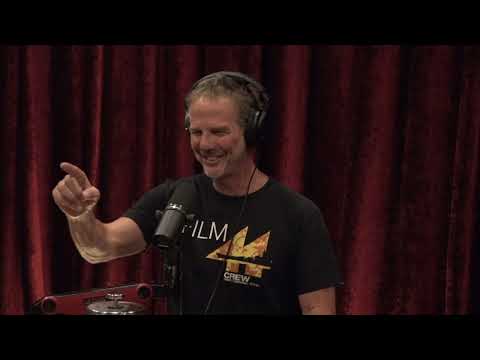
Joe Rogan Experience #2026 - Peter Berg
Peter Berg (guest), Narrator, Joe Rogan (host), Narrator
In this episode of The Joe Rogan Experience, featuring Peter Berg and Narrator, Joe Rogan Experience #2026 - Peter Berg explores peter Berg Exposes Sacklers, Opioid Carnage, And Weaponized Capitalism Joe Rogan and Peter Berg dive into the making of Netflix’s Painkiller, exploring how the Sackler family and Purdue Pharma aggressively marketed OxyContin as a safe painkiller while knowing its heroin‑like addictiveness.
Peter Berg Exposes Sacklers, Opioid Carnage, And Weaponized Capitalism
Joe Rogan and Peter Berg dive into the making of Netflix’s Painkiller, exploring how the Sackler family and Purdue Pharma aggressively marketed OxyContin as a safe painkiller while knowing its heroin‑like addictiveness.
They unpack the mechanics of the opioid crisis—FDA capture, manipulated medical literature, sales rep incentives, and strategic blame of "abusers"—and connect it to hundreds of thousands of deaths and devastated families.
The conversation broadens into parallels between Big Pharma and the military‑industrial complex, questioning how profit incentives, captured regulators, and limitless budgets drive everything from opioids to nuclear submarines and AI‑driven weapons.
They also touch on stem cells, combat sports brain damage, sociopathy among elites, and the ethics of pouring vast sums into war and weapons while underinvesting in schools, cities, and public health at home.
Key Takeaways
The opioid crisis was engineered, not accidental.
Berg describes how Purdue deliberately pushed OxyContin as "believed to be non‑addictive," incentivized higher dosages, and used sales reps and ghostwritten medical content to normalize what was essentially heroin in pill form.
Get the full analysis with uListen AI
Regulatory capture at the FDA enabled mass harm.
The entire OxyContin approval hinged on one FDA official, Curtis Wright, who after a mysterious two‑day hotel meeting with Purdue signed off on the "non‑addictive" language, then soon left to work for Purdue at eight times his government salary.
Get the full analysis with uListen AI
Purdue’s strategy was to blame victims, not the drug.
Internal guidance to "hammer the abusers" meant parents who lost children were told their kids were just addicts, allowing Purdue to deflect responsibility even as overdose deaths mounted into the hundreds of thousands.
Get the full analysis with uListen AI
Elite families launder reputations through philanthropy.
Berg likens the Sacklers’ naming of museum wings and medical schools to Alfred Nobel’s pivot from dynamite to the Nobel Prize—using cultural philanthropy to obscure fortunes built on lethal products.
Get the full analysis with uListen AI
The Supreme Court may finally challenge Sackler impunity.
On the day Painkiller premiered, the Court paused Purdue’s $6 billion bankruptcy deal, questioning whether a deal can shield the Sacklers from future civil and criminal liability while paying victims over decades from interest on their remaining fortune.
Get the full analysis with uListen AI
Defense spending mirrors Big Pharma’s profit logic.
Rogan and Berg compare drug profits to weapons profits, noting how nuclear submarines, missiles, and AI drones represent staggering investments where private contractors are heavily incentivized to sustain conflict and expansion, not restraint.
Get the full analysis with uListen AI
Safer, regenerative therapies like stem cells face higher barriers than addictive drugs.
Rogan contrasts the ease with which OxyContin was approved and marketed with the tight restrictions around stem cell therapies, suggesting economic motives may slow adoption of treatments that could reduce surgeries, chronic prescriptions, and pain‑drug sales.
Get the full analysis with uListen AI
Notable Quotes
“If you just look at the Sacklers from a capitalistic perspective…they get A+. You put that much morality into the equation, and these are some evil human beings.”
— Peter Berg
“They basically bought their way to safety for $6 billion.”
— Peter Berg
“Imagine your 90‑year‑old mom is jonesing… ‘I gotta get grandma heroin.’”
— Joe Rogan
“These are the real drug dealers… the big‑time, hard‑hitting drug dealers putting up the real numbers.”
— Peter Berg
“We have enough nuclear missiles that one of them means it’s over, and yet we keep making more. What would happen if you took two of these subs offline and built schools?”
— Peter Berg
Questions Answered in This Episode
How much responsibility should individual prescribing doctors bear compared to Purdue and the Sacklers, given the way OxyContin was marketed to them?
Joe Rogan and Peter Berg dive into the making of Netflix’s Painkiller, exploring how the Sackler family and Purdue Pharma aggressively marketed OxyContin as a safe painkiller while knowing its heroin‑like addictiveness.
Get the full analysis with uListen AI
What concrete reforms to the FDA and medical publishing would actually prevent another OxyContin‑style crisis, rather than just punishing one company?
They unpack the mechanics of the opioid crisis—FDA capture, manipulated medical literature, sales rep incentives, and strategic blame of "abusers"—and connect it to hundreds of thousands of deaths and devastated families.
Get the full analysis with uListen AI
At what point should corporate leaders face criminal liability for foreseeable public health harms caused by their products and strategies?
The conversation broadens into parallels between Big Pharma and the military‑industrial complex, questioning how profit incentives, captured regulators, and limitless budgets drive everything from opioids to nuclear submarines and AI‑driven weapons.
Get the full analysis with uListen AI
How can societies realistically rebalance budgets away from ever‑expanding weapons systems toward domestic priorities like schools, healthcare, and addiction treatment?
They also touch on stem cells, combat sports brain damage, sociopathy among elites, and the ethics of pouring vast sums into war and weapons while underinvesting in schools, cities, and public health at home.
Get the full analysis with uListen AI
What would a responsible, well‑regulated rollout of regenerative therapies like stem cells look like, and who is blocking it now?
Get the full analysis with uListen AI
Transcript Preview
(drumming) Joe Rogan podcast, check it out.
The Joe Rogan Experience.
Train by day, Joe Rogan podcast by night, all day. (rock music plays) What's happening? Good to see you.
Good to see you, my friend.
Your show is fantastic. It's really good, man. Uh-
Thank you.
... Painkiller on Netflix, can't recommend it enough. Um, I'm only two episodes deep. Uh, I started the third today. It's so fucking good, dude. And it's so dis- it's so disturbing, because it's true.
Mm-hmm.
I mean, it's an accurate account of how this all happened, and it's just ... it makes you so uncomfortable to think that there's people in the world that would do what the Sackler family did.
Do you know anyone who's, who's-
Yes.
... gone down from, from opioids or Oxy?
Quite a few.
Yeah, same here.
Quite a few people.
Um, when, uh, when they first came to me, uh, and asked me if I was interested, my buddy, Eric Newman, who, who put the whole thing together, uh, you know, said, "You wanna do something about the Sacklers? Do you know who the Sacklers are?" And I did. I knew they were the, you know, family behind OxyContin. Uh, and he said, "Are you interested?" And I, I started thinking, and I started counting the people I know who've died or whose kids have died, uh, because of OxyContin and opioids. And I, I quickly got off on both fingers, you know?
(sighs)
And then I, I started thinking about, um, some of my heroes, my art- my artistic heroes, um, Chris Cornell, Tom Petty, and, like, one of my big heroes was Prince.
Yeah.
I was a huge, huge Prince fan. I, I went to school in Minneapolis when he was coming up. Uh, I was an extra in Purple Rain back in the day, you know-
Wow.
... on First Avenue in, in Minneapolis. And, you know, those three guys. When, when Prince died, you know-
Yeah.
... Prince was, he was su- had such a, a ... he was legendary for his work ethic and his lifestyle, no alcohol and no swearing, and just incredible work ethic.
Yeah.
And the fact that OxyContin got him-
Yeah.
... and that, that really kinda fucked with me. So when they came to me and, you know, started talking to me about doing something about the Sacklers, I was like, "Yeah, I'm all in." Um, and the more I dug into it, and the more experts and writers who have been covering this, uh, epidemic for so long, the more I learned. Um, you know, I'm not necessarily the biggest conspiracy guy of all time. I, I do, I'll, I'll ... if the proof's there, I, I'm, I'm down. But the more I learned about the Sacklers and how they maneuvered what is essentially just heroin in, like, a little M&M pill, you know, how they were so artful and so good at manipulating the system, uh, I was shocked, and I, I was all in on Painkiller.
Install uListen to search the full transcript and get AI-powered insights
Get Full TranscriptGet more from every podcast
AI summaries, searchable transcripts, and fact-checking. Free forever.
Add to Chrome